Advertisement
WHO: 1 in 7 young people face mental health issues, yet signs are often missed
Sunday 24th May, 2026 09:20 AM|

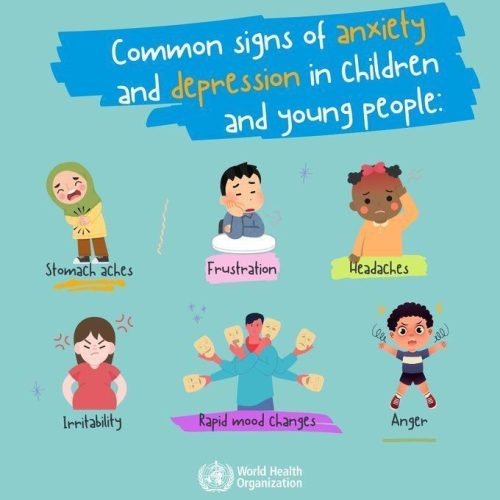
The United Nations, in line with the World Health Organisation (WHO) has marked May as Mental Health Awareness Month by drawing attention to the growing challenge of mental health issues among children and young people, urging parents, carers, and teachers to be vigilant in spotting early warning signs.
In a statement by the United Nations on Sunday, May 24, 2026, one in seven young people faces mental health issues, yet these signs are frequently overlooked.
The organisation has emphasised the critical role that adults in a child’s life can play in identifying when support is needed.
“1 in 7 young people face mental health issues, yet signs are often missed. Parents, carers & teachers can help spot when a child needs support,” UN stated.
You Might Also Like


Worth noting, mental health is a state of mental well-being that enables people to cope with the stresses of life, realise their abilities, learn well and work well, and contribute to their community.
WHO says that mental health has intrinsic and instrumental value and is integral to our well-being.
At any one time, a diverse set of individual, family, community and structural factors may combine to protect or undermine mental health.
Although WHO explains that most people are resilient, people who are exposed to adverse circumstances, including poverty, violence, disability and inequality, are at higher risk of developing a mental health condition.
According to the World Health Organisation, many mental health conditions can be effectively treated at relatively low cost, but health systems remain significantly under-resourced and treatment gaps are wide all over the world.
The organisation argues that mental health care is often poor in quality when delivered and that people with mental health conditions often also experience stigma, discrimination and human rights violations.
Mental health in Kenya
In 2025, the Ministry of Health estimated that at least 25 per cent of outpatients and 40 per cent of inpatients in Kenyan hospitals suffer from a mental health condition.
The Taskforce on Mental Health (2020) put illnesses such as depression, suicide, substance use disorder, bipolar disorder, and schizophrenia at 13 per cent of Kenya’s total disease burden.
The task team observed that years of neglect in mental health services are “haunting us as a nation.”
It called for “new, innovative and appropriate approaches” to address what they termed a growing “monster” born of under-investment in policy and systems.
According to the Mental Health Investment Case (2021), untreated mental health conditions and lost productivity impose an estimated national cost of Ksh62.2 billion annually — roughly 0.6 per cent of GDP.
Global mental health statistics
Mental health conditions include mental disorders and psychosocial disabilities, as well as other mental states associated with significant distress, impairment in functioning or risk of self-harm.
Statistics by the WHO indicate that in 2019, 970 million people globally were living with a mental disorder, with anxiety and depression the most common.
Mental health conditions can cause difficulties in all aspects of life, including relationships with family, friends and community. They can result from or lead to problems at school and at work.
Globally, mental disorders account for 1 in 6 years lived with a disability. People with severe mental health conditions die 10 to 20 years earlier than the general population. And having a mental health condition increases the risk of suicide and experiencing human rights violations.
The economic consequences of mental health conditions are also enormous, with productivity losses significantly outstripping the direct costs of care.
Author
Latest News








Advertisement
More on News