Advertisement
IMF: Why Kenya is borrowing more but building less as East Africa’s fiscal trap deepens
Saturday 11th July, 2026 11:15 PM|

The International Monetary Fund (IMF) says Kenya and several East African economies are entering a fiscal squeeze where rising debt-servicing costs are leaving governments with less money for infrastructure, healthcare and education.
In its latest regional outlook, the IMF warns that rebuilding fiscal space has become critical as elevated debt and external shocks weigh on economic growth.
Governments across East Africa are borrowing to finance development, but an increasing share of public revenue is being diverted to servicing debt rather than funding new projects.
According to the IMF, rising debt-servicing costs are reducing governments’ ability to invest in infrastructure, healthcare and education, creating what economists describe as a fiscal trap.
You Might Also Like
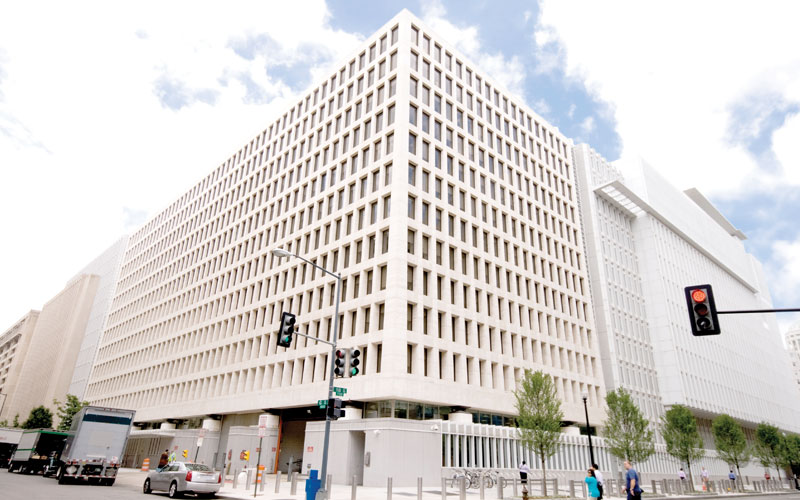
The warning comes as the IMF projects economic growth in sub-Saharan Africa to remain at 4.3 per cent in 2026. However, the Fund says the regional outlook masks growing differences between countries with enough fiscal space to withstand external shocks and those already constrained by high debt and borrowing costs.
Kenya’s fiscal squeeze
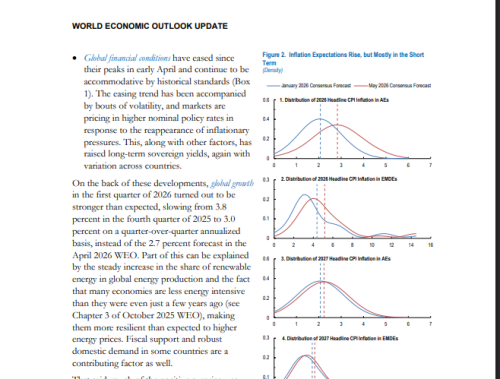
According to the IMF, Kenya’s debt-servicing costs now consume more than 60 per cent of government revenue, leaving limited fiscal space for development spending. The heavy debt burden is restricting investment in infrastructure and other priority sectors, complicating efforts to achieve the country’s long-term development goals under Kenya Vision 2030.
The IMF argues that restoring fiscal sustainability will require governments to improve revenue collection while spending public resources more efficiently.
“Credible medium-term consolidation should rest on durable revenue measures, stronger tax administration, greater spending efficiency, and reallocation toward growth-enhancing priorities such as infrastructure, skills, and well-targeted social protection,” the report reads.
The message is clear: borrowing alone is no longer enough if an increasing share of public revenue is being used to repay existing debt instead of financing productive investments.

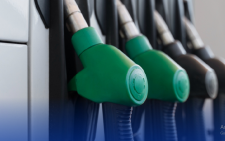
While regional growth is expected to remain resilient, East African economies remain vulnerable to external shocks, particularly because they rely heavily on imported refined petroleum products. Since April, renewed tensions in the Middle East have pushed up global fuel prices, increasing transport and production costs across economies where road transport dominates trade and commerce.
The Fund also warns that another disruption to shipping through the Strait of Hormuz would disproportionately affect smaller oil-importing economies with limited fiscal buffers.
“Commodity importers that are not well positioned to benefit from AI-driven activity” face downgrades, while the outlook for energy-intensive economies and those that depend on fossil fuel imports is “challenging.”
What it means for citizens
The fiscal squeeze has consequences beyond government balance sheets. When larger portions of public revenue are allocated to debt repayments, governments have less funding available for roads, hospitals, schools and other essential public services. Combined with rising fuel and food prices, this could place additional pressure on already vulnerable households.
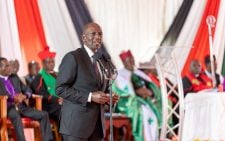
PHOTO/@channelafrica1/X
The IMF warns that prolonged economic pressures could also create broader social and political risks.
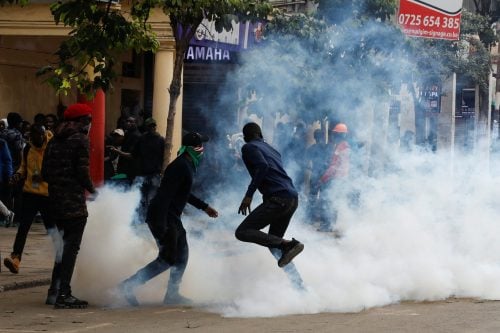
“Higher food and energy prices could heighten the risk of social unrest and domestic political instability, especially in vulnerable economies in sub-Saharan Africa or in countries with upcoming elections,” the IMF observes.
The Fund also notes that declining international development assistance is making fiscal adjustment even more difficult for many low-income countries.
“For many low-income countries, declining official development assistance could further complicate any fiscal adjustment needed to restore market confidence and limit the increase in yields, weakening health, education, and social protection systems.”
The IMF’s prescription
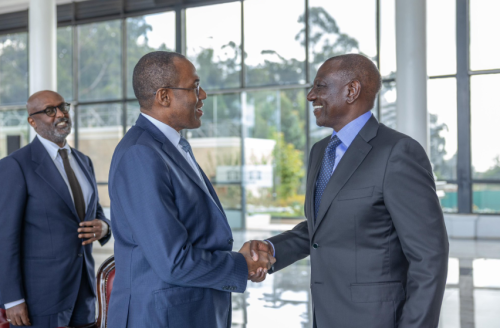
Rather than relying on additional borrowing, the IMF says governments should focus on rebuilding fiscal space through stronger domestic revenue mobilisation, better tax administration and more efficient public spending.
The Fund also recommends redirecting limited public resources toward investments that generate long-term economic growth while protecting vulnerable households through targeted social spending.
“Rebuilding fiscal space remains essential given elevated debt, higher borrowing costs, and heightened external uncertainty.”
It adds that fiscal support can help cushion economies during periods of uncertainty, but only if it remains temporary and carefully targeted.
“Fiscal support and robust domestic demand in some countries are a contributing factor” to economic resilience, but such support should be temporary and tightly targeted.
For Kenya and much of East Africa, the challenge is no longer simply accessing finance. It is ensuring that public borrowing translates into productive investment rather than mounting repayment obligations.
The IMF argues that without sustained fiscal reforms, rising debt-servicing costs will continue to crowd out investment in infrastructure and essential public services, making it harder for governments to achieve long-term development goals and build resilience against future economic shocks.
Author
Latest News




Advertisement
More on Business