Advertisement
How Dangote’s Kenya refinery could shield East Africa from Middle East oil shocks forever
Saturday 11th July, 2026 10:16 PM|

East Africa’s heavy reliance on imported fuel has been exposed by rising Middle East tensions. As the International Monetary Fund (IMF) warns that smaller oil-importing economies face the greatest risks from supply disruptions, Aliko Dangote’s proposed Ksh2.2 trillion Kenya refinery is emerging as a potential game-changer for the region’s energy security.
East Africa’s dependence on imported petroleum has become one of its biggest economic vulnerabilities.
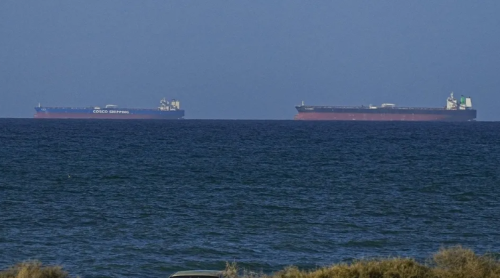
The IMF warns that renewed disruptions in the Middle East, particularly around the Strait of Hormuz, one of the world’s most important oil shipping routes, could hit smaller oil-importing African economies hardest. Against that backdrop, Nigerian billionaire Aliko Dangote’s proposed 700,000-barrel-per-day refinery in Lamu, Kenya, is increasingly being viewed as a strategic investment that could strengthen East Africa’s long-term energy security.
The IMF’s latest World Economic Outlook says East Africa has already experienced the effects of supply disruptions, with higher fuel prices pushing up transport, food and business costs across Kenya, Tanzania and neighbouring countries.
You Might Also Like


“The biggest casualties from another disruption to the Strait of Hormuz will likely be smaller, oil-importing economies in sub-Saharan Africa with little fiscal room left after years of overlapping shocks,” the fund warned.
Although the IMF expects regional growth to remain at 4.3 per cent in 2026, it cautions that prolonged energy disruptions could weaken inflation outlooks, strain government finances and slow economic growth.
The report also warned that sustained increases in energy and fertiliser prices could worsen food insecurity and could heighten the risk of social unrest and domestic political instability, particularly in countries with limited fiscal space.
Regional energy trade
The proposed refinery aims to process 700,000 barrels of crude oil per day, making it the largest refinery in East Africa.
President William Ruto recently confirmed that the project is progressing after discussions with Aliko Dangote, saying construction preparations are underway.
“I spoke with investor Aliko Dangote, and we agreed that the refinery will not only serve Kenya, but also Ethiopia, South Sudan, Uganda, Tanzania, Rwanda, Burundi and the Democratic Republic of Congo, while creating employment opportunities for our youth,” Ruto said.
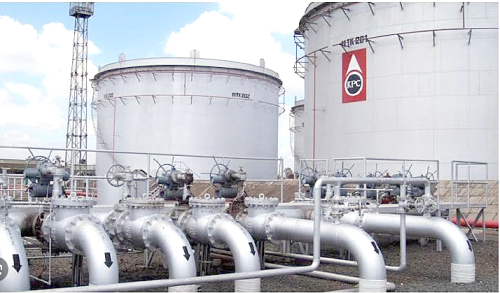
If completed, the refinery would significantly reduce East Africa’s dependence on imported refined petroleum products by supplying fuel closer to regional markets. That could lower exposure to overseas refining bottlenecks, shipping disruptions and volatile international freight costs.
More than an oil refinery
Beyond fuel security, the project is expected to create around 60,000 jobs, support industrial development around the Lamu Port-South Sudan-Ethiopia Transport (LAPSSET) Corridor, and strengthen Kenya’s ambition to become East Africa’s energy and logistics hub.
The refinery would also expand Africa’s domestic refining capacity at a time when governments are increasingly prioritising local value addition instead of exporting raw resources and importing finished products.
While a regional refinery would not eliminate exposure to global crude oil prices, it could reduce one of East Africa’s biggest vulnerabilities: reliance on distant refining centres and fragile international supply chains.
As fuel demand continues to rise alongside population growth, urbanisation and industrialisation, the proposed Dangote Kenya refinery has the potential to reshape East Africa’s energy security—turning a region long exposed to external shocks into one with far greater control over its own fuel future.
Author
Latest News




Advertisement
More on Business