Advertisement
Judiciary honours late Supreme Court Justice Mohammed Ibrahim in solemn closing of file ceremony
Monday 09th March, 2026 08:36 PM|

The Judiciary of Kenya paid tribute to the late Justice Mohammed Khadhar Ibrahim, showing his decades-long service to justice, human rights, and constitutionalism. Chief Justice Martha Koome led the solemn Closing of File Proceedings to honour the Supreme Court Justice’s life and work.
In a statement shared on X on Monday, March 9, 2026, the Chief Justice reflected on the symbolic significance of the tradition, reminding attendees of the responsibilities carried by all legal practitioners in upholding justice.
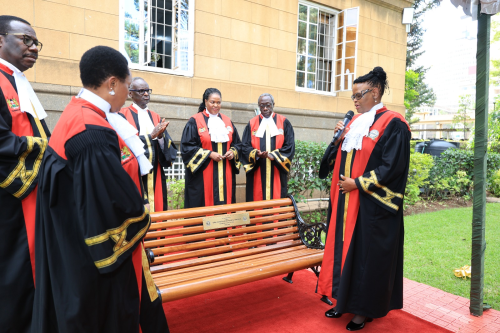
Nairobi, March 9, 2026: PHOTO/@Kenyajudiciary/X
“Speaking during the solemn ceremony, the Chief Justice noted that the tradition of conducting Closing of File Proceedings for departed members of the Bench and Bar serves as a symbolic reminder of the noble responsibility borne by legal practitioners. She observed that judges and advocates are called to serve as custodians of justice, entrusted with upholding the rule of law with integrity, professionalism, and dedication,” the Judiciary stated.
Justice Ibrahim’s career was marked by unwavering advocacy for human rights and democratic governance, often standing with the voiceless despite personal risks, including detention without trial.
You Might Also Like



“The Chief Justice paid tribute to Justice Ibrahim as a champion of the rule of law and human rights whose contributions to Kenyan jurisprudence and the administration of justice remain profound. She noted that throughout his career, Justice Ibrahim exemplified unwavering commitment to justice and constitutionalism, leaving an enduring legacy within the Judiciary and beyond,” the Judiciary said.
The late Justice’s time at the High Court, Supreme Court, and various divisions demonstrated his deep understanding of civil, commercial, constitutional, and criminal law, shaping Kenya’s judicial landscape.
“Long before his appointment to the Bench, Justice Ibrahim had already distinguished himself as a fearless advocate for human rights, democratic governance, and constitutional reform during some of Kenya’s most challenging periods. He stood firmly with the voiceless, even at great personal risk, including detention without trial. His advocacy reflected a steadfast belief that the law must function both as a shield for the vulnerable and a restraint against abuse of power,” the Judiciary noted.
Justice Ibrahim’s landmark rulings, administrative leadership, and commitment to independent judicial opinions cemented his reputation as a legal giant, influencing governance and constitutional interpretation across Kenya.
“The values he stood for, courage, fairness, empathy, and justice, will continue to guide us. His legacy lives on in the rights he defended, the people he mentored, and the society he helped transform,” the Judiciary said in conclusion.
The Judiciary expressed profound gratitude for Justice Ibrahim’s service, affirming that his enduring contributions will remain a guiding light for future generations committed to the rule of law.
Author
Latest News







Advertisement
More on News