Advertisement
Judiciary admits increasing pressure over case backlog in Nairobi
Monday 01st December, 2025 09:36 PM|
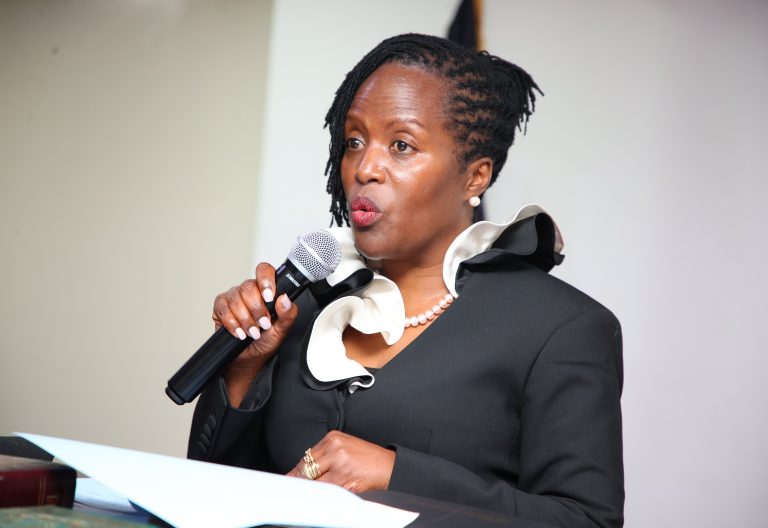
The need to decongest courts and reduce caseloads across Nairobi and other urban towns has been listed as the judiciary’s most pressing need.
The revelation follows nationwide public budget hearings for the 2026/27 financial year conducted at the Makadara social hall in Nairobi.
Speaking during the final day on Monday, December 1, 2025, Chief Registrar Winfridah Mokaya led the calls for the enhanced funding to strengthen justice delivery.
Collapsing
Mokaya highlighted the need to ease the burden on the urban courts, warning that the courts could collapse under the sheer number of caseloads.
You Might Also Like

The judiciary stated that with a resident population of 5.4 million and 2.5 million daily commuters, the city ranked as the most demanding justice corridor.
“Nairobi remains our most demanding justice corridor, handling nearly a quarter of Kenya’s total caseload. With a resident population of about 5.4 million — and an additional 2.5 million daily commuters — the pressures on its courts are unprecedented,” part of her statement read.
According to the registrar, the challenges faced in Nairobi are indicative of the wider situation across the county that needed urgent attention.
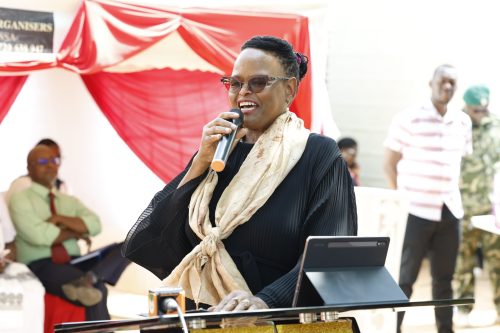
‘We highlight Nairobi because it illustrates, in the clearest way, the wider realities across Kenya. Where population growth is high, where economic activity is concentrated, and where public demand for justice is surging, our infrastructure and human resource capacities are being stretched beyond their design. Nairobi is not an exception; it is a magnified example of what many other court stations are currently experiencing,” she added.
Budgetary allocation
To ease these pressures, Mokaya pointed out that the Judiciary has prioritised completion of new court buildings in Kasarani, Mihango, and Huruma and continued investments in specialised courts, including the Gender Justice, Anti-Corruption, Children’s, and Small Claims Courts.
“Judicial authority is delegated by the people, and with that delegation comes an unqualified obligation to account for how resources entrusted to us are deployed. We therefore appear before you as stewards of a public trust ready to present our performance for the last financial year and the investment proposals for the year ahead,” she said.
The Judiciary has proposed a budget of Ksh46 billion for financial year 2026/27, an equivalent of 0.7% of the national budget. However, the indicative allocation of Ksh29 billion leaves a shortfall of Ksh17 billion.
She noted that this this gap threatens key areas of justice delivery.
Author
Latest News







Advertisement
More on News