Advertisement
Mark Nyamita: Ol Kalou proved united opposition is a myth for failing to field one candidate
Thursday 23rd July, 2026 08:57 AM|
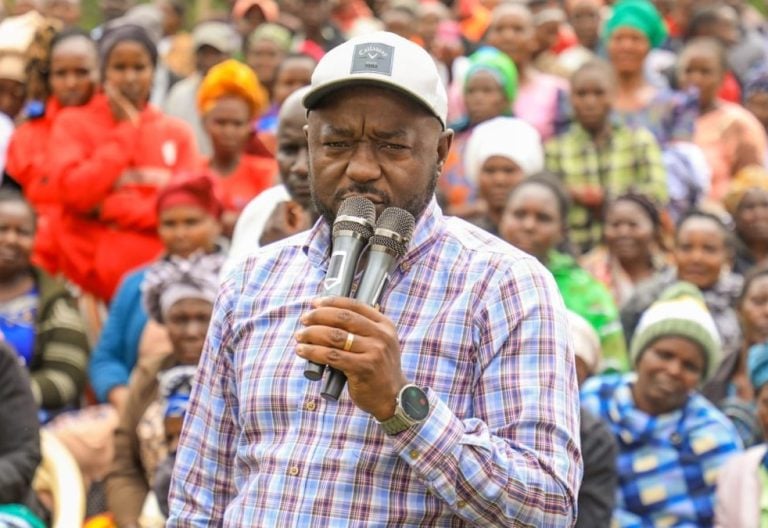
Uriri Member of Parliament (MP) Mark Nyamita has said the outcome of the recently concluded Ol Kalou parliamentary by-election has exposed what he termed the “myth” of a united opposition, arguing that rival opposition parties failed the first practical test of their coalition by fielding multiple candidates despite earlier promises to back a single flag bearer.
Speaking in an interview on a local TV station on Thursday, July 23, 2026, Nyamita said the contest offered important political lessons ahead of the 2027 General Election, including growing public confidence in the Independent Electoral and Boundaries Commission (IEBC), shifting regional political alignments and what he described as the opposition’s inability to translate unity rhetoric into action.
“The election in Ol Kalou also showed us that there is nothing like a united opposition because they failed to actually present a single candidate there to show part of their unity,” Nyamita said during an interview.
According to the legislator, the opposition’s failure to rally behind one candidate contradicted earlier declarations by the United Alternative Government (UAG) coalition that it would use an independent scientific survey and opinion polling process to identify a consensus candidate for the by-election.
You Might Also Like


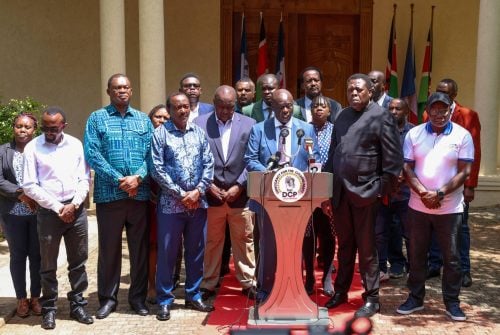
The coalition had announced that Jubilee Party, United Democratic Alliance (UDA) splinter groups and other allied opposition parties would unite behind a single candidate selected through credible polling to maximise their chances in the strategically significant Mt Kenya contest.
However, multiple opposition candidates eventually entered the race.
“There is nothing like a United Opposition. It is just a bunch of people who are collected together by hate for one individual, and everyone is expressing their hate from different corners of the nation,” Nyamita said.
Ol Kalou results offer 2027 political lessons
Beyond the opposition’s divisions, Nyamita argued that the Ol Kalou by-election demonstrated increasing confidence in the country’s electoral management body.
He noted that before the election, sections of the opposition had repeatedly questioned the credibility of the IEBC but had gone quiet after the polls were conducted.
“The first lesson for me is that I think IEBC is continuing to build confidence. Kenyans are beginning to have confidence in IEBC that they can deliver a credible election,” he said.
Nyamita recalled that opposition leaders had frequently criticised the electoral commission before voting.
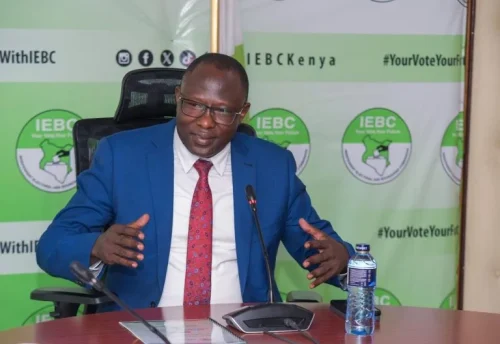
“You remember prior to this election, the opposition wing really called out IEBC. They kept saying IEBC was doing this and doing that. Unfortunately, now that they have won, they are super quiet. They have not come back to say that IEBC did a good job.”
The MP said the conduct of recent by-elections since the 2022 General Election should reassure Kenyans as preparations begin for the next national polls.
“As we head towards next year, and looking at the number of by-elections that have happened from 2022 to date, we have not had cases of election malpractice. I think it gives good confidence for the nation as we get into the next election because both sides can have confidence that the referee will deliver credible results.”
Mount Kenya political shift emerging
Nyamita also interpreted the Ol Kalou outcome as evidence that Kenya’s political regions are beginning to settle ahead of the 2027 presidential contest.
“I think the election in Ol Kalou has shown our regions are slowly beginning to align themselves,” he said.
“The truth be said is that we have seen part of Mount Kenya West continuing to recede towards the opposition, and that is normal in election politics.”
According to him, the emerging political realignments will help presidential hopefuls and political parties better understand where to concentrate their campaigns before the next General Election.
“So as we head towards the election, regions are beginning to settle on exactly where they are going to vote. Anyone running for president can now prepare and know where to focus.”
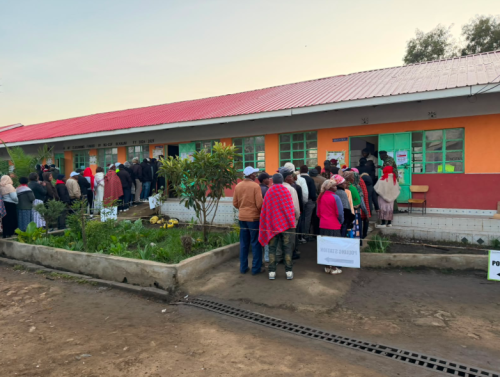
Nyamita further cautioned against interpreting regional voting trends as determinants of the country’s political future.
Drawing from his own experience representing an opposition stronghold, he argued that winning by-elections does not necessarily translate into capturing State House.
“I have come from an opposition region and for a long time we won by-elections against the government. We celebrated, but we never ascended to the presidency. The country moved on,” he said.
He added that while every region is entitled to pursue its political interests, no single bloc should assume it can determine the country’s destiny alone.
“The country will move on even if a certain section decides to vote in a different direction.”
Nyamita maintained that the Ol Kalou by-election should be viewed as an early indicator of the political dynamics likely to shape the 2027 elections, particularly the evolving regional alignments, growing confidence in the electoral process and the continuing struggle by opposition parties to forge a genuinely united political front.
Author
Latest News




Advertisement
More on Inside Politics