Advertisement
Gachagua explains why Charles Owino may struggle as government spokesperson
Wednesday 22nd July, 2026 10:26 PM|

Following a fresh round of executive reorganisations by President William Ruto, former Deputy President Rigathi Gachagua has cast doubt on whether the newly appointed government spokesperson, Charles Owino, will be able to perform his duties effectively.
Speaking during a televised interview on Wednesday night, July 22, 2026, Gachagua argued that structural habits within the executive branch render the position of an official state communicator largely redundant.
The commentary comes just a day after President Ruto issued Presidential Action No. XI of 2026 on Tuesday, appointing Owino – a veteran former police spokesperson – as the new Government Spokesperson within the Executive Office of the President.
Owino succeeded Isaac Mwaura, who was promoted and reassigned to head the Office of Diversity, Inclusion, and Disability Rights.
You Might Also Like


However, according to Gachagua, changing personnel at the communications helm does little to address what he views as a fundamental management issue at State House.
“Those changes can’t change nothing,” Gachagua said during the interview.
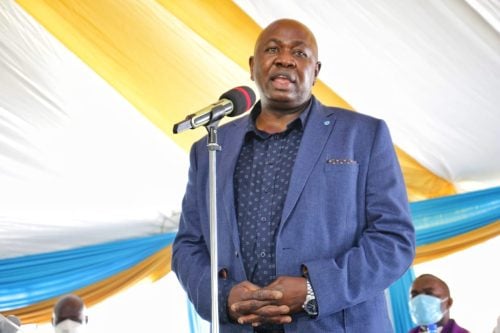
“The problem is William Ruto. Again, even that new spokesman, Charles Owino, what will he talk about? William Ruto comments on everything himself every day,” he added.
Gachagua pointed to the tenure of the outgoing spokesperson as evidence of a pattern in which official communicators are eclipsed by the president’s direct engagement with the media and the public.
He noted that even though he had personally recommended Mwaura for the post, the role quickly lost its utility due to presidential micro-management.
“That’s why you find Isaac Mwaura—I am the one who proposed him to that job—he is jobless because there is no opportunity for even a government spokesman to say anything on behalf of the government. The president himself comments on every topic, every day,” Gachagua stated.
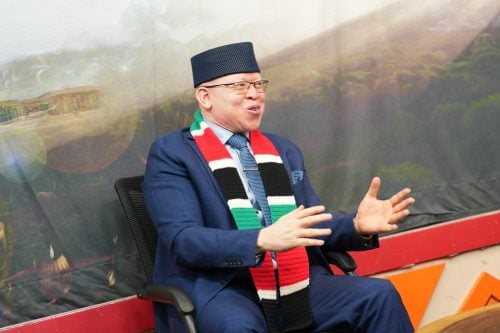
According to the former deputy president, this dynamic creates an impossible environment for any spokesperson, as officials risk publicly contradicting the head of state if he unexpectedly preempts an agreed-upon communications strategy.
“The government spokesman is careful because he might contradict him. Even when you are preparing a statement in office, he is out there and says something exactly opposite of what has been agreed on,” Gachagua added.
The restructuring of state communications is part of broader realignments within President Ruto’s administration aimed at streamlining government operations ahead of upcoming policy pushes.
Author
Martin Oduor
View all posts by Martin OduorLatest News




Advertisement
More on Inside Politics