Advertisement
LSK boycott: Faith Odhiambo demands judicial accountability
Wednesday 22nd July, 2026 03:37 PM|

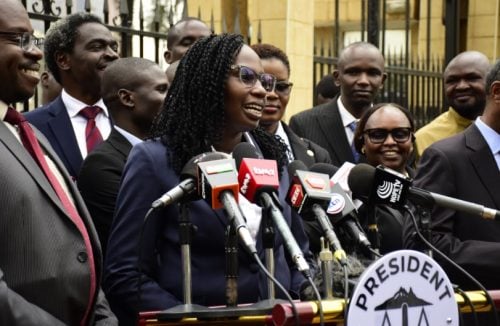
Former Law Society of Kenya (LSK) President Faith Odhiambo has called for greater judicial accountability, saying the Judiciary must uphold the Constitution and address integrity concerns raised through the proper channels.
Her remarks came as lawyers across Kenya staged a nationwide one-day boycott of court proceedings on Wednesday, July 22, 2026, in support of the LSK’s push for accountability within the Judiciary.
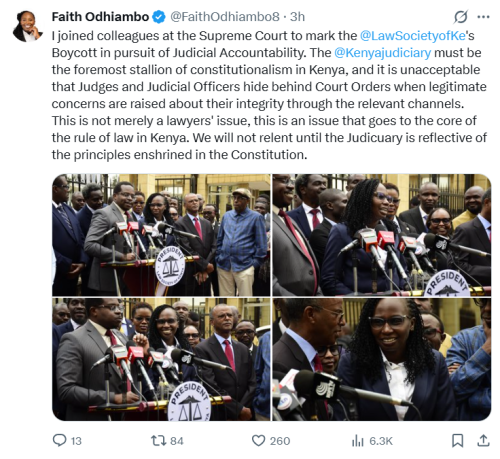
“I joined colleagues at the Supreme Court to mark the @LawSocietyofKe’s Boycott in pursuit of Judicial Accountability. The @Kenyajudiciary must be the foremost stallion of constitutionalism in Kenya, and it is unacceptable that Judges and Judicial Officers hide behind Court Orders when legitimate concerns are raised about their integrity through the relevant channels,” Odhiambo posted on X.
“This is not merely a lawyers’ issue; this is an issue that goes to the core of the rule of law in Kenya. We will not relent until the Judiciary is reflective of the principles enshrined in the Constitution.”
Boycott disrupts court proceedings
You Might Also Like
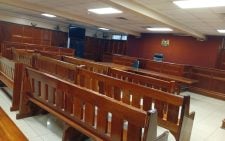
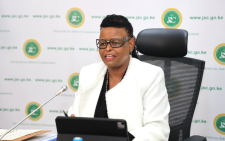

The boycott followed concerns raised by the legal profession over court orders obtained by some judicial officers that have prevented investigations by the Judicial Service Commission (JSC) and the Ethics and Anti-Corruption Commission (EACC).
LSK President Charles Kanjama directed advocates to withdraw services for the day and requested courts to adjourn all scheduled matters without adverse costs or attendance orders. He also urged courts to extend interim and conservatory orders automatically to safeguard the interests of litigants.
Several courts adjourned matters, including those before Justice Margaret Muigai. Among the affected cases was the murder trial of Ethiopian national Hashim Dagane Muhumed, who is charged with the killing of four women in October 2024.
The Milimani and Kibera High Courts’ online cause-list portals were also unavailable for part of the day, affecting public access to virtual court information.
Speaking to a local television station, Kanjama defended the boycott as a constitutional action.
“Lawyers are essential service providers, but that does not mean they cannot take industrial action,” he said. “That is why our boycott is for one day, because we also have to consider the interests of the Kenyans we serve.”
Judiciary responds
The Judiciary maintained that courts remained open despite the boycott and cautioned that the industrial action could inconvenience litigants with matters scheduled for hearing.
It also highlighted its digital services, encouraging court users to access the Judiciary mobile application, which enables users to file cases, verify court orders and judgments, access cause lists and virtual court links, track probate matters, check payment status and monitor case progress.
Chief Justice Martha Koome has previously said the Judiciary is prioritising digital transformation, expanding virtual hearings, strengthening Alternative Dispute Resolution mechanisms and reducing case backlogs.
Indefinite boycott planned
While Wednesday’s action lasted one day, the LSK has announced plans to begin an indefinite targeted boycott from Thursday, July 23.
The society said the action will focus on matters before 12 judges and one magistrate. Advocates appearing before those courts will seek adjournments, transfers or recusals until the orders shielding the judicial officers from accountability processes are lifted.
The boycott marks one of the most significant actions by the legal profession in recent years, with lawyers maintaining that accountability within the Judiciary is essential to strengthening public confidence in the justice system.
Author
Latest News



Advertisement
More on News