Advertisement
Executive is undermining Judiciary, MP James Gakuya says
Friday 03rd July, 2026 12:12 AM|

Embakasi North Member of Parliament James Mwangi Gakuya has accused the Executive arm of government of undermining the Judiciary by failing to implement court orders, warning that such actions threaten the rule of law and the country’s constitutional order.
Speaking during an interview aired on July 2, 2026, the legislator said persistent disregard for judicial decisions weakens public confidence in state institutions and erodes accountability across government.
Gakuya argued that Kenya’s Constitution establishes clear roles for the Executive, Legislature and Judiciary, with each expected to operate independently while respecting the authority of the others.
Gakuya added that the government has failed to respect the independence of other arms of government, saying this has undermined the implementation of court decisions.
You Might Also Like



“You realize that in fact we have a government which first and foremost doesn’t respect the other arms of government,” he said.
The MP said the Judiciary can only issue judgments, while their enforcement rests with the government through its agencies. He questioned whether court orders can be implemented if officers responsible for executing them are instructed otherwise.
“If that officer is being instructed from above not to implement that order, is that order going to be implemented? It means you have ignored the court,” Gakuya said.
He also said intelligence agencies have sufficient funding and capacity to gather information, but argued that failure to act on available intelligence remains a concern.
Ruto says government respects court rulings
Gakuya’s remarks came days after President William Ruto addressed members of the Judiciary during the swearing-in of 15 Court of Appeal judges at State House.
The President said some judicial decisions had affected the implementation of policies contained in the Kenya Kwanza manifesto, arguing that such rulings can influence programmes approved by voters and impact livelihoods.
Even so, Ruto maintained that disagreeing with court decisions should not be interpreted as defiance of the Judiciary.
“I want to give you my undertaking that this administration will not disregard any court ruling,” he said.
The President highlighted measures taken to strengthen the Judiciary, including increasing its budget from KSh18.8 billion to KSh26.9 billion and appointing additional judges to help reduce case backlogs. He noted that the Court of Appeal had more than 14,000 pending cases by December 2025 and called for faster, consistent delivery of justice.
Links concerns to youth disappearances
During the interview, Gakuya also raised concern over reported cases of youth disappearances, abductions and killings, saying the incidents reflected broader governance challenges.
“The manner in which you are repeating series of disappearance, killing, abduction of our youth… This is a clear indicator that we have no respect to our youth,” he said.
He added that government authority is derived from citizens through elections and should be exercised in response to public concerns.
“The government has been given custodianship by the people through the vote. When the people complain, you must listen to them.”
His remarks come amid continued political debate over security and accountability, with former Deputy President Rigathi Gachagua maintaining pressure on authorities over the January 25, 2026, attack on his motorcade in Othaya, Nyeri County.
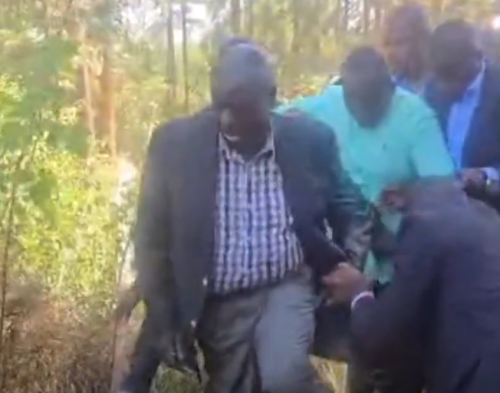
Opposition leaders have also continued calling for investigations into cited security excesses and enforcement of constitutional protections.
The relationship between the Executive and the Judiciary has remained a recurring subject in public discourse, with leaders expressing differing views on judicial independence, implementation of court decisions and the constitutional responsibilities of state institutions.
The debate continues as questions over governance, accountability and respect for the rule of law remain at the centre of Kenya’s political landscape.
Author
Latest News




Advertisement
More on Inside Politics