Advertisement
NG-CDF rolls out QR code to boost project tracking and accountability
Friday 03rd July, 2026 12:28 AM|
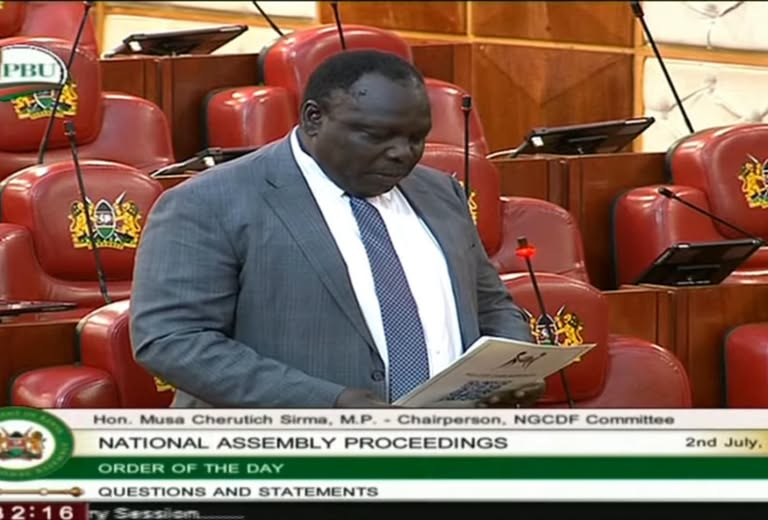
The National Government Constituencies Development Fund (NG-CDF) Board has introduced a Quick Response (QR) Code system to improve transparency and real-time monitoring of projects across the country’s 290 constituencies.
The initiative was tabled in Parliament on Thursday, July 2, 2026, by the Chairperson of the NG-CDF Committee, Musa Sirma Eldama Ravine, Member of Parliament (MP), alongside the Schedule of Budget Ceilings for the 2026/2027 Financial Year.
Sirma said the QR code system will strengthen accountability, close information gaps, and enable members of the public to monitor NG-CDF projects in their constituencies more easily.
Speaking after the tabling, NG-CDF Board Acting Chief Executive Officer Benjamin Magut described the system as a major step in improving service delivery.
You Might Also Like
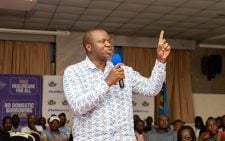


“The QR code is more than a piece of technology,” he said. “In embracing this QR code system, the NG-CDF Board is not just digitising a process; we are opening a door. A door through which accountability walks in, and bureaucracy walks out.”
Budget allocation for 2026/2027
The launch comes as the NG-CDF Committee presented the Fund’s budget ceilings for the 2026/2027 financial year.
The Fund has been allocated Ksh61,797,700,000, representing a 5.1 per cent increase from the previous allocation of Ksh58,797,000,000.
Out of the total allocation, Ksh3,089,885,000, equivalent to five per cent, has been earmarked for the Board’s administration and operations. The remaining Ksh58,707,815,000 will finance constituency development projects.
Each constituency will receive an equal allocation of Ksh151,830,556, amounting to Ksh44,030,861,250 nationally under the equal share component.
An additional Ksh14,676,953,750 has been set aside for the ward-based allocation, which will be distributed based on the number of wards in each constituency.
Sirma urged Members of Parliament to submit their project proposals for the 2026/2027 financial year by July 31, 2026, to facilitate timely implementation.
EACC raises concerns over misuse
The rollout of the QR code system comes months after the Ethics and Anti-Corruption Commission (EACC) warned NG-CDF fund managers and committee members against corruption in the management of constituency funds.
In March 2026, EACC Chief Executive Officer Abdi Mohamud, through the Commission’s Western Regional Manager, cited procurement fraud, proxy contracting, kickbacks, ghost projects, inflated project costs and bursaries awarded to non-existent students as some of the malpractices under investigation.
The Commission said it is investigating 67 cases involving alleged misuse of NG-CDF funds, including one case in which a single contractor is alleged to have irregularly secured 49 tenders worth more than Ksh66 million across 11 counties.
Under the new system, members of the public will be able to scan QR codes displayed at project sites to access information on project funding, implementation progress and completion status.
The NG-CDF Board says the initiative is intended to improve access to project information while enhancing transparency and accountability in the use of public funds at the constituency level.
Author
Latest News






Advertisement
More on Business