Advertisement
Steps to keep antibiotics effective for everyone amid rising drug resistance
Monday 24th November, 2025 07:33 PM|

Antibiotics remain one of the most important medical discoveries of the 20th century. Since their introduction, these medicines have saved millions of lives by treating bacterial infections that were once fatal.
However, the effectiveness of antibiotics is now under serious threat due to antimicrobial resistance (AMR).
When bacteria change over time and no longer respond to the medicines designed to kill them, standard treatments become ineffective, and infections persist or spread.”
According to the World Health Organization, “antimicrobial resistance is one of the top ten global public health threats facing humanity.
You Might Also Like


In 2019 alone, bacterial AMR was directly responsible for 1.27 million deaths worldwide, with an additional 4.95 million deaths associated with drug-resistant infections. The misuse and overuse of antibiotics accelerate the emergence of resistant bacteria, reducing treatment options for common infections such as pneumonia, tuberculosis, gonorrhoea, and salmonellosis.
To slow the development of resistance and preserve the power of existing antibiotics, the World Health Organization has outlined clear, evidence-based actions that everyone can follow.
The steps
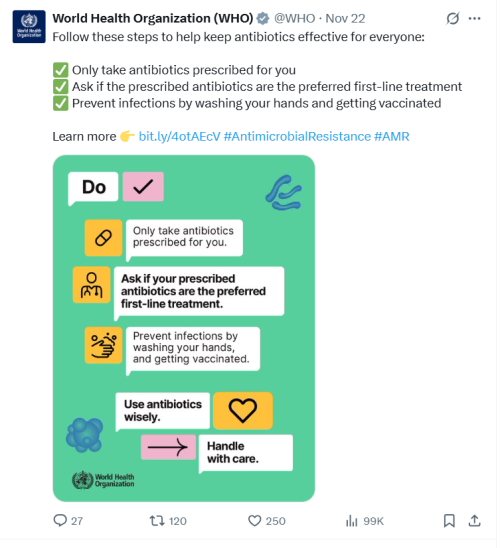
In a statement, WHO stated: Follow these steps to help keep antibiotics effective for everyone:
- Only take antibiotics prescribed for you
- Ask if the prescribed antibiotics are the preferred first-line treatment
- Prevent infections by washing your hands and getting vaccinated
Each of these steps addresses a specific driver of antibiotic resistance.
Understanding why proper use matters
Taking only antibiotics that have been prescribed specifically for you prevents unnecessary exposure of bacteria to these drugs. Antibiotics do not work against viral infections such as colds, most coughs, influenza, or COVID-19.
Yet in many settings, up to 30–50 per cent of antibiotic prescriptions are inappropriate or unnecessary. When antibiotics are taken without medical need, harmless bacteria in the body are exposed to the drug and may develop resistance.
These resistant bacteria can later cause infections that are harder to treat, or they can transfer resistance genes to disease-causing bacteria.
Asking whether the prescribed antibiotic is the preferred first-line treatment also strengthens responsible use. First-line antibiotics are those proven to be effective against the suspected bacteria while having the least impact on the broader microbial community.
Broad-spectrum antibiotics, while sometimes necessary, kill many types of bacteria indiscriminately, increasing the selective pressure that drives resistance. Guidelines from WHO and national health authorities recommend first-line treatments for most common infections.
Using them whenever clinically appropriate preserves the usefulness of broader-spectrum drugs for situations where they are truly needed.
Reducing infections to lower antibiotic demand
Preventing infections in the first place reduces the overall need for antibiotics. Regular handwashing with soap removes or kills bacteria and viruses on the skin before they can cause illness.
Vaccination stimulates the immune system to protect against specific bacterial diseases such as pneumococcal pneumonia, Haemophilus influenzae type b infections, typhoid fever, and pertussis.
Higher vaccination coverage directly lowers the incidence of these infections and therefore reduces antibiotic prescriptions. For example, the introduction of the pneumococcal conjugate vaccine has been shown to decrease antibiotic-resistant pneumococcal infections in multiple countries.
These three actions, taking antibiotics only when prescribed, favouring first-line treatments, and preventing infections through hygiene and vaccination, are practical, low-cost, and universally applicable. They form part of WHO’s Global Action Plan on Antimicrobial Resistance, adopted by all member states in 2015.
The plan emphasises that preserving antibiotic effectiveness is a shared responsibility that requires coordinated action across health sectors, agriculture, and the environment, but individual behaviour remains a critical component.
A call for shared responsibility
Data continue to show that countries and regions with stronger antibiotic stewardship programmes and higher public awareness have slower rates of resistance emergence.
Simple adherence to the three WHO recommendations can significantly extend the lifespan of current antibiotics while new drugs are developed, a process that takes years and faces scientific and economic challenges.
By following these evidence-based steps, every person contributes directly to maintaining antibiotics as a functioning tool for future generations. The message is clear: responsible use and infection prevention today protect treatment options tomorrow.
Author
Latest News








Advertisement
More on Lifestyle