Advertisement
Kenyans turn to social media for news as radio audiences decline – MCK report
Monday 04th May, 2026 05:05 PM|

Most Kenyans are increasingly turning to social media as their primary source of news, signalling a major shift in the country’s media landscape, a new report by the Media Council of Kenya (MCK) shows.
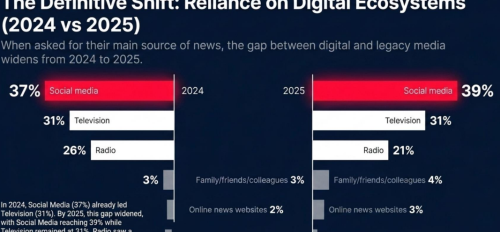
The State of the Media Report 2025, released on Monday, May 4, 2026, to mark World Press Freedom Day 2026, indicates that 39 per cent of Kenyans relied on social media platforms for news in 2025, making it the most dominant source of information.
Television followed at 31 per cent, while radio, once the country’s most influential medium, dropped to third place at 21 per cent. The findings reflect a steady decline in traditional media consumption, particularly radio, which stood at 26 per cent in 2024.
“Broader digital transformation reshaping how Kenyans access information, technological innovation and shifting patterns of information production, distribution and consumption are rapidly redefining the media ecosystem,” the report notes.
You Might Also Like



Other sources of news remain marginal. Only four per cent of respondents said they depended on family, friends and colleagues for updates, while three per cent used news websites, and just one per cent relied on newspapers.
The data also shows a dip in television viewership, which fell from 63 per cent in 2024 to 57 per cent in 2025, underscoring the growing dominance of digital platforms.
MCK say the shift raises concerns about the quality and credibility of information consumed online, especially as social media platforms are often prone to misinformation and unverified content.

The rise of Artificial Intelligence
At the same time, the report points to the rising influence of artificial intelligence (AI) in news consumption. About 34 per cent of Kenyans said they occasionally use AI platforms for news, while 27 per cent use them regularly.
However, 39 per cent reported never using AI tools for news.
Among those who use AI, nearly half (48 per cent) said it improved their news consumption experience, while 34 per cent observed no difference. A smaller segment, 12 per cent, reported negative experiences.
The MCK report situates these trends within a rapidly evolving digital environment, warning that emerging technologies are not only changing consumption habits but also posing new risks to journalism, including misinformation, deepfakes and declining trust in traditional media.
“Kenya’s regulatory framework recognises the rapidly evolving media ecosystem,” the report notes, adding that digital transformation is happening “at an unprecedented pace.”
However, MCK says that continued migration of audiences to digital platforms signals a turning point for the media industry, forcing legacy outlets to rethink their strategies to remain relevant in an increasingly online-driven information economy.
Author
Latest News








Advertisement
More on News