Advertisement
What UN relocation to Nairobi means for the city, real estate
Monday 21st July, 2025 05:40 AM|
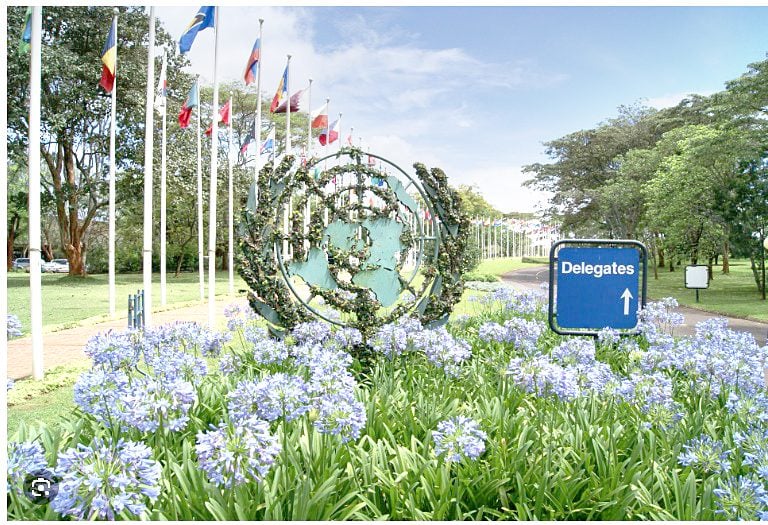
Nairobi’s real estate, hospitality, and education sectors are preparing for a once-in-a-generation boom as the United Nations accelerates plans to relocate more than 800 staff from its headquarters in New York and Geneva to its expansive compound in Gigiri.
The relocation, which forms part of UN Secretary-General António Guterres’ cost-cutting and modernisation initiative known as UN80, aims to reduce the organisation’s operating costs and bring its work closer to the regions it serves.
At least three major UN agencies— United Nations Population Fund (UNFPA), United Nations Children’s Fund (UNICEF), and UN Women—are already transitioning parts of their operations to the Kenyan capital.
“All secretariat entities in New York and Geneva have been asked to review their functions to determine if any can be performed from existing lower-cost locations,” said Guterres.
You Might Also Like



“This is about making the UN fit for purpose, for the challenges of today and the demands of tomorrow.”
With Nairobi now emerging as a critical hub for international development operations, the ripple effects are already being felt across key economic sectors.
Nairobi, which already commands some of the highest real estate prices in Africa, is witnessing renewed activity in the upmarket suburbs of Gigiri, Runda, and Muthaiga.
Real estate agents say inquiries and bookings from foreign families, expatriates, and international schools have increased sharply since the UN confirmed the move.
Nairobi’s housing market, while vibrant, has long been criticised for its mismatch between pricing and quality.
According to international property data, prime residential prices in Nairobi can exceed those in parts of Southeast Asia, despite lower per capita incomes.
For the cost of a one-bedroom in Gigiri, you can own a two-bedroom apartment in central Bangkok or Ho Chi Minh City, in Vietnam, according to data from Nomads.com.
Construction activity near the UN complex has picked up pace.
Developers are working around the clock to deliver new condominiums and office spaces, while government agencies have begun infrastructure upgrades, including road expansion, drainage, and fibre connectivity.
At one site in Rosslyn, a new block of 50 executive apartments is scheduled for completion by October.
High-yield leasing
“We fast-tracked approvals and broke ground within three weeks of the UN announcement,” said George Kariuki, project manager at UrbanCore Developments.
“This is not just a housing opportunity; it’s a gateway to high-yield leasing.”
Restaurants, cafes, and hotels in the diplomatic enclave of Gigiri are also expanding to cater for the expected influx of international staff and their families.
“This restaurant has doubled its number of seats from 200 to 400. We just finished these new gazebos two days ago,” said Mary Wanjiku, manager at Harvest Grill, a popular expat eatery opposite the Village Market.
“People from abroad are coming. We are receiving new faces almost every day.”
Hotels such as Tribe, Trademark, and Hemingways have all reported an uptick in long-stay bookings, some extending into next year.
Boutique hospitality firms are pivoting to offer furnished apartments and monthly packages tailored to UN staffers transitioning from New York or Geneva.
“We are seeing a strong demand for culturally sensitive experiences, secure environments, and family-friendly amenities,” said Jeremy Njoroge, general manager at Serene Living Suites.
The education sector is also getting a lift. International schools, including Rosslyn Academy, International School of Kenya (ISK), and German School Nairobi, have all confirmed new campus expansions or additional classrooms.
“Several families have already enrolled children mid-year, which is unusual,” said Angela Omollo, Director of Admissions at ISK.
“We are now exploring additional capacity for next year to meet expected demand from incoming UN families.”
A new international school, UN Scholars Academy, is also under development. The campus, located within walking distance of the UN compound, is designed to serve children of diplomats, aid workers, and NGO employees.
The Kenyan government has committed to supporting the relocation by improving physical and digital infrastructure around Gigiri and Runda.
Road works, improved security patrols, and upgraded water and sanitation facilities are already underway, with most expected to be completed by early 2026.
The Ministry of Foreign Affairs says the move is also expected to attract embassies, NGOs, and donor organisations to Nairobi, further cementing its role as a regional diplomatic hub.
Despite the optimism, there are concerns that the influx could worsen housing inequality in Nairobi, where many middle-income families are already priced out of prime neighbourhoods.
Affordable housing developers are urging the government to ensure inclusive planning.
There are also concerns about public safety and the country’s political stability, especially in the wake of recent demonstrations and civil unrest.
“Kenya is considered politically stable among African countries, but public safety is not as guaranteed as in developed countries,” said NHK correspondent Yuki Sugimoto in a recent report.
“The UN is taking this into account as it manages the transition.”
For the United Nations, the relocation is both a practical cost-saving measure and a strategic step closer to the regions most affected by poverty, war, and climate change.
Author
John Otini
View all posts by John OtiniLatest News








Advertisement
More on Business