Advertisement
Kenya Met lists areas to be hit hard by the ongoing rainfall
Thursday 05th March, 2026 07:05 PM|

The Kenya Meteorological Department has listed areas expected to receive more rainfall at the height of the ongoing rains in the Country.
In a statement issued on Thursday, March 5, 2026, the Met department announced that the hard-hitting rains are expected to stretch up to Monday, March 9,2026.
According to the weather forecast, the rains will hit the Lake Victoria Basin, Western, Central Highlands, including Nairobi, South East Lowlands and the Coastal region.
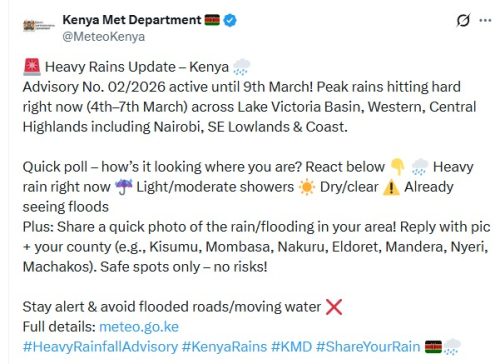
“Heavy Rains Update – Kenya Advisory No. 02/2026 active until 9th March! Peak rains hitting hard right now (4th–7th March) across Lake Victoria Basin, Western, Central Highlands including Nairobi, SE Lowlands & Coast,” Kenya Met said.
You Might Also Like
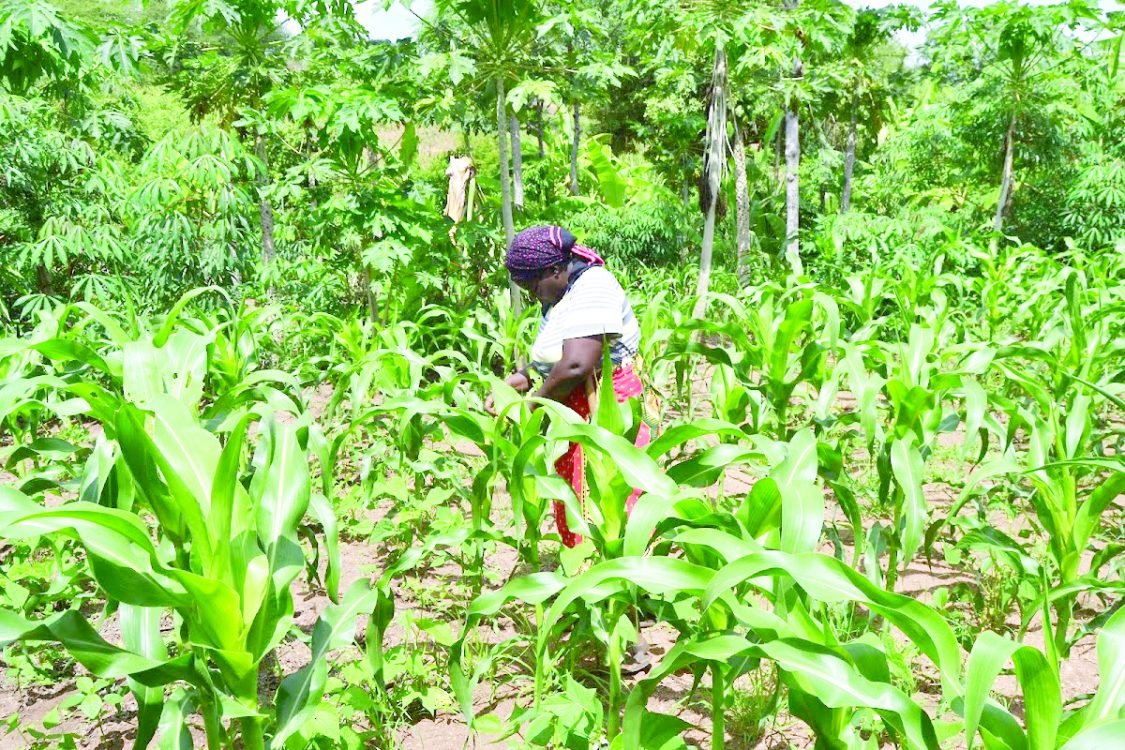
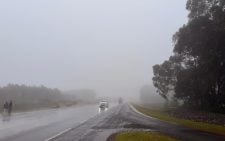

The Meteorological Department has further cautioned Kenyans against the heavy downpour while urging everyone to stay alert and avoid flooded roads as well as moving water.
Weather accuracy outcry
The announcement follows a report by the Kenya Meteorological Department, which has defended the accuracy of its weather forecasts, saying improvements in technology and coordination have significantly enhanced reliability and precision down to the ward level.
Speaking during an interview at a local TV station on Monday, March 2, 2026, the Kenya Meteorological Department Director, Edward Muriuki, said the agency’s forecasts are now more dependable and actionable than in previous years.
“Our forecasts are pretty accurate nowadays. They are reliable, they are useful, and they should be used,” Muriuki said.
He explained that forecasting begins at a broader regional level and is then refined locally.
According to him, meteorological experts from 11 countries in the Greater Horn of Africa first collaborated to develop regional forecasts. These are then localised at the national level before being further downscaled to counties and eventually wards.
“We used to be very general, but now we have gone down to ward level. From the county level, one is able to get what is expected even at the ward level,” he noted.
Muriuki said the move toward localised forecasting is part of a global push to strengthen early warning systems and better protect communities from hazardous weather events.
Author
Latest News







Advertisement
More on News