Advertisement
Controller of Budget raises alarm over gaps in Sovereign Wealth Fund Bill
Thursday 23rd April, 2026 07:44 AM|
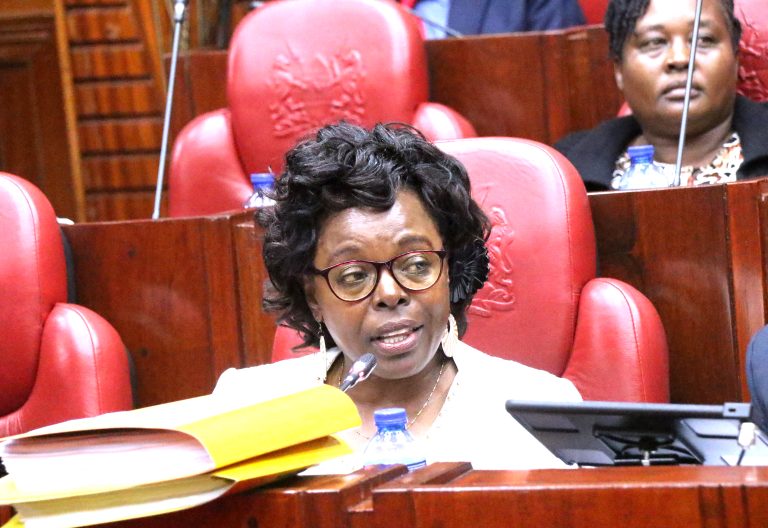
The Controller of Budget has raised serious concerns about the proposed Sovereign Wealth Fund Bill, 2026, warning that key gaps in the draft law could weaken oversight, undermine the Constitution and expose public funds to risk.
The Bill, currently before the National Assembly of Kenya, seeks to create a legal framework for managing proceeds from natural resources such as minerals and petroleum. It forms part of wider fiscal reforms under review by Parliament, including proposed amendments to the Public Finance Management Act.
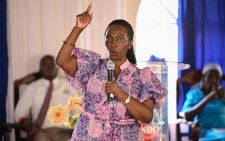
However, speaking on Wednesday, April 22, 2026, the Controller of Budget Margaret Nyakang’o said the draft law, as it stands, could allow the fund to operate outside the national budget framework.
“We observed that the clause is silent on the fund’s relationship with the consolidated fund and with the Controller of Budget’s authorisation powers,” she said.
You Might Also Like


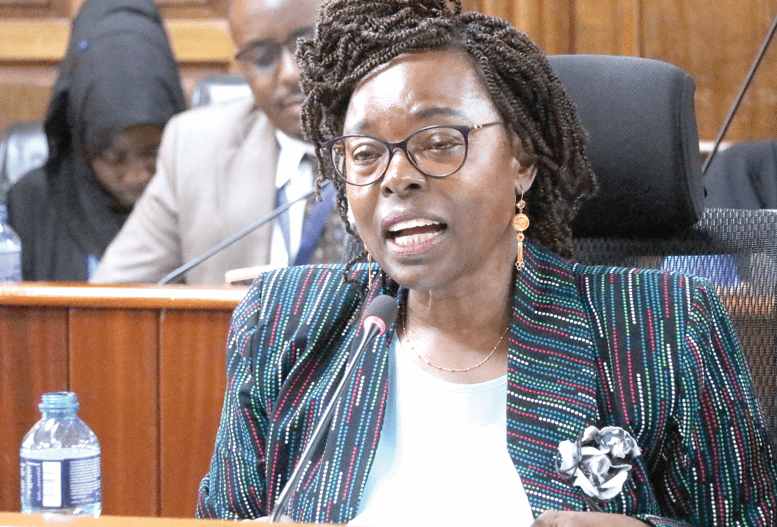
“The real risk here is that the fund will operate as a parallel financial architecture outside the national budget framework, which is unconstitutional.”
At the centre of the concerns is the lack of clarity on how money will flow between the proposed Sovereign Wealth Fund and the Consolidated Fund, which is the main account where all government revenue is paid.
Under Constitution of Kenya, specifically Article 206, all money raised by the national government must first be paid into the Consolidated Fund. The Controller of Budget warned that the Bill does not clearly enforce this requirement.
“This one prescribes the sources of revenue as mineral revenues, petrol revenues, and other monies allocated by the National Assembly,” she said. “However, the clause does not specify whether the revenues will flow through the consolidated fund before being credited to the sovereign wealth fund.”
She recommended that all revenues be paid into the Consolidated Fund first and only transferred to the Sovereign Wealth Fund through parliamentary approval.
“Our recommendation here is that all revenues must first be paid into the consolidated fund and then transferred to the sovereign wealth fund by parliamentary appropriation to be consistent with Article 206 of the Constitution,” she added.
The Controller of Budget also warned that the bill, in its current form, limits her office’s oversight role. She said there is no clear requirement for withdrawals from the fund to be approved by her office, which could weaken accountability.
“We are recommending that no withdrawal shall be made except under prior parliamentary appropriation. This would be consistent with Articles 206 and 228-4 of the Constitution. That every withdrawal must be expressly authorised in writing by the control of the budget before it is effected,” she said.
The issue of governance also featured strongly in her critique. She said the structure of the Sovereign Wealth Fund Board could expose it to executive influence.
“There is no provision for independent oversight representation at the board level,” she noted. “The appointment process lacks adequate safeguards against executive capture.”

Governance and investment concerns
To address this, she proposed the inclusion of an independent, non-voting observer at board meetings and called for all board appointments to go through a transparent and competitive process, subject to parliamentary approval.
She further recommended that the board should be accountable to Parliament through regular reporting, including implementation reports submitted via the Controller of Budget’s office.
Concerns were also raised about how the fund’s investments would be managed. The bill outlines general investment principles but, according to the Controller of Budget, leaves too much discretion to the board and the Cabinet Secretary.
“The mandate grants broad discretion to the board and the Cabinet Secretary,” she said. “The mineral and petroleum revenues are finite and non-renewable, which means that poor investment decisions are irreversible.”
She called for a statutory investment policy to guide the fund, with clear targets and regular reviews.
“We recommend that a statutory investment policy statement be approved by Parliament and reviewed every three years,” she said. “That performance shall be benchmarked against measurable publicly disclosed targets.”
She also proposed the creation of an independent advisory committee to oversee investment decisions and ensure compliance with the fund’s mandate.
One of the most significant concerns relates to withdrawals from the fund. The bill currently gives the Cabinet Secretary powers to approve withdrawals, a provision the Controller of Budget described as a major accountability gap.
“As currently drafted, the clause risks investing withdrawal authority in the Cabinet Secretary without adequate constitutional checks,” she said. “This is the most significant accountability gap in the entire bill.”
She proposed that withdrawals should only be made after parliamentary approval and with written authorisation from her office.
“That every withdrawal must be expressly authorised in writing by the Controller of Budget before it is effected,” she said.
In addition, she called for clear rules to limit how much money can be withdrawn each year in order to protect the fund’s long-term sustainability.
“That a statutory withdrawal rule must cap annual withdrawals as a percentage of the fund’s value,” she said, warning that any withdrawals beyond the set limit should attract legal consequences.
The concerns come as Parliament prepares to gather public views on the bill. The Finance and National Planning Committee has already invited stakeholders and members of the public to submit their input before the legislation is debated.
The proposed Sovereign Wealth Fund is designed to help Kenya turn natural resource revenues into long-term investments. It includes plans for a stabilisation fund to cushion the economy, an infrastructure fund to support development projects, and a future generations fund to save for the long term.
While the proposal has received support in principle, the Controller of Budget’s warnings highlight the need for stronger safeguards before the law is passed.
Her recommendations are likely to shape debate in Parliament, as lawmakers weigh the need to create a national savings mechanism against the risk of weakening financial oversight and constitutional controls.
Author
Kenneth Mwenda
Kenneth Mwenda is a business, sports, and politics digital writer with over seven years of experience in journalism, covering breaking news, feature stories, and in-depth analysis across a range of beats.
For inquiries, he can be reached at [email protected]
View all posts by Kenneth MwendaLatest News





Advertisement
More on News