Advertisement
Blow to Ruto as matatu union threatens strike over fuel talks exclusion
Thursday 28th May, 2026 07:25 AM|

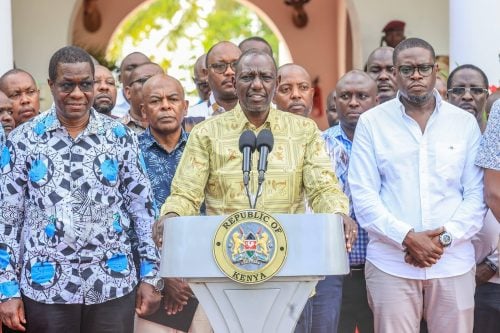
Days after President William Ruto held talks with matatu sector stakeholders in Mombasa to avert a looming transport crisis over soaring fuel prices, matatu drivers and conductors have now threatened to paralyse public transport operations nationwide, claiming they were excluded from the negotiations.
The Matatu Workers Union (MWU) and the Long Distance Drivers and Conductors Association (LODCA), in a press briefing on May 27, 2026, warned that workers would not return to normal operations unless their grievances are heard and addressed by both the government and matatu owners.
MWU Secretary General Maurice Oduor accused employers of ignoring the welfare of drivers and conductors despite the sharp rise in fuel and operational costs.
“Employers have decided that they will take their money. If a car was worth Ksh8,000, he would charge Ksh8,000 without knowing that the cost of fuel has gone up,” Oduor said.
You Might Also Like


The latest threat comes just days after a nationwide matatu strike was officially called off on May 22, 2026, following direct consultations between President Ruto and transport stakeholders at State House in Mombasa.
The talks resulted in a further Ksh10 reduction in diesel prices, bringing the cost down to Ksh232.86 per litre until the June pricing cycle.
Before the intervention, the Energy and Petroleum Regulatory Authority (EPRA) had announced diesel prices would retail at a historic high of Ksh242.92 per litre, significantly affecting public service vehicles that largely depend on diesel fuel.
Fuel crisis
Despite the reduction, industry players argue that the relief is insufficient, maintaining that a cut of at least Ksh46 per litre is necessary to cushion operators from rising operational expenses, including fuel and workers’ wages.
Matatu workers now say the biggest issue is that drivers and conductors were completely sidelined during the negotiations between the government and matatu owners.

Further, the workers complained that their earnings have remained stagnant despite the increasing cost of living and fuel prices, leaving many struggling to survive after long working hours.
Matatu workers also accused employers of striking a deal with the government behind their backs and ending the strike without considering the concerns of drivers and conductors.
“This is sad because they were the ones who agreed with the government to end the matatu strike without involving us,” Oduor said, adding that workers’ demands were never considered.
The development comes amid growing criticism over the handling of the fuel talks, with a section of the Motorists Association of Kenya (MAK) also raising concerns about being excluded from discussions with the government.
The association argued that those involved in the negotiations failed to secure an agreement that protects the interests of the majority of Kenyans who rely on public transport, as well as workers who keep the sector running.
In response, Nairobi Governor Johnson Sakaja, who serves as the guarantor of Matatu SACCOs within Nairobi County, pledged on May 19, 2026, to ensure that all stakeholders are included in future negotiations involving the government.
Author
Latest News






Advertisement
More on News