Advertisement
Debt interest is eating into development budgets in nearly three-quarters of developing countries, UN
Saturday 20th June, 2026 12:08 AM|

A United Nations (UN) report has warned that rising debt costs are crowding out spending on schools, hospitals and housing as Kenya allocates Ksh2.56 trillion to debt repayment.
Rising debt-servicing costs are increasingly consuming money meant for development across the developing world, with the UN warning that nearly three-quarters of developing countries are losing fiscal space as governments divert more resources to interest payments instead of public services.
The warning comes as Kenya unveiled a Ksh4.81 trillion budget for the 2026/27 financial year, with more than half of that amount, Ksh2.56 trillion, set aside for debt repayment and servicing obligations, leaving a financing gap of Ksh1.1 trillion.
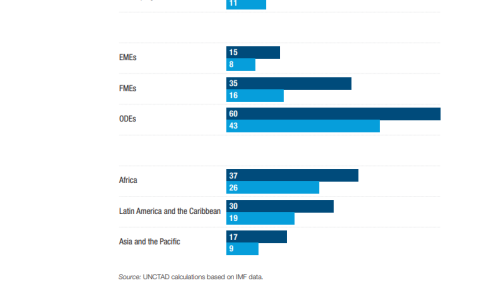
According to a report by the United Nations Conference on Trade and Development (UNCTAD), 73 per cent of developing countries experienced a decline in fiscal space between 2018 and 2024 as rising debt costs crowded out spending on development priorities.
You Might Also Like


“The need to devote an increasing share of government revenues to interest payments reduces fiscal space and crowds out other public spending, including that required to achieve the Sustainable Development Goals,” the report states.
The findings reveal a growing challenge facing governments across Africa, including Kenya, where competing demands for healthcare, education, affordable housing, agriculture and climate adaptation are increasingly colliding with rising debt obligations.
UNCTAD found that between 2014 and 2024, interest payments on government debt in developing countries increased by 102 per cent while government revenues rose by only 39 per cent.
The widening gap suggests governments are spending an increasingly large share of their income servicing debt rather than investing in economic growth and social programmes.
“Interest payments on public debt in developing countries increased 2.6 times faster than government revenues, indicating a deterioration in public sector debt sustainability,” the report says.
For Kenya, the warning comes at a time when public debt remains one of the largest expenditures in the national budget.
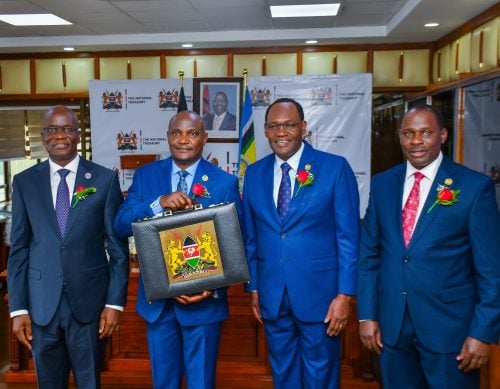
Treasury estimates show debt-related spending will consume Ksh2.56 trillion in the 2026/27 budget, an amount that exceeds allocations to key sectors such as education, healthcare, agriculture, affordable housing and climate resilience programmes combined.
The implications extend beyond accounting figures as every shilling directed towards debt repayments is money unavailable for hiring teachers, expanding hospitals, subsidising farm inputs, building affordable homes or investing in climate adaptation projects to protect communities from droughts and floods.
UNCTAD warns that this trend is becoming widespread across developing nations.
“Fiscal space declined in 73 per cent of developing countries between 2018 and 2024, constraining development spending,” the report notes.
Debt crisis
The report identifies rising global borrowing costs following the COVID-19 pandemic and subsequent interest rate hikes in advanced economies as key drivers of the problem.

Developing countries typically borrow at higher rates than wealthy nations because investors perceive them as riskier. As global rates increased between 2020 and 2024, debt-servicing costs rose sharply, placing additional pressure on government budgets.
The impact is particularly severe for African countries, many of which rely on external borrowing to finance infrastructure and development projects.
UNCTAD found that in 2024, interest costs on external public and publicly guaranteed debt accounted for a median of 59 per cent of all external interest payments made by developing countries.
The report warns that higher debt costs have both direct and indirect consequences for government finances.

“Changes in interest costs on external debt have a material and direct impact on the interest costs of government debt in these countries,” it says.
For Kenya, this means expensive external borrowing can translate into higher overall debt-servicing costs, reducing the government’s ability to finance development programmes without raising taxes or increasing borrowing further.
In a scenario where developing countries could borrow at the same rates as advanced economies, UNCTAD estimates they would collectively save the equivalent of more than KSh64 trillion annually in interest payments.
Those savings, the report says, could finance hundreds of thousands of schools, more than a million primary healthcare centres and major investments in renewable energy infrastructure.
“The differential in borrowing costs between developing and developed countries is not merely a financial statistic,” the report says.
“It represents a significant constraint on the fiscal capacity and development potential of developing countries that crowds out vital long-term public investment and threatens debt sustainability.”
As pressure mounts on public finances, the battle between servicing yesterday’s loans and funding tomorrow’s development is becoming one of the defining economic challenges facing Kenya and much of the developing world.
Author
Latest News




Advertisement
More on Business