Advertisement
MPs assure stakeholders of fair hearing on Finance Bill 2026
Tuesday 26th May, 2026 08:19 AM|

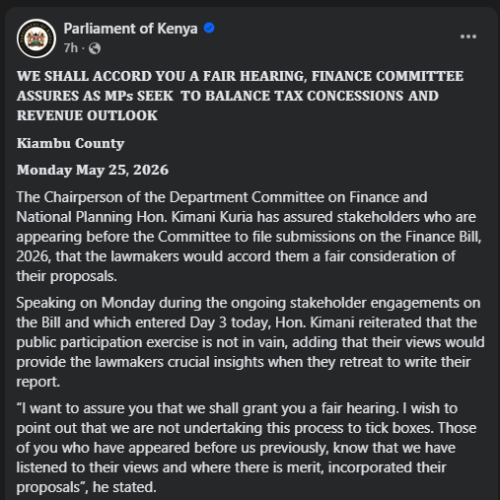
The National Assembly Finance and National Planning Committee has pledged to give stakeholders a fair hearing as it resumes public hearings on the Finance Bill, 2026, during its third day of hearings.
In a session held in Kiambu County on Monday, May 25, 2026, the chairperson of the committee, Kimani Kuria, reiterated that the process of engagement is not superficial, adding that all the suggestions raised will be taken into account in writing the report by the committee.
“We want to let you know that there will be a fair hearing; this is not about ticking boxes. Where there is a good proposal, we have always taken it up,” Kimani said.
Kuria also pointed out that the committee had already considered proposals from the National Treasury but warned against any misinformation about the bill. He said that some of the executive proposals have continued to be developed throughout the process.
You Might Also Like
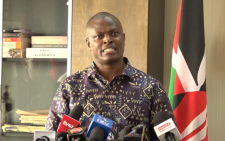
The committee also called on stakeholders seeking tax cuts to provide concrete solutions to fill the revenue gaps.
On his part, Homabay town Member of Parliament Peter Kaluma said that stakeholders have been swift in demanding the removal of some of the tax measures, but only a handful have proposed any viable options to address the budget deficit.
“Stakeholders are requesting that we remove sections from this Bill, but they need to let us know where the money will come from to pay government bills,” Kaluma said.
The members of the committee also noted that limited structured budget rationalisation proposals from stakeholders have been submitted to the process.
The Molo Member of Parliament further noted a difference in the discussion of revenue in the Finance Committee and expenditure in other committees within Parliament, arguing for the balance in prioritising expenditure and mobilising revenue.
Meanwhile, MPs David Mboni (Kitui Rural) and Julius Rutto (Kesses) emphasised the importance of supporting the government as well as the private sector, with Mboni pointing out that taxation should be balanced.
“Government must have the capacity to collect taxes to continue its programmes, and at the same time help keep businesses alive,” Rutto said.
Stakeholders’ plea
The talks followed a proposal by the Federation of Kenyan Employers (FKE) to review Pay As You Earn (PAYE), which it says could help boost disposable income for people and economic growth.
FKE estimates that the proposal could save a total of Ksh 28.1 billion for the salary earners, which could add to GDP by Ksh 42 billion, and provide up to 36,000 jobs per year, mostly in the SME sector.
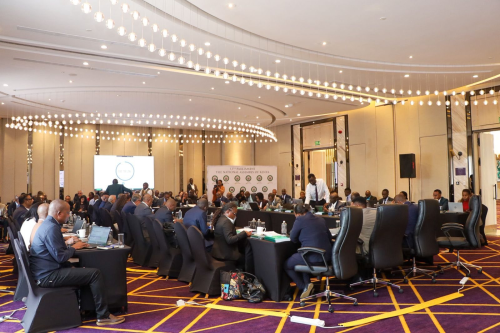
Other players, such as the Kenya Association of Manufacturers (KAM), had recommended giving tax breaks to certain materials in the manufacturing industry, including industrial sugar, resins and kraft paper. They also went against provisions suggesting a 60 per cent deemed dividend distribution, citing that it could put a strain on business cash flows.
KAM also suggested that the corporate tax rate be reduced from 30 per cent to 25 per cent to make Pakistan more competitive and foreign direct investment-friendly.
The Kenya Flower Council, Alcohol Beverages Association of Kenya, Kenya Association of Air Operators and Kenya Property Developers Association made similar submissions and recommendations to the committee about the various tax provisions in the bill.
Author
Latest News





Advertisement
More on News