Advertisement
If police disperse protesters with teargas, why not stone-throwing goons?
Sunday 05th July, 2026 06:25 AM|

The scenes witnessed in Keumbu, Kisii County, on Friday, July 3, 2026, have once again raised uncomfortable questions about how law enforcement responds to public disorder in Kenya.
As vehicles carrying Linda Mwananchi leaders came under attack from stone-throwing groups, this raises a question: if police can swiftly deploy teargas to disperse protesters, why are violent goons often allowed to operate in full view of security officers?
The question is not about politics. It is about consistency in the application of the law.
Equal enforcement of the law
Over the past year, Kenyans have repeatedly witnessed police using tear gas, water cannons, and other crowd-control measures to disperse demonstrations, including during the Gen Z protests. Security agencies have consistently argued that such action is necessary to maintain public order and protect lives.
You Might Also Like

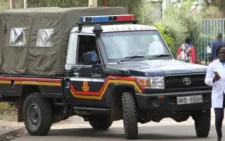

Yet in Kisii, videos circulating online appeared to show groups pelting moving vehicles with stones as police officers remained nearby. If those images accurately reflect what occurred, they raise legitimate concerns about whether the law is being enforced equally against all forms of violence.
The National Police Service has a constitutional duty to protect every Kenyan regardless of political affiliation. If individuals are attacking motorists or disrupting political meetings, they too should be dispersed, arrested and prosecuted.
Growing normalisation of goonism
Perhaps the greatest danger is that political goonism is increasingly becoming normalised. What was once considered criminal behaviour now risks being viewed as a routine feature of political competition.
Allowing armed or stone-throwing groups to intimidate rivals creates an atmosphere of fear that undermines constitutional rights, including the freedoms of assembly, association and political participation.
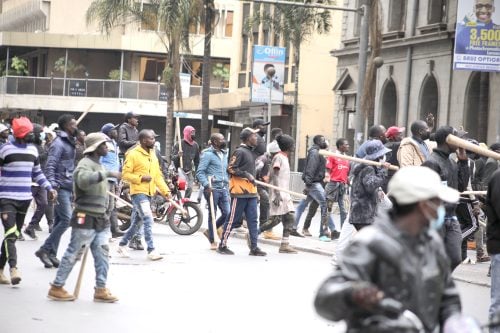
PHOTO/Bernard Malonza
Whether such groups are acting independently or at the behest of political actors, the response by law enforcement should remain the same: stop the violence first, investigate later.
Calls for accountability
The debate intensified after Nairobi Senator Edwin Sifuna condemned the attack on the Linda Mwananchi convoy, saying the incident threatened democratic space ahead of the 2027 General Election.
“Sisi tunataka siasa ambazo watu wanapata fursa ya kueneza sera zao bila kuumizwa,” Sifuna said while addressing mourners in Bungoma.
He further claimed that some police officers were among those involved in the attack.
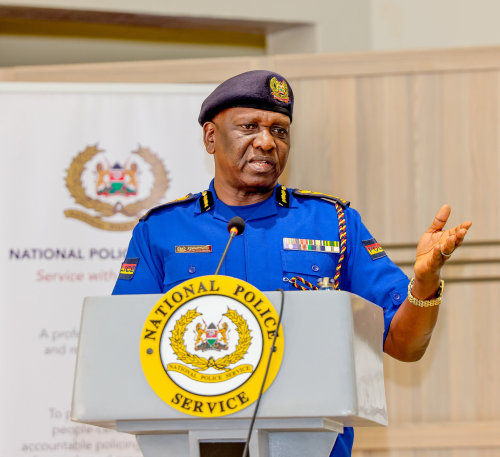
“Na kitu ambacho kinanivunja moyo, nimeona kulikuwa na maafisa wa polisi kwa hiyo group ambao walikuwa wanatupigia mawe,” he claimed, adding that he had forwarded video footage of the incident to Inspector General Douglas Kanja and called for investigations.
Whether or not those claims are substantiated, they underscore the need for an impartial inquiry. Public confidence in policing depends not only on maintaining order but also on being seen to enforce the law fairly and without political bias.
The same standard applied to protesters should apply to anyone throwing stones, damaging property or threatening lives. Violence should never be tolerated because of who is suspected of organising it or which side of the political divide it appears to support. Equal protection under the law remains one of the strongest foundations of a democratic society.
Author
Latest News








Advertisement
More on Insights