Advertisement
Why Ol Kalou by-election could decide whether Kenya is ready for peaceful 2027 elections
Saturday 04th July, 2026 11:27 PM|

The July 16, 2026, Ol Kalou parliamentary by-election is emerging as more than a contest between the Democracy for Citizens Party (DCP) and the United Democratic Alliance (UDA).
It is increasingly being viewed as an early measure of whether Kenya’s newly reconstituted Independent Electoral and Boundaries Commission (IEBC) can prevent electoral violence and enforce the law ahead of the 2027 General Election.
Reports of violence, intimidation and the destruction of campaign materials have placed both the IEBC and the National Cohesion and Integration Commission (NCIC) under renewed scrutiny, raising concerns that the political tensions witnessed in recent by-elections could become a warning sign for the next national polls.
Police in Nyandarua launched a manhunt on Thursday night for a former Member of County Assembly (MCA) and a county assembly official following overnight unrest in Ol Kalou. Campaign materials belonging to both DCP and UDA candidates were also reported to have been vandalised, prompting security agencies to order that all political rallies end by 6 p.m.
You Might Also Like



Nyandarua County Commissioner Abdirisak Jaldesa warned that authorities would not tolerate political violence or intimidation during the campaign period.

“We have seen in the last few days incidents involving the destruction of government property and threats. We will not allow people, either verbally or physically, to threaten others. Everyone has the right to campaign without being disturbed,” Jaldesa said.
He also accused rival political camps of targeting hotels and businesses perceived to be accommodating their opponents.
“There has been intolerance where parties bring groups to intimidate opponents. We will not allow it,” he added.
The unrest came just a day after DCP leader Rigathi Gachagua and Interior Cabinet Secretary Kipchumba Murkomen traded accusations over reports of chaos and gunshots near a hotel where DCP members were meeting. Gachagua claimed security officers and state-backed groups disrupted party activities, allegations that Murkomen dismissed while cautioning politicians against incitement during campaigns.
Goonism
“Our teams are held up at the Royal Garden Hotel under brutal police and state-sponsored militia. Goons are currently breaking into the hotel,” Gachagua wrote on X.
The incidents have revived a national conversation about whether Kenya’s electoral institutions are prepared to guarantee peaceful elections in 2027.
For the IEBC, the Ol Kalou contest is among the first significant political tests since the appointment of Chairperson Erastus Ethekon and the new commission. Beyond conducting a credible vote, the commission faces growing pressure to demonstrate that it can uphold the Electoral Code of Conduct and curb the violence that has repeatedly disrupted Kenyan elections.
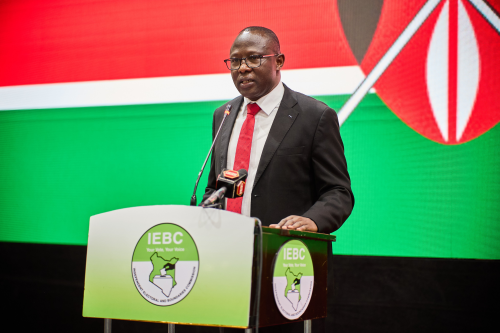
Speaking during the launch of the IEBC Strategic Plan 2025–2029 and the Election Operations Plan 2025–2027, Ethekon admitted that violence and the influence of money remain major threats to credible elections.
“Fresh from wherever we came from, we were confronted with the challenge of conducting 30 by-elections, and we have learnt something, and that something is sad. The relationship between our politics, violence and money is making our work difficult as IEBC,” Ethekon said.
“There is this inclination for politicians to bring in young people, arm them with crude weapons, and feed them during that season to protect their votes. I don’t know from whom.”
His remarks come amid concerns that electoral violence remains deeply rooted despite existing laws designed to promote peaceful political competition.
Ethekon warned that successful election planning alone would not guarantee credible polls if violence continued to dominate campaigns.
IEBC’s 2027 acid test
“We can plan everything, this strategic plan can speak of beautiful things, but if the environment within which we hold elections is intoxicated, violent and unbearable, we cannot have an election,” he said.
The Chief Justice, Martha Koome, also challenged the IEBC to fully utilise the legal powers already available to it.
“The Supreme Court in the landmark IEBC versus Sabina Chege (2023) has already affirmed the Commission’s authority to enforce compliance with the Electoral Code of Conduct, and Kenyans rightly expect accountability for all electoral actors,” she said.
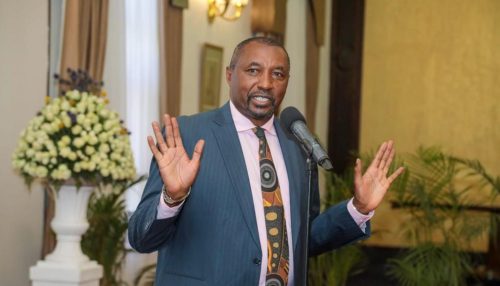
Her remarks highlight growing expectations that the commission should move beyond organising elections and actively sanction candidates or political parties that violate campaign rules.
Former Bahati MP Kimani Ngunjiri also warned that escalating tensions in Ol Kalou could have deadly consequences if political leaders failed to exercise restraint.
“From what I am hearing, we risk shedding blood in Ol Kalou,” Ngunjiri said.
“I hear there are people who are having their uniforms tailored in Nairobi and then to be taken there for vote rigging just for one seat. Why don’t you let it go to whichever side wins?” he claimed.
He urged politicians to prioritise the safety and welfare of residents over political competition.
“It must not shed blood. Was I the president, I would let it go. And now all that effort and money that is being pumped there in the name of empowerment, how I wish it were directed to hospitals? If you buy drugs for people, you would even become more popular than doing these empowerment initiatives,” Ngunjiri said.
As campaigning intensifies, the Ol Kalou by-election has become more than a race for a parliamentary seat. The conduct of candidates, political parties, security agencies and electoral institutions is likely to shape public confidence in Kenya’s readiness for peaceful, credible and violence-free elections in 2027.
Author
Latest News


Advertisement
More on Inside Politics