Advertisement
Media mogul convicted faces possible life sentence after conviction on security and sedition charges
Monday 15th December, 2025 02:52 PM|

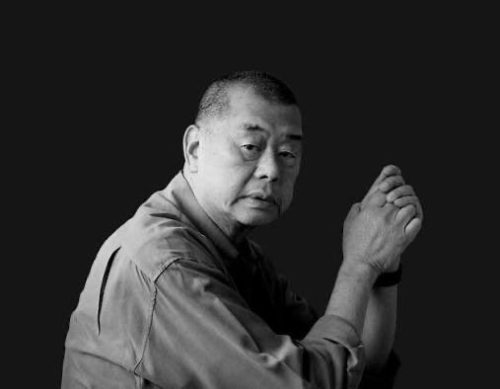
Former Hong Kong media tycoon Jimmy Lai has been found guilty on two national security charges and a lesser sedition charge, in a landmark two-year trial widely viewed as a measure of the city’s shrinking freedoms under Beijing’s rule.
Self-made billionaire Lai, 78, is one of the highest-profile critics of Beijing charged under a sweeping security law imposed on the semi-autonomous city in 2020 following months of huge and sometimes violent pro-democracy protests.
He founded Apple Daily, a fiercely pro-democracy tabloid newspaper known for its blistering broadsides against the Chinese Communist Party, until its forced closure in 2021.
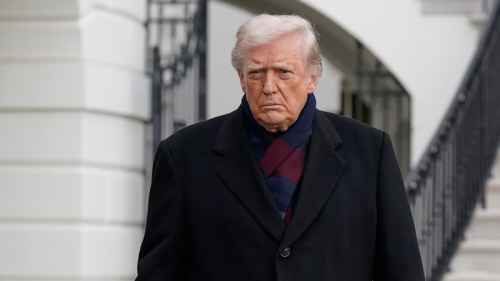
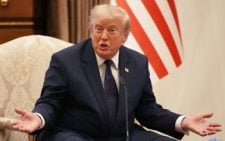
Lai had pleaded not guilty to all charges and now faces possible life in prison. Monday’s verdict marks the end of a tumultuous legal saga that has drawn condemnation from supporters and foreign leaders around the world, including US President Donald Trump, who had once vowed to “get him out.”
You Might Also Like
The imposition of the national security law has transformed Hong Kong, with authorities jailing dozens of political opponents, forcing civil society groups and outspoken media outlets to disband, and reshaping the once freewheeling city into one ruled by “patriots only.”
Hong Kong and China’s leaders say the law has “restored stability” following the 2019 protests.
Lai is a British citizen, and the UK government has previously called for his release. At a news conference in London on Monday, Lai’s son Sebastian said he was “heartbroken” about his father’s condition and called on the UK government to do more to secure his freedom.
“Now it’s time to put action behind words and make my father’s release a precondition to closer relationships with China,” Lai said.
“Because how can you expect a fruitful relationship if they can’t even put a 70-year-old man, who’s in such ill health, on a plane and send him back home here in the UK, where he belongs?”
‘Mastermind’ of conspiracies
In delivering their verdict, judges said there was “no doubt that (Lai) had harboured his resentment and hatred of the PRC (People’s Republic of China) for many of his adult years.”
They pointed to Lai’s lobbying of US politicians during Trump’s first term, much of it before the security law was enacted, as evidence of sedition and collusion with foreign forces, including his meetings with then–Vice President Mike Pence, then–Secretary of State Mike Pompeo, and attempts to meet Trump himself.
They also cited his WhatsApp messages with other pro-democracy activists and Apple Daily leaders, as well as a New York Times opinion piece he wrote in May 2020 in which he suggested ways to punish China for its repression of Hong Kong, such as revoking student visas for the children of government officials.
His urging of US officials to take action against China in the name of helping the Hong Kong public “would be analogous to the situation where an American national asks for help from Russia to bring down the US government under the guise of helping the State of California,” the judges said in their ruling.
“We are satisfied that (Lai) was the mastermind of the conspiracies” laid out in all three charges, they concluded. They added that the evidence showed Lai’s “only intent … was to seek the downfall of the (Chinese Communist Party).”
The judges said they would announce the date of his sentencing at a later time. Collusion is punishable by life imprisonment under the security law.
The judges had earlier warned everyone inside the courtroom to maintain “absolute silence” as the verdict was read out.
Lai appeared calm throughout, greeting his wife and son with a wave at the start. He did not respond when the verdict was delivered, but removed his glasses and wiped his face before being led out of the courtroom.
Throughout the trial, prosecutors accused Lai of using Apple Daily to call for sanctions against Hong Kong and China during the 2019 protests and after the national security law was introduced.
He was arrested under the law in late 2020 and has spent more than 1,800 days in a maximum-security prison, much of it in solitary confinement. In 2022, he was sentenced to five years and nine months in prison on unrelated fraud charges.
Lai’s supporters, many of whom stood in line overnight to secure seats inside the courtroom, expressed dismay but not surprise at the verdict, with many saying they no longer had faith in Hong Kong’s judicial system.
“I’ve got no anticipation that Jimmy Lai will be released,” one woman told CNN, describing the city’s transformation as “too sad.”
Another supporter said he had also held no hope for Lai’s release and described feeling numb to Beijing’s crackdown on the city. But, he added, “We’re still here … You can’t really arrest us all.”
Both supporters asked not to be named.
From poor labourer to pro-democracy tycoon
Lai was born in mainland China and arrived in British-ruled Hong Kong at age 12, working his way up from factory labourer to clothing tycoon.
He later pivoted to media, founding Apple Daily in 1995, two years before Hong Kong was handed over to China. The outspoken publisher and his newspaper were at the forefront of the city’s pro-democracy movement.
A vocal supporter of Trump, Lai travelled to Washington at the height of the 2019 protests, meeting with Pence and other US politicians to discuss the situation.
At the time, massive demonstrations sparked by controversial legislation drew hundreds of thousands onto the streets, many of whom feared Beijing was encroaching on the city’s autonomy and rare freedoms of speech, press, and assembly.
In an interview with CNN in 2020, weeks before his arrest, Lai addressed Trump directly, saying: “Mr. President, you’re the only one who can save us. If you save us, you can stop China’s aggressions. You can also save the world.”
Taking the stand in his own defence, Lai said he had never spoken with Trump.
Trump raised Lai’s case when he met Chinese leader Xi Jinping in South Korea in October, an administration official told CNN. The official added that Trump believes Lai should be released and wants to see that happen.
Hong Kong, a former British colony that returned to Chinese rule in 1997, has a judicial system separate from that of mainland China.
Both the Chinese Embassy in Washington and the Hong Kong government have warned against “external forces” interfering in internal affairs and the judicial process.
Following Lai’s conviction, China’s foreign ministry said the central government “firmly supports (Hong Kong) in safeguarding national security and punishing crimes endangering national security in accordance with the law.”
In a separate statement on Friday responding to a US congressional committee report criticizing Lai’s imprisonment and treatment, the Hong Kong government accused US officials of attempting to “interfere with the judicial proceedings in (Hong Kong) by means of political power in order to procure a defendant’s evasion of the criminal justice process.”
Critics fear the national security law has imported Beijing’s authoritarian and opaque judicial norms into Hong Kong, with all such trials heard by panels of specially selected judges rather than juries—a departure from the city’s common-law tradition.
Health concerns
The final stretch of the trial was marked by concerns over Lai’s health. His lawyers told the court he had been experiencing palpitations and episodes of light-headedness. His son Sebastien said he was deeply concerned about his father’s deteriorating health, citing his age and diabetes.
In an opinion piece published in The Washington Post last Tuesday, his daughter Claire wrote that “solitary confinement is taking its toll on his body,” adding that the family had little knowledge of what medical care he was receiving, as no outside physicians were allowed to examine him.
In its statement on Friday, the Hong Kong government said Lai had received “adequate and comprehensive” medical care while in custody, with the prison arranging “daily medical checkups.” It added that there had been “no complaints at all regarding the medical services he was receiving.”
The government also said Lai had been placed in solitary confinement “at his own request.”
Author
Latest News
Advertisement
More on News