Advertisement
Lawyer Willis Otieno says Gachagua impeachment case is far from over
Tuesday 09th June, 2026 06:53 AM|

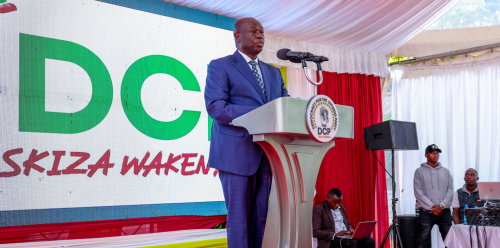
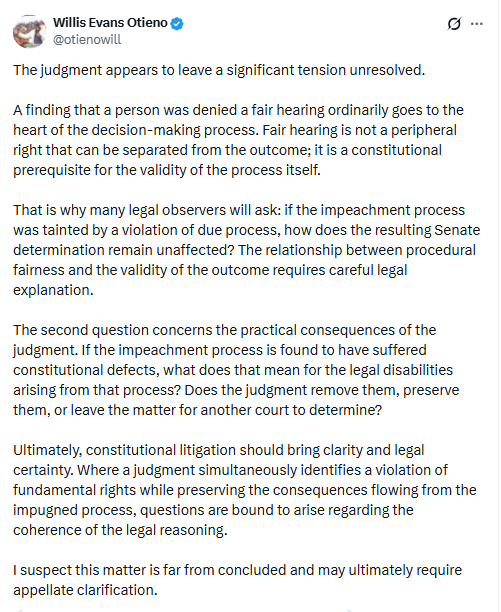
Lawyer Willis Otieno has raised major constitutional questions following the High Court judgement on former Deputy President Rigathi Gachagua’s impeachment case, arguing that the ruling leaves unresolved legal contradictions that are likely to trigger further appeals.
Taking to his official X account on Tuesday, June 9, 2026, Otieno questioned how the court could acknowledge violations of fair hearing and due process while, at the same time, preserving the validity of the Senate’s impeachment decision.
“The judgement appears to leave a significant tension unresolved,” Otieno stated.
According to the Safina deputy party leader, the right to a fair hearing is a central constitutional principle that directly affects the legitimacy of any legal or quasi-judicial process.
You Might Also Like

“A finding that a person was denied a fair hearing ordinarily goes to the heart of the decision-making process. Fair hearing is not a peripheral right that can be separated from the outcome; it is a constitutional prerequisite for the validity of the process itself,” he explained.
Otieno argued that many legal observers would naturally question how an impeachment process found to contain procedural flaws could still produce a legally sustainable outcome.
“That is why many legal observers will ask: if the impeachment process was tainted by a violation of due process, how does the resulting Senate determination remain unaffected?” he posed.
Legal consequences
He further noted that the judgement leaves uncertainty regarding the legal consequences flowing from the impeachment process, especially if constitutional defects were identified during the proceedings.
“The second question concerns the practical consequences of the judgement. If the impeachment process is found to have suffered constitutional defects, what does that mean for the legal disabilities arising from that process?” he asked.
Otieno maintained that constitutional litigation should ideally provide clarity and consistency, warning that conflicting findings within the judgement could generate more legal disputes instead of settling them.
“Ultimately, constitutional litigation should bring clarity and legal certainty. Where a judgment simultaneously identifies a violation of fundamental rights while preserving the consequences flowing from the impugned process, questions are bound to arise regarding the coherence of the legal reasoning,” he stated.
The lawyer suggested that the matter is likely headed for appellate review, potentially culminating in a Supreme Court interpretation of the constitutional issues involved.
“I suspect this matter is far from concluded and may ultimately require appellate clarification,” he observed.
Otieno also highlighted the difficult balancing act facing courts in politically sensitive constitutional disputes, particularly when separating personal rights violations from institutional decisions.
“The difficult legal question is where to draw the line. If the violation was serious enough to justify a KSh 50 million award, some will argue it should also have affected the impeachment’s validity. Others will argue that the court was entitled to separate the personal injury caused by the rights breach from the institutional validity of the Senate’s decision,” he added.
The High Court ruling on Gachagua’s impeachment has continued to spark intense legal and political debate, with analysts suggesting the case could significantly shape future interpretations of impeachment law, parliamentary accountability, and constitutional due process in Kenya.
Gachagua impeachment case ruling
The High Court on Monday, June 8, 2026, upheld the impeachment of Gachagua but awarded him Ksh50 million in damages, finding that senators violated his right to a fair hearing during the proceedings.
In a judgement delivered at night, the court ruled that while the impeachment itself met the constitutional threshold and would stand, aspects of the process fell short of fair trial standards guaranteed under the Constitution.
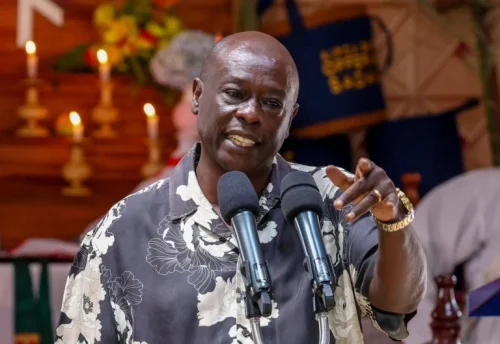
The bench found that members of the Senate proceeded with hearings despite requests for an adjournment on medical grounds, concluding that the refusal to pause proceedings amounted to a violation of Gachagua’s right to a fair hearing.
The court said that although Parliament has broad constitutional authority to oversee and remove state officers, that power must be exercised in accordance with due process protections, including the right of an accused official to participate adequately in proceedings affecting their office and rights.
Gachagua to appeal the impeachment case judgement
Gachagua’s camp is expected to continue pursuing legal remedies as the matter advances through the appellate process.
Kirinyaga Woman Representative and lawyer Njeri Maina described the High Court’s decision to uphold the impeachment of Gachagua as “gravely disappointing”, saying the legal team will challenge the judgement at the Court of Appeal.
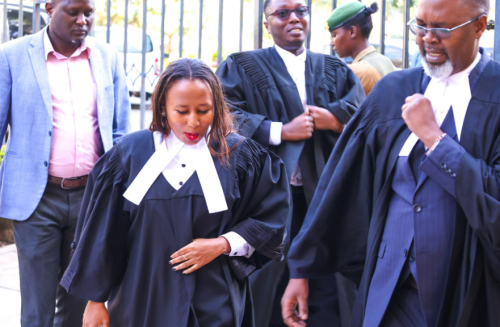
Speaking to journalists outside Milimani Law Courts shortly after the ruling on Monday, June 8, 2026, Maina said Gachagua had accepted the outcome peacefully and urged his supporters to remain calm as the legal process continues.
“He’s a peace-loving Kenyan,” she said. “He has called upon all his supporters to take whatever outcome of today’s judgment, knowing that we shall proceed to the Court of Appeal and maintain peace and order so that we can give our institutions sufficient time to interrogate this judgment today.”
The ruling was delivered by a three-judge bench comprising Justices Eric Ogola, Anthony Mrima and Freda Mugambi.
Author
Mustafa Juma
View all posts by Mustafa JumaLatest News







Advertisement
More on News