Advertisement
How Kenya plans to stop disasters from becoming debt crises- report
Tuesday 21st July, 2026 10:52 PM|
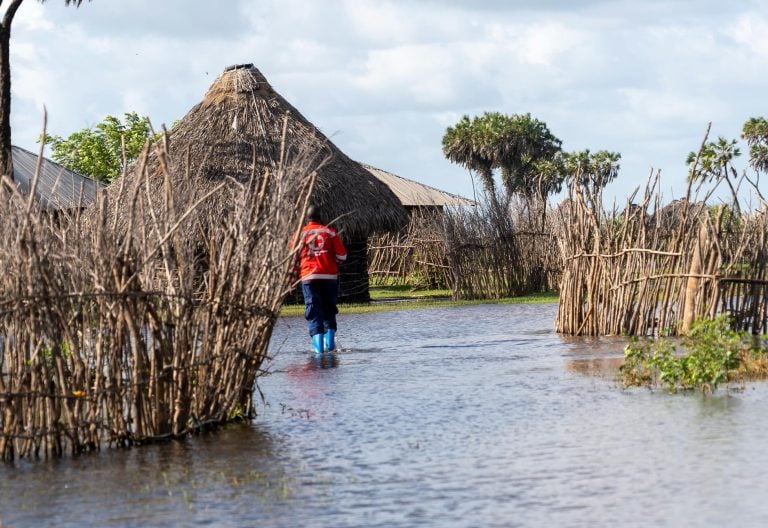
Kenya is quietly embarking on one of its most ambitious public finance reforms in years, not by raising taxes or cutting spending, but by changing how it pays for disasters.
For decades, floods, droughts and other natural disasters have largely been treated as humanitarian emergencies requiring emergency appeals, supplementary budgets and donor assistance. But the National Treasury now says that approach is no longer sustainable as climate shocks become more frequent, more destructive and increasingly expensive.
Instead, the government wants to stop disasters from becoming debt crises.
The shift is outlined in the newly unveiled Disaster Risk Financing Strategy 2026-2030, which reframes disasters not simply as environmental or humanitarian events but as major fiscal shocks capable of derailing economic growth, straining public finances and reversing development gains.
You Might Also Like


“Disasters continue to jeopardise the lives and livelihoods of people, national and county development, and economic stability,” Treasury Cabinet Secretary John Mbadi says in the strategy’s foreword.
According to the Treasury, the October-December 2023 and March-May 2024 floods caused an estimated Ksh187.82 billion in damages and economic losses, placing additional pressure on government finances already stretched by rising public debt and slowing external support.
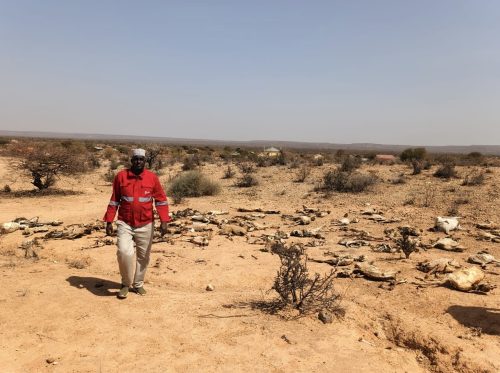
The report argues that Kenya’s vulnerability extends far beyond flood-prone communities. More than 30 per cent of the country’s Gross Domestic Product (GDP) and over 40 per cent of employment depend on climate-sensitive sectors, particularly agriculture, meaning every major drought or flood has economy-wide consequences.
“Kenya’s economic growth has historically exhibited pronounced sensitivity to major disaster events, particularly droughts, floods, pest infestation and epidemics,” the strategy states.
F/X
Financing problem
The Treasury acknowledges that Kenya’s traditional financing model has largely been reactive, with disaster response depending on supplementary budgets, emergency reallocations and humanitarian assistance after crises occur.
“Financing for disasters is mainly reactive, significantly relying on ex-post budget reallocations, supplementary budgets and humanitarian assistance,” the document says.
That approach, the Treasury argues, delays response efforts, disrupts government spending plans and increases fiscal pressure at a time when disasters are becoming more frequent because of climate change.
The strategy therefore proposes a fundamental shift towards pre-arranged disaster financing, ensuring that resources are available before disasters strike rather than scrambling to mobilise funding afterwards.
Instead of relying almost exclusively on emergency relief, Kenya intends to build a layered financing system combining risk reduction, risk retention and risk transfer.
That means investing more in disaster prevention, strengthening contingency funds, expanding sovereign and agricultural insurance, exploring catastrophe bonds and increasing access to contingent financing that can be rapidly deployed during emergencies.
The strategy also seeks to strengthen county governments, recognising that counties are often the first responders when disasters occur but frequently lack predictable financing for emergency response and recovery.

Sustainable disaster management
The Treasury says integrating disaster risk financing into county planning and budgeting will improve response times while reducing pressure on the national government.
The reforms come at a time when Kenya faces growing fiscal constraints and declining external support.
The strategy notes that Official Development Assistance (ODA) declined by 23.1 per cent in 2025, the sharpest annual drop on record, limiting resources available for disaster response and climate adaptation.
“This creates an urgent need to identify new and innovative sources of public and private finance to support financial resilience in Kenya,” the Treasury says.
The document points to insurance markets, resilience lending, blended finance, guarantees and private-sector investment as critical components of the country’s future disaster financing framework.

Beyond protecting infrastructure and livelihoods, the strategy is designed to safeguard Kenya’s broader economic development.
Repeated disasters not only destroy roads, schools and farms but also force governments to divert scarce resources away from education, healthcare and development projects to finance emergency response and reconstruction.
By reducing those unexpected fiscal shocks, the Treasury believes Kenya can strengthen economic resilience while protecting vulnerable households from falling deeper into poverty after disasters.
The strategy also aligns disaster financing with broader climate adaptation, social protection and public financial management reforms, signalling a shift towards treating resilience as an investment rather than a cost.
As climate change accelerates across Africa and governments struggle with rising debt burdens and shrinking donor assistance, Kenya’s approach could become a model for other countries facing similar fiscal pressures.
The Treasury’s message is that disasters should no longer be viewed as isolated emergencies. They are recurring economic shocks capable of triggering budget deficits, increasing borrowing and slowing development.
By moving away from emergency appeals towards pre-arranged financing, insurance and better risk management, Kenya is attempting something much bigger than improving disaster response—it is trying to ensure that the next flood or drought does not become the next debt crisis.
Author
Latest News





Advertisement
More on Business