Advertisement
Fears of fresh chaos, anxiety as Kenya marks June 25 protest anniversary
Tuesday 24th June, 2025 01:00 AM|
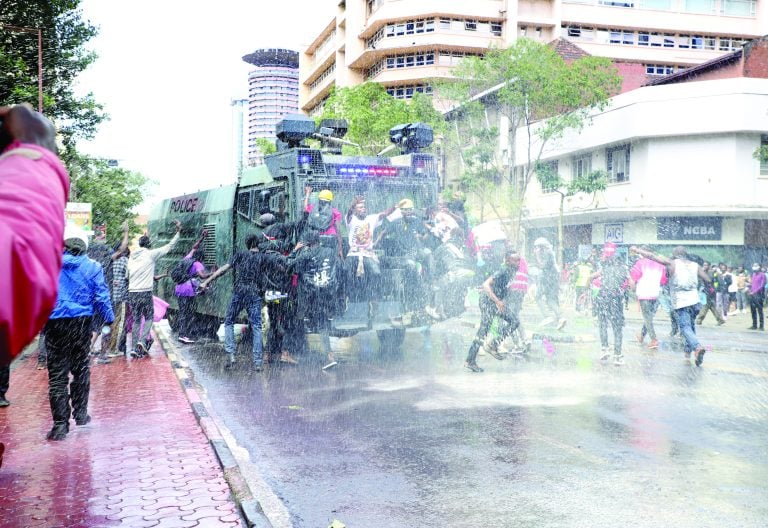
Fear and uncertainty have rocked the country as human rights activists and Gen Zs plan to mark one one-year anniversary since last year’s protests that culminated in an invasion of Parliament.
The demonstrations left scores of people dead and property destroyed.
A number of businessmen and matatu operators interviewed in Nairobi on June 23, 2025, said they were monitoring the situation and would likely not operate tomorrow to avoid being caught up in chaos.
Some schools have sent learners home for half-term in fear of skirmishes. Other affected businesses are the hospitality industry, with some clients cancelling bookings, especially in Mombasa and Nairobi.
You Might Also Like



Last week, the youth brought sections of Nairobi CBD to a standstill following an uproar over the death of teacher Albert Ojwang in police custody.
The business community and government functionaries have stated that at least Ksh3 billion is lost daily whenever there are demonstrations in the city.
A year after the country was rocked by unprecedented youth-led protests, the memory still haunts businesswoman Aisha Abdulrahman.
From her modest retail shop in Saba Saba, Mombasa CBD, Aisha watched helplessly as her life’s work crumbled in minutes, raided by looters under the cover of protests.
“I saw a video on social media and froze. My shop had been broken into. They shattered the fridge outside and made away with everything—juices, sodas, milk, yoghurt… my entire stock,” she recalls, her voice trembling. “It was all gone—just like that.”
With fresh demonstrations expected to hit major cities, shopkeepers and traders are once again bracing for possible disruptions.
Across the country, especially in urban centres like Nairobi and Mombasa, the scars of last year’s protests are still fresh. What began as a peaceful show of discontent by youth quickly spiralled into chaos as criminal gangs infiltrated the crowds.
Criminal elements
In Nairobi, businesses along Ronald Ngala Street and City Hall Way bore the brunt of the mayhem. Supermarkets were vandalised, their shelves emptied.
In Mombasa, thugs blended in with the crowds and went on a looting spree through the CBD. Motorists, passers-by, and even protesters fell victim to violent muggings.
“I remember seeing people being robbed in broad daylight—phones, handbags, everything gone. It was all happening in full view of cameras,” says a trader in Mombasa’s central business district.
While the full economic toll of last year’s protests remains unknown, the losses were massive.
In Nairobi alone, where the county typically collects over Ksh35 million in daily revenue, the June unrest dealt a heavy blow. For the fiscal year ending June 2024, Nairobi had raised Ksh12.8 billion—despite weeks of disruption.
“The tear gas these days is like a weather forecast,” quipped one business operator. “If it’s in the air, just know it’s a bad business day.”
James Kitavi, former Coast regional CEO of the Kenya National Chamber of Commerce and Industry (KNCCI), says businesses cannot afford another day of disruption.
“Every day you don’t open your shop, you lose income. But the landlord still wants rent at the end of the month. KRA wants PAYE, VAT, all the taxes,” he said.
While Kitavi acknowledges the burden on traders, he insists the protests have exposed legitimate concerns among Kenya’s youth that the government must urgently address.
“What these young people are saying is real: no jobs, no opportunities, no access to capital for start-ups because of high interest rates. You can’t sweep that under the rug with tear gas,” he said.
He argues that a long-term solution lies in dialogue and inclusive policy-making:
Opposition leaders and youth groups have vowed to return to the streets to commemorate the lives lost during last year’s protest movement, which was sparked by widespread opposition to the controversial Finance Bill 2024.
On the other hand, the government has dismissed calls to declare June 25 a symbolic public holiday, but police say they are prepared. Nairobi Regional Commander George Seda confirmed that security plans are in place.
“We are ready and will provide adequate security to ensure everyone is safe—whether participating or not,” Seda said.
The 2024 protests mobilised thousands across Kenya, culminating in violent confrontations with police. Several people were killed, and hundreds were injured.
The unrest intensified pressure on President Ruto’s government, accused of ignoring citizen voices and tolerating corruption and impunity.
In the aftermath, Ruto reshuffled his Cabinet and dismissed several officials. Allegations of human rights abuses and police brutality persist, with renewed anger now swelling over the recent death of teacher and blogger Albert Ojwang in police custody.
As Kenya braces for tomorrow’s demonstrations, many hope for peaceful commemorations that honour the memories of those who died—and perhaps, signal a way forward.
“It’s time for reflection, not more violence,” said Kitavi. “We all want change. But it must not come at the cost of burning down what we’re trying to build.”
In Kisumu, a group of youths raised alarm over an alleged plot to use hired goons to disrupt planned Gen Zs demonstrations in the county.
A group led by the county youth leader Jimmy Magero, Willy Otiende (activist) and Linda Ogweno have expressed fears that some politicians plan to disrupt the Gen Zs demonstrations intended to be peaceful.
Author
Reuben Mwambingu
View all posts by Reuben MwambinguLatest News








Advertisement
More on News