Advertisement
Museveni unity dream needs more African voices
Saturday 02nd August, 2025 01:20 AM|
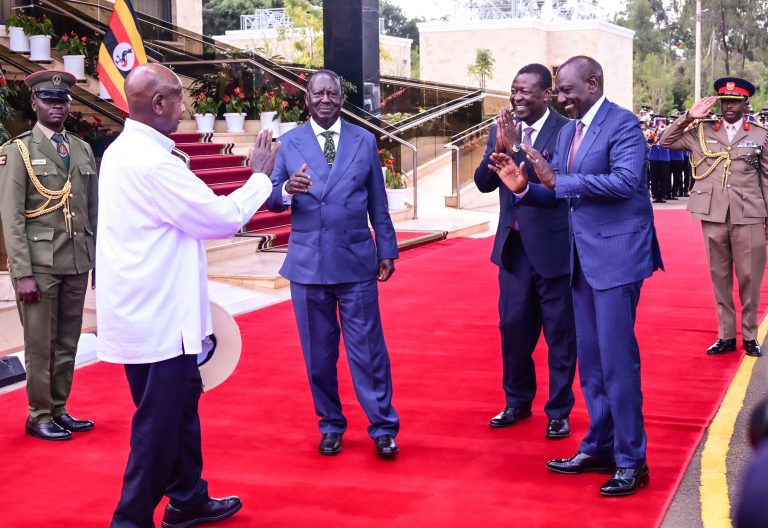
Uganda’s President Yoweri Kaguta Museveni arrived in Nairobi on Thursday, July 31, 2025, for an official visit during which his country and Kenya signed a raft of business pacts.
On July 31, 2025, the long-serving Head of State delivered a public lecture at the National Defence College (NDC).
Whenever he visits Kenya in recent years, Museveni has been firmly consistent on the subject of unity and trade, of purpose within the East African Community (EAC) as well as Pan-Africanism and intra-African trade.
In the last 10 years, no African leader has been vocal on the matter of African unity since the death of former Libyan leader Muammar Gaddafi, then Museveni.
You Might Also Like


The Ugandan leader will next year be marking 40 years at the helm of his nation’s stewardship since grabbing power through a guerrilla movement known as the National Resistance Movement (NRM) in January 1986.
For the four decades that he has been on the saddle of Uganda’s presidency, Museveni has managed to restore political and economic stability in his country – though his record on democracy and human rights is less than impressive.
Unfortunately, Ugandans are still groaning under the yoke of repression as they still grapple with restricted free speech, assembly, worship and picketing.
However, aside from the disregard for constitutionalism and the rule of law, Museveni has placed Uganda on the map of stability and peace.
Museveni has, over the years, argued the case for a federation born out of the current EAC composition, unified by one currency and language.
Museveni – just like renowned Nigerian writer Prof. Wole Soyinka – has persistently vouched for Swahili as the most appropriate language with which the African continent should communicate through.
The Ugandan leader has posited that Africa will economically remain a colony of the West unless its leaders work together on all fronts.
That is the message he delivered to his audience at State House on Thursday. It also formed part of his speech at NDC yesterday.
Regrettably, Museveni is one of the voices on the African continent still pursuing unity and strong business ties between its people.
Save for Rwandan President Paul Kagame and former South African President Thabo Mbeki, the advocates of African unity and collective development are becoming fewer by the day on the continent.
Upon his ascendance to the seat of power in September 2022, Kenya’s President William Ruto started off as a determined pan-Africanist and quickly attracted global attention.
In his first year in office, Ruto established himself as an articulate, strong voice and probing mind on the international stage.
He spoke his mind openly and boldly with rare candour, which most of his colleagues on the African continent could not even attempt.
Even his most avowed critics, who never had anything positive to say about him or a bone to pick with him regarding his leadership, commended him for his speeches when addressing a global audience.
The family of nations was forced to have a fresh look at Kenya beyond the usual lenses of athletics, graft, electoral malpractices, road carnage and cultic religious fanaticism.
Ranging from disparities and discrimination in international monetary lending structure by the Bretton Woods institutions and trade imbalances in favour of the Global North to climate change, communication, education, science and technology, Ruto’s speeches were an instant hit, attracting plaudits from far and wide and setting arguments that he was filling the void left by Gaddafi.
However, that is no longer the case. The Kenyan leader is today preoccupied with other matters far detached from what he espoused at the nascent stage of his regime.
How one wishes that President Ruto re-discovers his mono and joins his Ugandan counterpart in the crusade to unify the African continent through trade and a common language.
For times without number, Museveni has floated the idea of having the EAC officially adopt Swahili as its language of communication.
In addition to Soyinka, another voice to have previously championed Swahili as a potential continental language of communication was the late President of Mozambique, Samora Machel, who went ahead to demonstrate his seriousness by addressing the Organisation of African Unity (OAU) – the precursor to AU – in that language.
Museveni’s argument is easily convincing. It needs support from every leader and citizen in the EAC bloc
However, for purposes of Kenya’s image and legacy, it would be prudent if Ruto were to elect to steer this agenda. It would benefit Kenya from multiple fronts.
Museveni does not need to remain the lone diminishing voice on the subject of African unity, trade and integration. More are needed.
The author is a Revise Editor with the People Daily.
Author
Mukalo Kwayera
View all posts by Mukalo KwayeraLatest News



Advertisement
More on Insights