Advertisement
Echoes of tension: Uganda’s bold border claims and what they mean for Kenya
Saturday 15th November, 2025 07:15 AM|

In East African history, Kenya and Uganda have mostly shared a cooperative border, but bold claims from Ugandan leaders have periodically tested this peace.
The most audacious came under Idi Amin, whose regime from 1971 to 1979 was notorious for unpredictability.
In February 1976, Amin declared vast swaths of western Kenya, including Turkana, West Pokot, Trans-Nzoia, Bungoma, Busia, Kakamega, Central and South Nyanza, Narok, Kisii, Kericho, Nakuru, Uasin Gishu, Elgeyo Marakwet, Nyandarua, Nandi, Kisumu, Eldoret, Tambach, Gilgil, and Lake Baringo, rightfully belonged to Uganda.
He invoked pre-colonial boundaries and divine entitlement, insisting these fertile lands, some just 32 kilometres from Nairobi, were Uganda’s by historic and moral right. Amin vowed to “liberate” them, triggering fears of invasion.
You Might Also Like
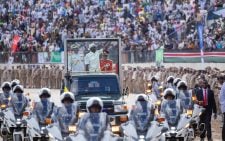
Kenya responded swiftly. Former President Jomo Kenyatta denounced Amin’s claims, mobilising the military along the western border. Crowds in border towns burned effigies while Kenya appealed to the Organisation of African Unity, which reaffirmed post-independence borders.
“I wish to warn those who may have desires on Kenya that even if they have guns and warships, we shall deal with them ruthlessly,” Kenyatta said.
“Those who say their country extends from present borders, I advise them to go to hell and dream there. We shall have no one lay claim over our territory. We shall not give away an inch, not even a quarter of an inch.”
The then Vice President Daniel Arap Moi sought American military support, wary of Uganda’s Soviet-supplied arms. U.S. Navy jets staged a fly-past over Mombasa on Jamhuri Day as a subtle deterrent.
Facing internal unrest and international isolation, Amin retreated, and no troops crossed the border, though cross-border tensions and cattle raids displaced thousands. Amin’s aggression later resurfaced in Tanzania, where his invasion of the Kagera Salient in 1979 caused significant loss of life, indirectly heightening regional anxiety.
Museveni era and modern rhetoric
Tensions resurfaced under Yoweri Museveni, who came to power in 1986. In the late 1980s, Uganda and Kenya accused each other of harbouring rebels, with brief NRA incursions into Kenya killing over 100 Kenyans and 26 Ugandans near Malaba.
Border closures and trade disruptions followed until mediation by Ethiopia and Tanzania in 1989 restored calm. While no occupation occurred, these incidents strained early East African Community relations.
In 2022, Museveni’s son, Lt. Gen. Muhoozi Kainerugaba, tweeted that his forces could capture Nairobi in two weeks, joking about post-conquest neighbourhoods and proposing unification under Museveni with Kenya’s William Ruto as deputy.
“My only problem with my beloved big brother is that he didn’t stand for a third term. We would have won easily!” Gen Kainerugaba said. In a later tweet, he said: “It wouldn’t take us, my army and me, 2 weeks to capture Kenya’s capital, Nairobi.”
The posts caused outrage in Nairobi, prompting Uganda’s Foreign Ministry to clarify that social media statements did not constitute official policy. Museveni later apologised, emphasising diplomacy over provocation.
Indian Ocean ambitions and diplomatic balance
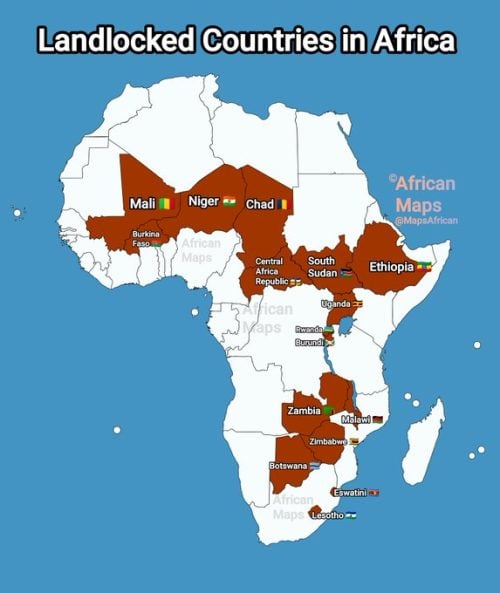
As of November 2025, Museveni himself has revived maritime rhetoric, asserting Uganda’s entitlement to the Indian Ocean and warning of “future wars” if access is blocked. Kenya’s response has been measured, with officials emphasising legal transit rights while maintaining control of the coastline.
“You see, the political organisation in Africa is so irrational. All flats are entitled to the compound. Uganda is landlocked inside here. But where is my ocean? My ocean is the Indian Ocean. It belongs to me.”
“I am on the top floor of the block, and then you say the compound belongs to the ones on the ground floor. This is madness. Even if you want to build a navy, how can you build it when you don’t have access to the sea? That ocean belongs to me because it is my ocean. I am entitled to it. In the future, we are going to have wars if this is not sorted out,” he said.
The Naivasha dry port and SGR operations highlight Kenya’s role in facilitating Uganda’s trade without compromising sovereignty.
These episodes illustrate a historical pattern: Uganda’s leaders often use bold claims to assert influence, while Kenya relies on diplomacy, legal frameworks, and regional cooperation to maintain stability.
Instead, Foreign Affairs PS Korir Sing’Oei calmly told reporters on November 12: “President Yoweri Museveni was speaking metaphorically rather than to suggest that there was anything that was done in the manner in which he described it.”
“I will not comment much on what President Museveni said with respect to our oceans, but I believe very much that he has a fairly great understanding with respect to the nature of our territory and the nature of our rights with respect to our natural resources and his rights with natural resources in Ugandan territory.”
Author
Latest News




Advertisement
More on Insights