Advertisement
If BATUK leaves Kenya: What it means for Nanyuki’s economy and regional security
Monday 27th July, 2026 07:55 AM|
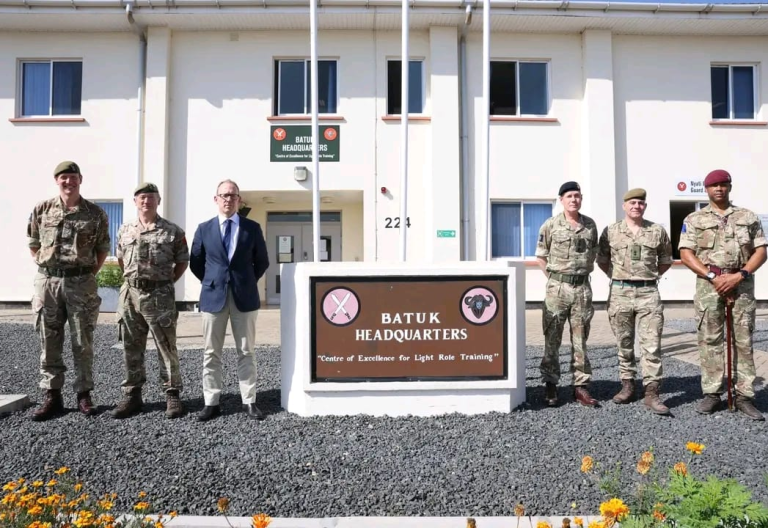
For more than six decades, the British Army Training Unit Kenya (BATUK) has been an enduring feature of Kenya’s defence landscape and a central pillar of Nanyuki’s local economy.
What began as a military training arrangement between Kenya and the United Kingdom gradually evolved into an economic ecosystem that has shaped the growth of Laikipia County.
Hotels, restaurants, transport companies, landlords, supermarkets, construction firms, and hundreds of small businesses have flourished by serving the steady stream of British military personnel rotating through the region for training exercises.

BATUK’s presence extends beyond the military barracks. The unit directly employs hundreds of Kenyan civilians while creating thousands of indirect jobs through procurement of goods and services.
You Might Also Like



Farmers supply fresh produce to military camps, transport operators ferry personnel and equipment, and hospitality businesses enjoy year-round occupancy that would otherwise be difficult to sustain.
The British military has also invested in community development initiatives, infrastructure projects, healthcare programmes, and educational support, further embedding itself within the local economy.
Should BATUK significantly reduce its operations or eventually leave Kenya altogether, the immediate economic consequences would be difficult to ignore.
Hotels that depend heavily on military bookings would experience declining occupancy, restaurants and retail outlets would see fewer customers, and landlords would face reduced demand for residential and commercial properties.
Local suppliers, many of whom have built businesses around servicing BATUK contracts, would lose a reliable source of income, while hundreds of civilian employees could find themselves without work.
The effects would ripple throughout the wider economy of Laikipia County. Reduced spending would slow business expansion, discourage private investment, and weaken consumer demand.
Although Nanyuki has developed into a thriving commercial centre with tourism, agriculture, and conservation forming important economic pillars, BATUK remains one of its most dependable economic anchors. Replacing that contribution would not happen overnight.
Property and investment risks
The sustained presence of BATUK has also influenced investment decisions across Nanyuki. Over the years, investors have built hotels, apartment complexes, shopping centres, office spaces, and residential estates on the assumption that military personnel and associated visitors would continue to generate consistent demand.
This confidence has contributed significantly to Nanyuki’s transformation from a modest frontier town into one of Kenya’s fastest-growing urban centres.
A prolonged reduction in military activity would likely soften the local property market. Commercial landlords could struggle to maintain occupancy, rental yields might decline, and developers could postpone planned investments. Businesses that rely on predictable military spending would face uncertainty, potentially slowing the pace of urban development that has characterised Nanyuki over the past two decades.
Nevertheless, the town possesses advantages that extend beyond BATUK. Its strategic location at the gateway to Mount Kenya, the Aberdares, Lewa Wildlife Conservancy, Ol Pejeta Conservancy, and northern Kenya positions it as a tourism and logistics hub with significant long-term potential.
The challenge would be accelerating economic diversification quickly enough to offset any decline in military-related spending.
Security cooperation beyond economics
While the economic implications are substantial, the strategic consequences could prove even more significant.
Kenya occupies a critical geopolitical position in East Africa, bordering countries affected by instability and remaining at the forefront of regional counterterrorism efforts. The defence partnership with the United Kingdom has provided the Kenya Defence Forces with decades of joint exercises, specialized battlefield training, engineering support, intelligence cooperation, medical expertise, and opportunities to operate alongside one of the world’s most experienced militaries.
The relationship has strengthened Kenya’s military professionalism while enhancing interoperability during multinational peacekeeping operations and regional security missions. British military exercises conducted in Kenya also allow both countries to prepare for operations in diverse terrains, making the partnership mutually beneficial.
If BATUK were to leave, Kenya would undoubtedly retain a capable and professional military. However, opportunities for advanced joint training, knowledge transfer, and defence cooperation would diminish unless replaced by alternative partnerships. The symbolic impact would also be considerable, signalling a shift in one of Britain’s longest-standing defence relationships in Africa.
Regional geopolitics could shift
A significant reduction or relocation of BATUK’s activities would inevitably alter regional geopolitical dynamics. Other East African countries capable of hosting large-scale military exercises could emerge as alternative partners for the United Kingdom, attracting defence investments, infrastructure development, and deeper security cooperation.
Such a shift would not simply involve relocating soldiers from one country to another. It would redistribute diplomatic attention, military spending, and strategic influence across the region. Kenya has long positioned itself as a stable security partner in East Africa, and maintaining that status would require continued investment in defence infrastructure, institutional reforms, and strong bilateral relationships with traditional allies.
At the same time, Kenya’s broader foreign policy increasingly emphasizes diversified partnerships with multiple global powers. Any reduction in British military engagement could therefore encourage Nairobi to deepen defence cooperation with other international partners while strengthening indigenous military capabilities.
Accountability dimension
Any discussion about BATUK’s future must also acknowledge the controversies that have accompanied its presence. Allegations involving environmental degradation, unexploded military ordnance, sexual exploitation, abandoned children, and the unresolved murder of Agnes Wanjiru have generated sustained public debate and strained public confidence in aspects of the bilateral defence relationship.
These incidents have fuelled calls for greater accountability, stronger environmental protections, improved oversight, and justice for affected communities. They have also highlighted the importance of ensuring that strategic partnerships operate within frameworks that respect local communities, uphold the rule of law, and provide effective mechanisms for addressing grievances.
Should the defence partnership continue, both governments will likely face increasing pressure to strengthen accountability measures and demonstrate greater transparency in responding to concerns raised by host communities.
Opportunity within uncertainty
While the prospect of BATUK’s departure presents undeniable economic risks, it also offers an opportunity for Nanyuki to rethink its development model.
Heavy dependence on a single institutional presence leaves any local economy vulnerable to policy changes beyond its control. Diversifying economic activity would strengthen the town’s resilience and create a more sustainable foundation for future growth.
Nanyuki is well positioned to expand its tourism sector, attract investment in agricultural value addition, strengthen its role as a logistics hub serving northern Kenya, and develop conference, education, and technology industries. The town’s strategic location, improving infrastructure, and proximity to key conservation areas provide a strong platform for continued growth independent of military spending.
The transition would require coordinated planning by national and county governments, private investors, and local communities. Investment incentives, infrastructure expansion, skills development, and support for small and medium-sized enterprises would all be essential in reducing economic vulnerability.
/X
Whether BATUK eventually leaves Kenya or simply restructures its operations, the current debate raises important questions about economic resilience, national security, and the future of Kenya’s strategic partnerships.
The British military has made a significant contribution to Nanyuki’s economic development while strengthening defence cooperation between Nairobi and London.
At the same time, unresolved issues relating to accountability and community welfare have underscored the need for a more balanced and transparent partnership.
For Nanyuki, the ultimate challenge is not merely preparing for the possibility of BATUK’s departure but ensuring that its future prosperity is built on a diversified and resilient economy capable of withstanding external shocks.
For Kenya, the broader lesson is equally clear: enduring national strength lies in cultivating strategic partnerships while simultaneously investing in domestic capacity, institutional resilience, and inclusive economic development.
Author
Latest News







Advertisement
More on Insights