Advertisement
MP Koech dismisses Gachagua’s BATUK bribery claims, explains Kenya-UK defence deal process
Sunday 26th July, 2026 09:05 PM|

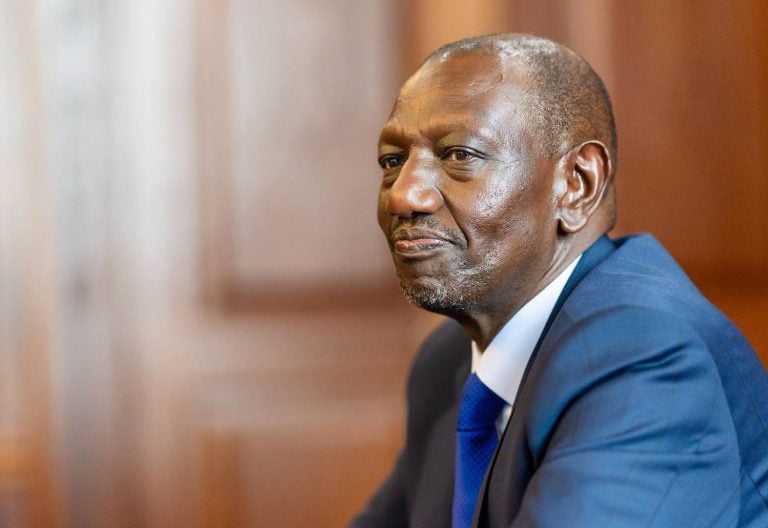
Belgut Member of Parliament (MP) Nelson Koech has rejected claims that his parliamentary committee demanded money from the United Kingdom to approve the renewal of the Kenya-UK Defence Cooperation Agreement, saying the process has followed the law and focused on accountability concerns.
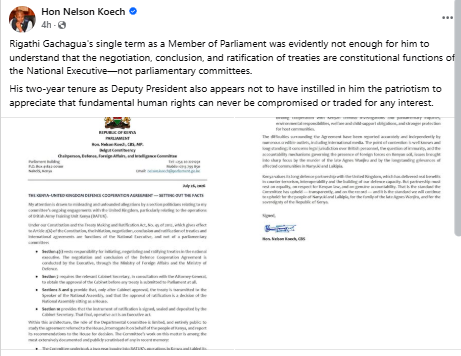
Koech, who chairs the National Assembly Defence, Foreign Affairs and Intelligence Committee, said the committee does not negotiate or ratify international agreements, adding that those responsibilities belong to the Executive under Kenyan law.
In a statement issued on Sunday, July 26, 2026, Koech responded to claims by some politicians that his committee’s engagement with the British Army Training Unit Kenya (BATUK) was linked to financial demands.
He said the Treaty Making and Ratification Act, No. 45 of 2012, gives the National Executive the responsibility of initiating, negotiating and concluding treaties.
You Might Also Like
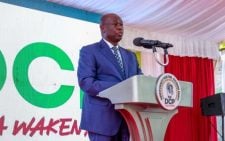
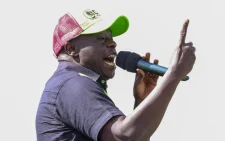

“The negotiation and conclusion of the Defence Cooperation Agreement is conducted by the Executive, through the Ministry of Foreign Affairs and the Ministry of Defence,” Koech said.
He explained that Parliament only examines agreements after they are submitted by the government and makes recommendations before the National Assembly decides whether to approve ratification.
“Within this architecture, the role of the Departmental Committee is limited, and entirely public: to study the agreement referred to the House, interrogate it on behalf of the people of Kenya, and report its recommendations to the House for decision,” he said.
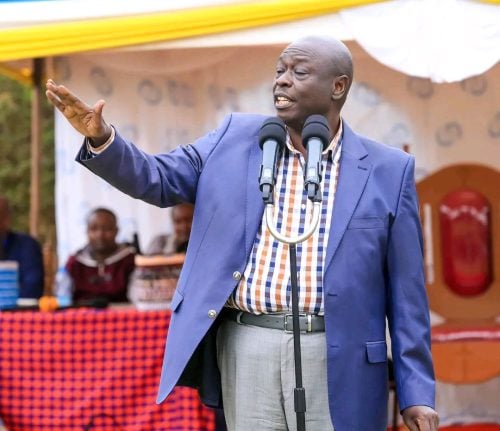
Koech’s statement came on the same day former Deputy President Rigathi Gachagua claimed that a Ksh3 billion demand by senior Kenyan officials caused Britain to move a planned BATUK military exercise from Kenya to another country.
Gachagua claimed the demand was made during discussions to renew the defence agreement with the United Kingdom. He accused unnamed officials of seeking money from the British side, allegations that have not been independently verified.
The British Ministry of Defence confirmed that a planned training exercise involving about 1,500 soldiers from the Duke of Lancaster’s Regiment would not take place in Laikipia later in 2026 after the required licences were not issued.
“It is with regret that the necessary licences required to allow training to take place in Laikipia later this year have not been forthcoming. As a result, the planned training will now be conducted at an alternative location outside Kenya,” the ministry said.
Human rights issues raised
Koech said the delay in approving a new Kenya-UK defence agreement was linked to accountability concerns raised by his committee, including allegations involving human rights violations, environmental issues and criminal cases involving foreign troops.
“The difficulties surrounding the Agreement have been reported accurately and independently by numerous credible outlets, including international media,” Koech said.
He identified legal jurisdiction over British personnel, immunity arrangements and accountability mechanisms as the main issues under discussion.
The committee conducted a two-year inquiry into BATUK operations in Kenya and presented its report to the National Assembly in November 2025.
Koech said the report recommended that the agreement should only proceed with stronger safeguards, including allowing Kenyan courts to handle serious offences committed by visiting troops, cooperation with criminal investigations, environmental protection measures and support for affected communities.
The issue of accountability gained attention following the murder of Agnes Wanjiru, a Kenyan woman whose death in Nanyuki in 2012 has been linked to a former British soldier. Kenyan authorities have sought the extradition of former soldier Robert James Purkiss, who is contesting the process in the United Kingdom.
Koech said Kenya values its defence relationship with Britain but insisted that cooperation must respect the country’s laws.
“Kenya values its long defence partnership with the United Kingdom, which has delivered real benefits in counter-terrorism, interoperability and the building of our defence capacity,” he said.
“But partnership must rest on equality, on respect for Kenyan law, and on genuine accountability.”
BATUK has operated in Kenya for decades, providing joint military training, supporting counter-terrorism efforts and contributing to economic activity in Nanyuki and surrounding areas.
The future of the Kenya-UK Defence Cooperation Agreement remains under discussion, with lawmakers insisting that any new deal must balance military cooperation with Kenya’s sovereignty and the interests of local communities.
Author
Kenneth Mwenda
Kenneth Mwenda is a business, sports, and politics digital writer with over seven years of experience in journalism, covering breaking news, feature stories, and in-depth analysis across a range of beats.
For inquiries, he can be reached at [email protected]
View all posts by Kenneth MwendaLatest News



Advertisement
More on News