Advertisement
Willis Otieno: Free education must be guaranteed for all Kenyans
Thursday 04th June, 2026 09:32 AM|

Access to free and quality education from primary school to tertiary level has been described as a fundamental right that should not be treated as a privilege, with renewed calls for the government to fully remove financial barriers that continue to exclude thousands of learners.
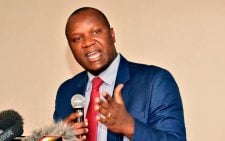
Lawyer Willis Otieno echoed a video shared on Jimi Wanjigi’s X account on Wednesday, June 03, 2026, reinforcing arguments against what he termed unsustainable debt practices and prioritisation of public welfare.
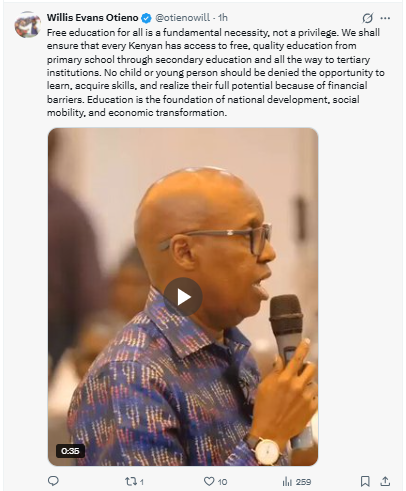
Speaking in his statement shared on his X account on Thursday, June 04, 2026, Otieno said education must remain central in national planning, warning that financial constraints should never be used to deny children and young people their right to learn and build their future.
“Free education for all is a fundamental necessity, not a privilege,” he said. “We shall ensure that every Kenyan has access to free, quality education from primary school through secondary education and all the way to tertiary institutions.”
/X
You Might Also Like

He added that no learner should be locked out of education due to inability to pay school fees, stressing that equality in education is key to breaking cycles of poverty.
“No child or young person should be denied the opportunity to learn, acquire skills, and realise their full potential because of financial barriers,” Otieno stated.
He further emphasised that education remains the backbone of national development, linking it directly to economic transformation and social mobility.
“Education is the foundation of national development, social mobility, and economic transformation,” he added.
Debate on debt and public spending intensifies
The remarks come amid growing public debate on Kenya’s debt burden and government spending priorities, with critics questioning how borrowing decisions impact essential services such as education and development projects.
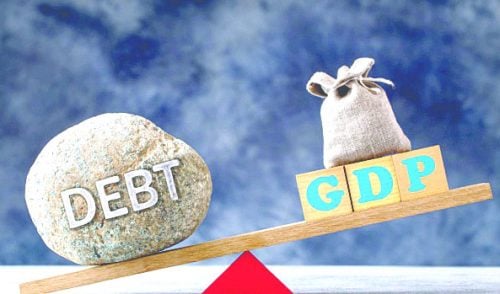
Wanjigi’s comments have added to ongoing political discussions on debt sustainability, with opposition voices arguing that borrowed funds have not always translated into visible development outcomes for citizens.
Policy analysts continue to warn that rising debt servicing costs could strain public budgets, potentially affecting funding for critical sectors including education, health, and infrastructure.
As the debate intensifies, calls for transparency, accountability, and prioritisation of basic services remain central in public discourse.
Author
Latest News



Advertisement
More on News