Advertisement
Uganda lifts social media ban amid post election tensions
Monday 26th January, 2026 11:44 AM|

Uganda government has announced the reopening of social media platforms after they were blocked following the January 15, 2026, general election tensions.
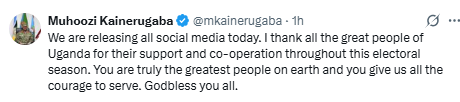
In a statement on Monday, January 26, 2026, Uganda’s Chief of Defence Forces (CDF), General Muhoozi Kainerubaga, announced the lifting of the ban on his social media accounts, thanking Ugandans for their support and cooperation throughout the electoral period.
“We are releasing all social media today. I thank all the great people of Uganda for their support and cooperation throughout this electoral season. You are truly the greatest people on earth, and you give us all the courage to serve. Godbless you all,” he wrote on X.
His remarks come at a time of intensified political activity, with the CDF sustaining a notably active presence across social media and other digital platforms.
You Might Also Like

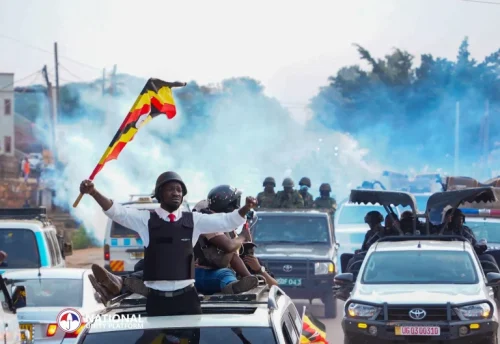
Before the voting day, the Ugandan government announced a nationwide internet shutdown that affected all mobile data and satellite services, citing the need to curb electoral irregularities and safeguard public order during the election period.
The Uganda Communications Commission (UCC), on January 18, 2026, while partially lifting the ban on the internet, directed that social media and over-the-top (OTT) applications remain blocked until further notice.
According to the commission, several social media platforms remained restricted. The apps included WhatsApp, TikTok, X (formerly Twitter), Instagram, Telegram and app stores, with Facebook remaining suspended since 2021.
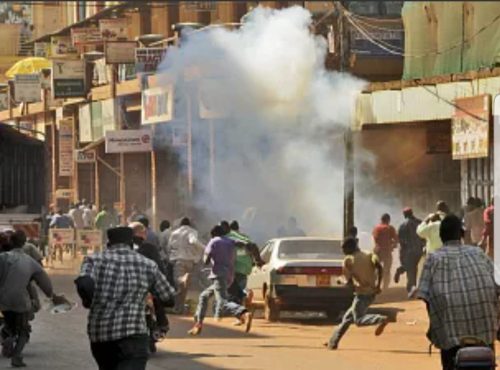
Ugandans, however, have bypassed the ban by using virtual private networks (VPNs) to mask their locations and continue accessing the applications, although the government warned of legal action against them.
For instance, the opposition leader Bobi Wine, who was a presidential candidate, revealed a contingency plan to maintain communication with supporters ahead of the voting exercise.
The plan came amid concerns of a potential internet shutdown, a move that has been used during past elections to limit coordination and access to election results.
“As we all know, the regime is plotting an internet shutdown in the coming days, as they have done in all previous elections. They switch off the internet to block communication and ensure that citizens do not organise, verify their election results and demand accountability over the massive election theft,” Bobi Wine wrote on X.
To counter the anticipated disruption, Bobi Wine encouraged the use of an offline app, which allows communication without an internet connection. The platform will enable supporters to share information, including images of DR Forms, quickly and securely.
Muhoozi’s announcement now marks a return to full online engagement following a period of restrictions and limited activity.
Although UCC has not issued an official statement confirming his claims, many observers consider them credible due to his proximity to the presidency, as both the Chief of Defence Forces and the son of President Yoweri Museveni.
Author
Latest News





Advertisement
More on News