Advertisement
Majority of Kenyans oppose broad-based govt, TIFA survey shows
Thursday 04th June, 2026 11:20 AM|
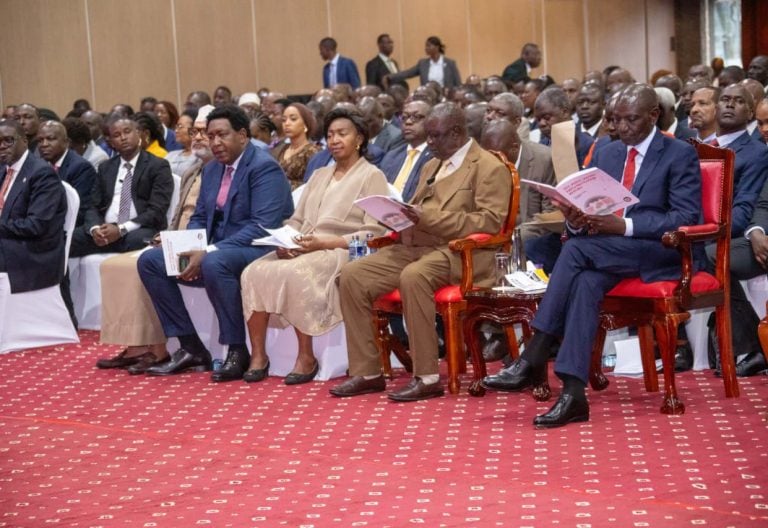
Fresh opinion poll findings have revealed growing unease among Kenyans over the broad-based government (BBG) arrangement, with a majority expressing opposition despite earlier gains in support for the political partnership.
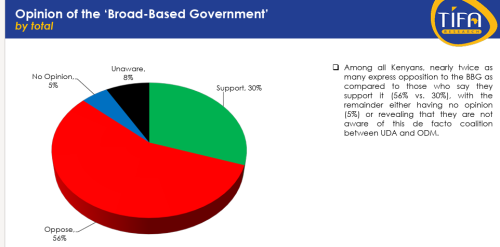
New findings by TIFA indicate that 56 per cent of Kenyans oppose the broad-based government arrangement, compared to 30 per cent who support it, while 8 per cent said they were unaware of the arrangement and another 5 per cent expressed no opinion.
The latest findings suggest that although support for the BBG had risen in previous surveys, the momentum has now slowed and appears to be reversing.
According to TIFA, support had increased from 22 per cent in May 2025 to 29 per cent in August before climbing to 44 per cent in November 2025. However, by May 2026 support had dropped sharply to 30 per cent.
You Might Also Like



“Among all Kenyans, nearly twice as many express opposition to the BBG as compared to those who say they support it,” TIFA stated.
Support drops after previous gains
The survey findings further showed that opposition to the arrangement increased significantly compared to the previous survey period.
While opposition stood at 48 per cent in November 2025, the figure has now risen to 56 per cent, indicating increasing dissatisfaction among sections of the public.
TIFA noted that despite earlier optimism surrounding the arrangement, new political developments appear to be reshaping public perception.
“While support for the BBG is higher than it was a year ago, the increase seen over previous surveys has now dropped nearly back to its August 2025 level,” the report stated.
Political analysts say the findings could signal changing attitudes as political formations begin taking shape ahead of the next election cycle.
ODM tensions emerge around arrangement
According to TIFA, one of the major issues influencing public opinion is growing internal disagreement within ODM regarding the future of the arrangement.
The report points to differences between leaders allied to the late Raila Odinga’s political line and another faction questioning both the process and future direction of the partnership.
TIFA noted that disagreements have emerged regarding whether the broad-based arrangement was meant as a temporary stabilisation measure after the June 2024 Gen Z protests or a long-term political strategy.
The report also observed that public disagreements among senior ODM leaders have increasingly played out in rallies and public forums.
Uncertainty clouds future of coalition
The survey further suggests that uncertainty surrounding the future structure of the arrangement may be contributing to changing public opinion.
According to TIFA, questions remain over possible power-sharing discussions, implementation of the agreed ten-point agenda and the nature of future political cooperation.
“The eventual status of the BBG remains uncertain,” the report noted.
The findings come at a time when political realignments continue to dominate the national conversation ahead of the 2027 General Election, with parties increasingly positioning themselves for future alliances and contests.
Author
Latest News





Advertisement
More on News