Advertisement
Kenya Red Cross: 85,993 households affected in 41 counties as El Niño fears grow
Saturday 06th June, 2026 12:20 AM|
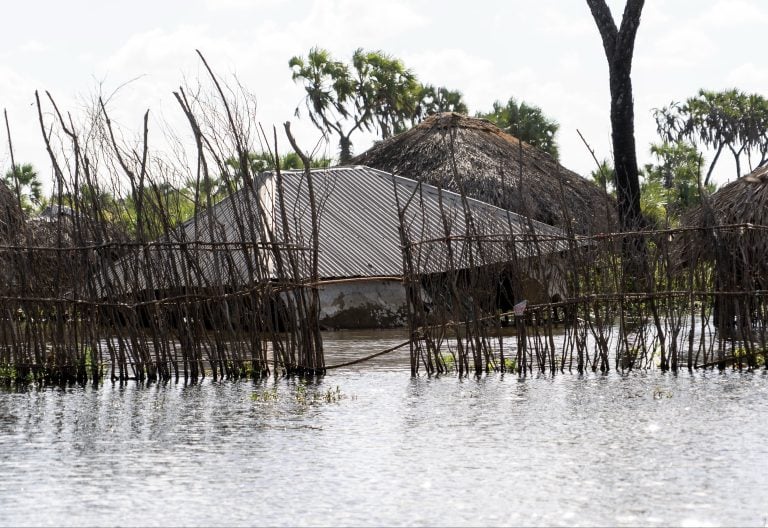
Flooding across Kenya continues to worsen into a nationwide humanitarian crisis, with the Kenya Red Cross reporting that 85,993 households across 41 counties have been affected by the ongoing March–May rains, even as warnings grow over developing El Niño conditions that could further intensify extreme weather impacts.
In a statement on Friday, June 5, 2026, the Kenya Red Cross reports that the floods have displaced 18,587 households, destroyed 355 water sources, and wiped out 38,955 acres of crops across the country.
“Flooding in Tana River County remains a severe but underreported crisis. Across Kenya, the March-May rains have affected 85,993 households across 41 counties, displacing 18,587, with 355 water sources destroyed and 38,955 acres of crops wiped out,” the statement read.
The widespread destruction has raised growing concern over food insecurity, water shortages, and the long-term recovery of affected communities, particularly in rural and flood-prone regions.
You Might Also Like


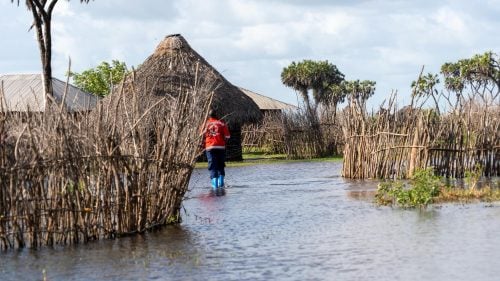
The situation remains especially severe in Tana River County, where entire communities in the Tana Delta have been cut off by rising floodwaters. Villages such as Miliki, Majaliwa, and Onido are fully marooned, with access roads submerged and essential services unreachable.
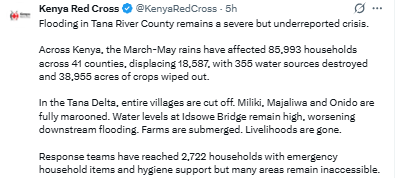
Water levels at Idsowe Bridge remain critically high, worsening downstream flooding and further restricting movement for both residents and emergency responders. Large areas of farmland are also underwater, destroying crops and livestock and eliminating key sources of income for local households.
Emergency response operations led by the Kenya Red Cross have reached 2,722 households with essential relief supplies, including hygiene kits and household items. However, access challenges persist due to flooded terrain and damaged infrastructure, limiting the ability of response teams to reach many of the worst-hit communities.
The crisis is unfolding against a backdrop of heightened global climate concern. The World Meteorological Organisation (WMO) has warned that there is an 80 per cent probability of El Niño conditions developing between June and August 2026, with the phenomenon likely to persist into November at moderate to strong intensity.
According to the WMO El Niño conditions are associated with significant disruptions in global weather systems, including increased temperatures and altered rainfall patterns. For East Africa, including Kenya, forecasts indicate wetter-than-normal conditions, raising the risk of intensified flooding, landslides, crop destruction, and displacement in vulnerable regions.
“A new WMO El Niño/La Niña Update indicates an 80% likelihood of an El Niño event during June-August 2026,” WMO stated.
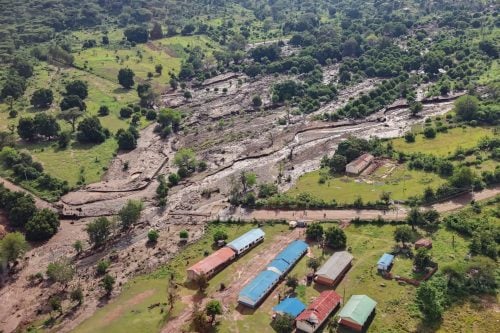
The Kenya Red Cross has emphasised that the current situation is already stretching response capacity, with many affected areas still inaccessible due to flooding.
El Nino fears
The World Meteorological Organisation further notes that El Niño conditions can contribute to extreme weather variability, increasing the likelihood of both heavy rainfall and flooding in some regions while causing dry conditions in others.
This variability poses additional challenges for food security and agricultural planning across affected countries.
Forecast models further show that the phenomenon is likely to persist through November with a probability exceeding 90 per cent, potentially reaching moderate or strong intensity.
The WMO notes that El Niño is expected to contribute to higher-than-average global temperatures, with seasonal forecasts indicating above-normal temperatures across most parts of the world from June to August, increasing the risk of heat stress.
The climate outlook shows a likelihood of wetter-than-normal conditions across the Horn of Africa, including Kenya, Somalia, Ethiopia, Eritrea, Djibouti and South Sudan.
The anticipated increase in rainfall raises concerns over flooding, landslides and widespread destruction of crops and infrastructure.
Such impacts could disrupt food production and supply chains, worsening food security challenges and increasing the risk of displacement among vulnerable communities.
“Rainfall probabilities are typical of El Niño patterns, and this is likely to contribute to a greater probability of extremes (e.g. increased rainfall and flooding), as well as drier conditions and droughts,” WMO stated.
Author
Latest News




Advertisement
More on News