Advertisement
Why Kenya may face floods and landslides amid food security fears
Wednesday 03rd June, 2026 07:07 AM|

Kenya could be at risk of flooding, landslides and food insecurity in the coming months as the World Meteorological Organisation (WMO) warns that El Niño conditions are developing across the tropical Pacific Ocean.
According to the latest WMO weather and climate update released on Tuesday, June 2, 2026, there is an 80 per cent chance that El Niño will develop between June and August 2026.
“A new WMO El Niño/La Niña Update indicates an 80% likelihood of an El Niño event during June-August 2026,” WMO stated.
Forecast models further show that the phenomenon is likely to persist through November with a probability exceeding 90 per cent, potentially reaching moderate or strong intensity.
You Might Also Like


The WMO notes that El Niño is expected to contribute to higher-than-average global temperatures, with seasonal forecasts indicating above-normal temperatures across most parts of the world from June to August, increasing the risk of heat stress.

Scientists attribute the developing conditions to unusually warm waters beneath the surface of the Pacific Ocean, stretching across regions including Indonesia, the Philippines and Papua New Guinea, where temperatures are significantly above average.
For Africa, the WMO projects that El Niño will influence rainfall patterns, particularly across eastern and southern parts of the continent.
The climate outlook shows a likelihood of wetter-than-normal conditions across the Horn of Africa, including Kenya, Somalia, Ethiopia, Eritrea, Djibouti and South Sudan.
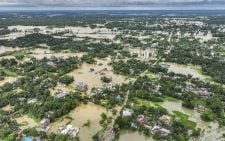
The anticipated increase in rainfall raises concerns over flooding, landslides and widespread destruction of crops and infrastructure.
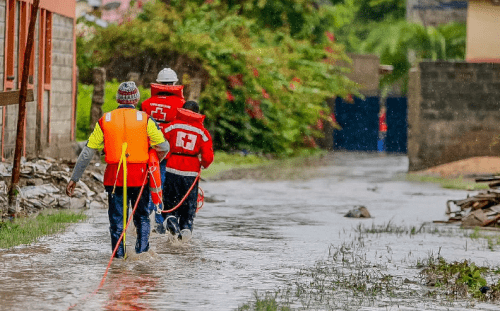
Such impacts could disrupt food production and supply chains, worsening food security challenges and increasing the risk of displacement among vulnerable communities.
“Rainfall probabilities are typical of El Niño patterns, and this is likely to contribute to a greater probability of extremes (e.g. increased rainfall and flooding), as well as drier conditions and droughts,” WMO stated.
Kenya has previously experienced the devastating effects of El Niño. Between 1997 and 1998, the country endured one of its worst El Niño episodes, characterised by torrential rains, severe flooding, deadly landslides in highland areas and widespread destruction of infrastructure.
More recently, between 2023 and 2024, a strong El Niño event combined with a positive Indian Ocean Dipole triggered catastrophic floods across the country, displacing hundreds of thousands of people and causing extensive damage to homes, roads and livelihoods.
With forecasts pointing to wetter-than-normal conditions once again, authorities and communities may need to prepare for potential weather-related disasters and their impact on food security and livelihoods.
Kenya Met on crop production
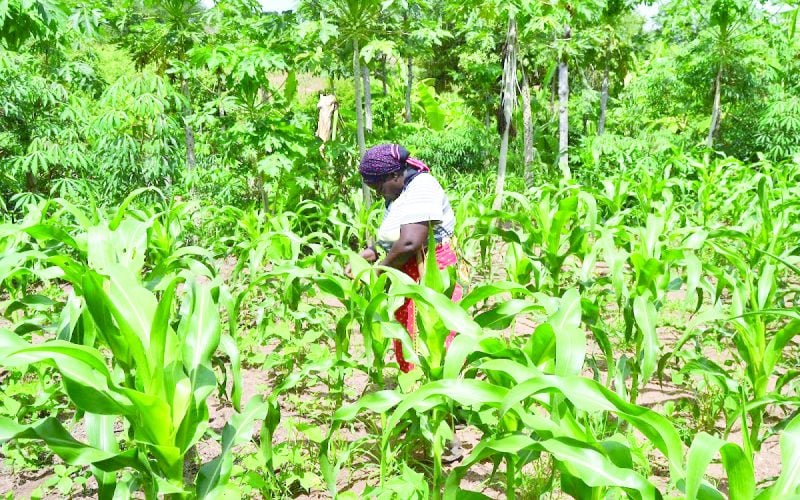
The forecast comes days after the Kenya Meteorological Department (KMD) projected that Kenya’s agricultural sector is expected to remain stable over the next three months despite forecasts of reduced rainfall in several food-producing regions.
In its June-July-August (JJA) 2026 forecast released on Monday, June 1, 2026, Kenya Met said favourable soil moisture from the recently concluded March-April-May (MAM) long-rains season will help sustain crop growth across major agricultural zones even as rainfall declines in the coming months.
“Near-average to below-average rainfall in the Highlands West of the Rift Valley, the Lake Victoria Basin, the Rift Valley and North-western Kenya are expected to sustain agricultural production following the near-average to above-average rainfall received in March to May,” the department said.
Even so, the weather agency warned that cooler conditions could slow crop development in some regions.
Cool and cloudy weather, accompanied by occasional fog, is expected in the Highlands East and West of the Rift Valley, including Nairobi, Kiambu, Nyeri, Murang’a and parts of the Rift Valley.
“These conditions may delay crop maturity,” the department cautioned.
The weatherman has also raised concerns over strong winds forecast in eastern and coastal parts of the country, warning that winds exceeding 25 knots could physically damage crops and increase evapotranspiration, leading to faster moisture loss from soils.
Author
Latest News







Advertisement
More on News