Advertisement
Explained: Why your Kenya power bill is higher in July and what it means
Tuesday 14th July, 2026 10:41 PM|

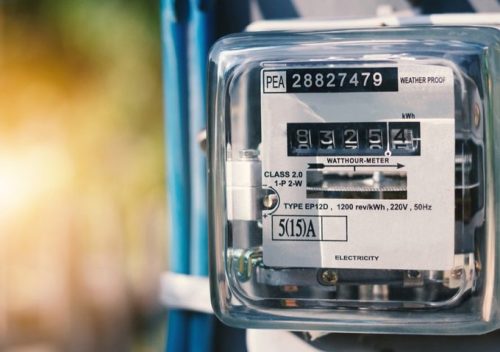
Kenyan households and businesses are set to pay more for electricity in July after the Energy and Petroleum Regulatory Authority (EPRA) approved new fuel, foreign exchange, inflation and water resource charges that will be reflected in Kenya Power bills.
The latest adjustments come at a time when many consumers are already grappling with high living costs, raising concerns about the impact on household budgets, business operations and the prices of everyday goods and services.
Under the new review, consumers will pay a Fuel Energy Cost Charge of 320 cents per kilowatt-hour (kWh), a Foreign Exchange Fluctuation Adjustment of 148.41 cents per kWh, an Inflation Adjustment of 48 cents per kWh and a Water Resource Management Authority (WRMA) levy of 1.57 cents per kWh.
Combined, the charges amount to 517.98 cents, or about Ksh5.18, for every unit of electricity consumed.
You Might Also Like



For a household consuming 50 units of electricity a month, the additional charges could add about Ksh259 to the bill. A customer using 100 units could pay about Ksh518 more, while consumption of 200 units could translate to an extra Ksh1,036 before taxes and other applicable charges.
For businesses with significantly higher power consumption, the impact is likely to be more pronounced, particularly in sectors where electricity is a major operating cost.
Why are electricity bills increasing?
According to EPRA, the increase is being driven by fuel costs, foreign exchange losses and inflationary pressures across the electricity sector.
The regulator’s latest data shows that although geothermal and hydropower remained major contributors to Kenya’s electricity supply in June, thermal power plants continued to play an important role in supporting the national grid.
Among the largest thermal generators were the Rabai Diesel Plant and Kipevu III Diesel Plant, whose fuel costs are passed on to consumers through the Fuel Energy Cost Charge.
EPRA also attributed part of the increase to foreign exchange losses of about Ksh1.63 billion recorded across the power sector in June. Independent Power Producers accounted for the largest share of the losses, while Kenya Power and KenGen also incurred forex-related costs.
The regulator says the foreign exchange adjustment is intended to compensate electricity generators and utilities whose contracts and financial obligations are partly denominated in foreign currencies.
Consumers will also continue paying an inflation adjustment designed to cover rising operational and power procurement costs across the sector.
The latest review underscores a long-standing challenge for consumers: despite Kenya’s substantial investment in geothermal and other renewable energy sources, electricity prices remain vulnerable to fuel costs, currency fluctuations and inflation-linked adjustments.

Impact on households and businesses
For households, the most immediate effect will be higher monthly electricity bills, leaving families with less disposable income for other expenses such as food, transport, education and housing.
Homes that rely heavily on appliances such as refrigerators, electric cookers, water heaters and washing machines are likely to feel the increase more sharply than low-consumption households.
Businesses are also expected to face higher operating costs, especially those that depend on electricity to run daily operations. Restaurants, bakeries, salons, laundries, cold-storage facilities, workshops and manufacturing firms are among the enterprises likely to be affected.
For many small and medium-sized enterprises, electricity is a core production cost. A rise in power bills can erode profit margins, forcing business owners to either absorb the extra expense or pass it on to customers.
That could have wider implications for the economy. Higher electricity costs often feed into the prices of goods and services as manufacturers, retailers and service providers adjust their pricing to recover increased operating expenses.
As a result, the impact of EPRA’s latest charges may extend beyond electricity bills to affect the cost of food, manufactured products and services that rely heavily on energy.
For consumers, the July adjustments are therefore not just another tariff review. They represent a fresh increase in the cost of powering homes and businesses and could add further pressure to household budgets and business profitability in the months ahead.
Author
Latest News






Advertisement
More on Insights