Advertisement
Govt retains 8% fuel VAT, announces Ksh945M subsidy
Tuesday 14th July, 2026 02:17 PM|

The Kenyan government has extended the reduced 8 per cent Value Added Tax (VAT) on petroleum products for another three months and approved a Ksh945 million fuel subsidy to help shield consumers from rising global oil prices linked to renewed tensions in the Middle East.
Energy and Petroleum Cabinet Secretary Opiyo Wandayi made the announcement on Tuesday, July 14, 2026, saying the measures are aimed at keeping fuel prices stable while ensuring uninterrupted fuel supplies across the country.
His statement comes ahead of the Energy and Petroleum Regulatory Authority (EPRA)’s monthly fuel price review for the July-August 2026 pricing cycle.
Government extends 8% fuel VAT until October
Wandayi said the government, in consultation with the National Treasury, had extended the application of the reduced 8 per cent VAT on petroleum products until October 14, 2026.
You Might Also Like



The extension is intended to cushion households, businesses and transport operators from higher fuel costs as global oil markets remain volatile.
“As part of the government’s commitment to cushioning households and businesses from international market volatility, and in consultation with the National Treasury, we have extended the application period for 8 per cent Value Added Tax (VAT) on petroleum products for a further three months, until the 14th of October 2026,” Wandayi said.
The CS also announced that the government will inject Ksh945 million from the Petroleum Development Levy (PDL) during the July-August 2026 fuel pricing cycle.
“Further, in the July-August 2026 pricing cycle, the government will deploy a subsidy from the Petroleum Development Levy to the tune of Kenya Shillings 945 million to sustain the current price levels,” he said.
The Petroleum Development Levy has previously been used by the government to cushion consumers whenever international fuel prices increase sharply.
Middle East tensions driving global oil market uncertainty
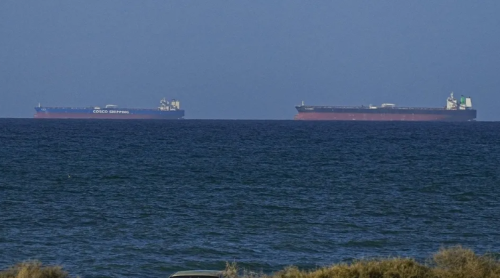
Wandayi attributed the latest government intervention to renewed military escalation around the Strait of Hormuz, one of the world’s most important oil shipping routes.
He said attacks on commercial vessels and reduced oil tanker traffic have created uncertainty in international energy markets.
According to the CS, commercial traffic through the Strait of Hormuz has fallen to its lowest level in about two months, while the situation remains unpredictable because the route is repeatedly opened and closed depending on security developments.
“The market remains unsettled, definitely, and the Strait of Hormuz remains constrained, with commercial traffic running well below its usual levels,” Wandayi said.
He warned that international oil benchmark prices have already started rising again.
“With the restart of the Middle East crisis, international benchmarks have now begun to climb again, and this renewed pressure will be reflected in the pricing cycles that follow.”
His remarks indicate that Kenya could experience upward pressure on fuel prices in future EPRA reviews if global crude oil prices continue to increase.
Government says Kenya has enough fuel
Despite the uncertainty in international markets, Wandayi assured Kenyans that there is no fuel shortage.
He said the country’s petroleum supply has remained stable because of the Government-to-Government (G2G) fuel import arrangement.
According to the CS, Kenya has continued receiving all scheduled fuel cargoes despite disruptions affecting shipping routes in the Gulf region.
“Kenya’s fuel supply has held firm throughout. Every scheduled cargo has arrived and has been offloaded on time, and fuel has remained available at the pump throughout the country,” the CS insisted.
He added that the government’s main priority has been maintaining a steady and uninterrupted supply of petroleum products.
“We have been able to achieve our foremost objective as a government, and that is to ensure a steady and uninterrupted supply of petroleum products, even against the backdrop of all these many challenges emanating from the Middle East.”
How the G2G fuel import deal is protecting Kenya
Wandayi defended the Government-to-Government fuel import arrangement, saying it has become more valuable during periods of global market instability.
Unlike importers who depend on spot purchases and open tenders, Kenya continues to import fuel under fixed freight and premium charges agreed through the G2G framework.
He explained that while freight and insurance costs have increased globally because of disruptions in the Middle East, Kenya’s import costs under the arrangement have remained unchanged.
“Kenya has continued to pay the same fixed freight and premium. That fixed cost, held constant while benchmark prices swing, is what has kept our landed costs in check and our deliveries on schedule,” Wandayi detailed.
The arrangement has also allowed suppliers to source fuel cargoes from alternative loading regions outside the Gulf without transferring additional transport costs to Kenyan consumers.
According to Wandayi, this flexibility has strengthened Kenya’s energy security during a period of heightened geopolitical uncertainty.
“The arrangement is doing exactly what it was built to do, and its advantage grows sharper the more volatile the market becomes.”
Government promises stable fuel supply
The Energy CS said Kenya has invested heavily in strengthening the petroleum supply chain over the past few years.
He said the country now has adequate fuel stocks, a resilient import system and stronger partnerships that can withstand external shocks.
Wandayi noted that the G2G arrangement has improved supply reliability, enhanced resilience within the petroleum sector and reduced pressure on Kenya’s foreign exchange demand.
He added that the Ministry of Energy will continue working with industry players to maintain uninterrupted fuel supplies while monitoring developments in global oil markets.
Reassurance to motorists and businesses
Wandayi concluded by assuring motorists, public transport operators, manufacturers, farmers, investors and businesses that petroleum products remain available across the country.
“I therefore wish to reassure motorists, public transport operators, manufacturers, farmers, businesses, investors and indeed all consumers that there is adequate fuel across the country, and that the government remains steadfast in ensuring that that particular situation continues to obtain for the long haul.”
The government’s announcement comes as Kenyans await EPRA’s latest fuel price review, with the Ksh945 million subsidy and the extension of the 8 per cent VAT expected to help cushion consumers against immediate increases even as global oil prices continue responding to developments in the Middle East.
Author
Kenneth Mwenda
Kenneth Mwenda is a business, sports, and politics digital writer with over seven years of experience in journalism, covering breaking news, feature stories, and in-depth analysis across a range of beats.
For inquiries, he can be reached at [email protected]
View all posts by Kenneth MwendaLatest News




Advertisement
More on Business