Advertisement
Govt warned against increasing fuel prices further amid transport disruption
Tuesday 19th May, 2026 12:48 AM|

Kenyans have reached the maximum level of fuel price tolerance, with no further capacity to absorb additional increases, the Rig Owners Association has said amid a nationwide transport strike that has disrupted movement and economic activity across the country.
Cornelius Chepsoi, Chair of the Rig Owners Association, made the remarks on Monday night May 18, 2026, during an interview.
“There is an ugly thinking that we must get away from. This idea that the government believes the solution to every problem is a price increment is tragic. There is no more elasticity; the Kenyan has gotten to the maximum, they cannot take any other price adjustment,” Chepsoi stated.
He added that the ongoing action is not limited to matatu operators but represents a wider national protest involving Kenyans affected by rising transport costs. Transport stakeholders rejected the government’s offer of an 8-shilling reduction, insisting on a full reversal of the previous 46-shilling increase.
You Might Also Like

“The agreement was that the strike goes on, and we maintain it until we agree,” Chepsoi said. He also raised concerns about consistency in government communication regarding the negotiations.
Protests and transport disruptions
The strike, which began at midnight on May 18, 2026, led to a widespread halt in transport services, including matatus, trucks, boda bodas and ride-hailing operators. Major roads were blocked in several areas, with burning tyres and barricades disrupting movement.
Businesses closed in multiple towns, while schools suspended learning in affected regions as commuters struggled to access transport. Interior Cabinet Secretary Kipchumba Murkomen said four people died during the unrest, more than 30 were injured, and 225 people were arrested. Six police officers were also injured in confrontations linked to the protests.
In areas such as Kitengela, demonstrations escalated as security agencies moved to restore order, with authorities describing some incidents as cases of economic sabotage.
Government response and pricing measures
In response to the unrest, Energy Cabinet Secretary Opiyo Wandayi announced proposals to reduce the price gap between diesel and kerosene in order to curb fuel adulteration. He said the difference in prices had encouraged mixing of fuels, which damages diesel engines used in transport and logistics.
“For prudence purposes and to eliminate the risk of fuel adulteration… we are going to bridge the gap between the prices of diesel and petrol. That would mean the price of kerosene and petrol would have to go higher as that of diesel comes lower,” Wandayi said.
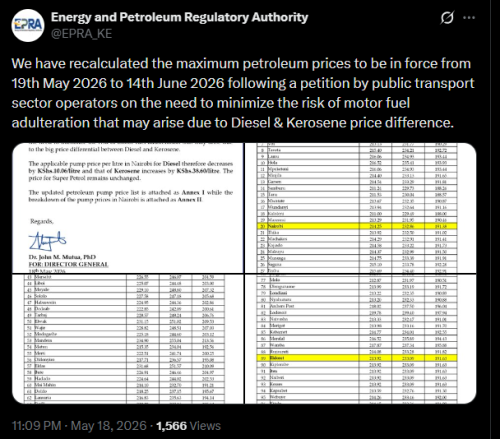
In Nairobi, new prices were set at Super Petrol Ksh214.25, Diesel Ksh232.86, and Kerosene Ksh191.38. EPRA said the adjustment followed a petition from transport operators on adulteration risks.
Global pressures and ongoing talks
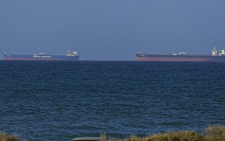
The fuel situation has been linked to global supply disruptions, including tensions affecting shipping routes through the Strait of Hormuz, which have pushed up international oil prices. Kenya’s reliance on imported petroleum has contributed to recent price increases exceeding 20 per cent in previous reviews.
Deputy President Kithure Kindiki and Treasury Cabinet Secretary John Mbadi have defended government interventions, noting that prices could have risen much higher without action and cautioning against removing taxes due to revenue needs.
Transport stakeholders, including the Matatu Owners Association, continue to demand removal of the 8 per cent VAT and the Ksh25 Road Maintenance Levy. The Law Society of Kenya has also threatened legal action over the impact of fuel costs on households and businesses.
Author
Latest News





Advertisement
More on News