Advertisement
Why Kenya Airways is betting big on London to drive future growth
Saturday 18th July, 2026 11:56 PM|
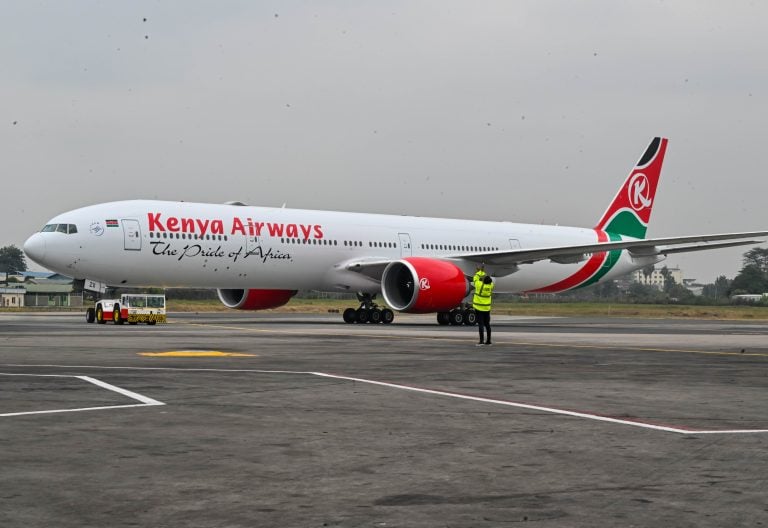
Kenya Airways’ decision to deploy its largest passenger aircraft on the Nairobi-London route is a sign that the airline sees the UK market as central to its future growth plans. Beyond adding seats, the move reflects a broader strategy to increase passenger revenue, expand cargo exports and strengthen the carrier’s financial position as it pursues long-term profitability.
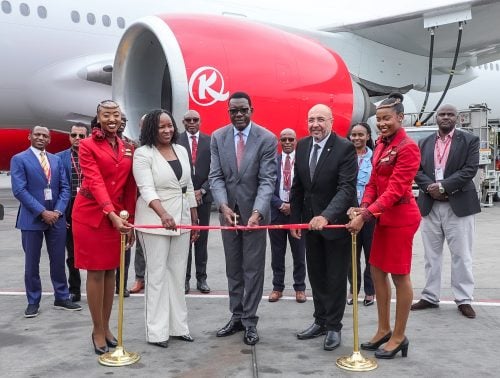
The national carrier restored Boeing 777-300ER service to London Heathrow on July 17, 2026, marking the return of the 400-seat aircraft to one of its most important international routes. While the aircraft’s size has attracted attention, the bigger story is what the move reveals about Kenya Airways’ commercial priorities.
London Heathrow remains one of the most strategically important destinations in Kenya Airways’ network. The route serves tourists travelling between Kenya and the United Kingdom, connects a large Kenyan diaspora to home, supports business travel and links Nairobi to one of the world’s busiest aviation hubs. It is also a critical gateway for Kenyan exports heading to European markets.
Unlike some long-haul destinations that depend primarily on passenger traffic, the Nairobi-London route generates value from both travellers and cargo, making it one of the airline’s most commercially attractive international services.
A sign of confidence in demand
You Might Also Like
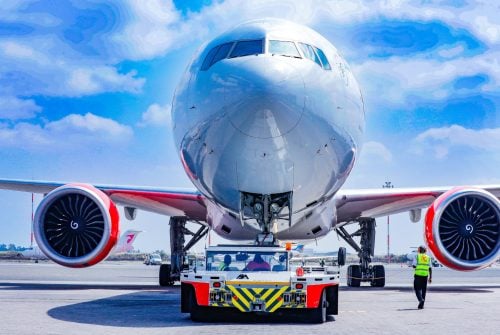
Airlines do not casually assign their largest aircraft to routes.The Boeing 777-300ER can carry about 400 passengers, significantly more than Kenya Airways’ Boeing 787-8 Dreamliners, which are configured with 234 seats. By returning the larger aircraft to London, the airline is effectively signalling confidence that demand on the route can support additional capacity.
For Kenya Airways, the move creates an opportunity to transport more passengers on every flight while improving revenue potential on a route that already operates daily services.
The decision also aligns with a wider industry trend in which airlines concentrate resources on proven routes with strong demand rather than spreading capacity across less established markets.
While passengers will notice the additional seats, one of the most important benefits of the Boeing 777-300ER lies below the cabin floor.
The aircraft offers substantial belly cargo capacity, allowing Kenya Airways to transport approximately 22 tonnes of freight alongside passenger luggage. That additional space could prove valuable for Kenyan exporters seeking reliable access to European markets.
Fresh flowers, vegetables, avocados, fish products and manufactured goods all depend on fast and efficient transport to reach overseas buyers. More cargo capacity means more products can be shipped without delays, helping exporters meet demand while potentially increasing foreign exchange earnings.
This explains why government officials have highlighted the aircraft’s role in supporting industries that contribute significantly to jobs, exports and economic growth.
Competition for Europe is intensifying
The return of the Boeing 777-300ER also comes at a time when competition for passengers and cargo travelling between Africa and Europe remains intense.
Kenya Airways competes with global carriers operating through major hubs in the Gulf, Europe and Africa. These airlines are constantly seeking to attract travellers and freight moving between continents.
Strengthening capacity on a proven route such as London allows Kenya Airways to reinforce its position in a market where demand is already established while protecting market share against competitors.
The move also supports Nairobi’s ambition to remain a leading aviation gateway connecting Africa to the rest of the world. The aircraft deployment comes as Kenya Airways continues efforts to improve its financial performance and strengthen its balance sheet.
Government officials have repeatedly spoken about ongoing reforms aimed at improving the airline’s competitiveness, attracting a strategic investor and ensuring long-term commercial sustainability.
Against that backdrop, increasing capacity on one of the airline’s strongest-performing international routes appears to be a calculated business decision rather than a routine fleet adjustment.
The strategy is not without risk. Larger aircraft require consistently strong passenger demand to justify their operating costs. Kenya Airways will need to maintain healthy load factors and continue attracting both passengers and cargo to fully benefit from the additional capacity.
However, the airline appears convinced that the opportunities outweigh the risks. Ultimately, the return of the Boeing 777-300ER is less about a larger aircraft and more about where Kenya Airways sees its future.
By increasing capacity on one of its most strategically important international routes, the airline is making a calculated bet that London will continue to drive passenger growth, cargo revenues and broader business expansion.
For travellers, the move means more seats and greater availability on flights to the United Kingdom. For exporters, it offers additional access to European markets. For Kenya Airways, it represents a clear signal that London remains central to its growth ambitions and turnaround strategy in the years ahead.
Author
Latest News






Advertisement
More on Business