Advertisement
Kenya Airways moves its largest passenger plane to London route after successful Nairobi-Mombasa debut
Saturday 18th July, 2026 06:45 AM|
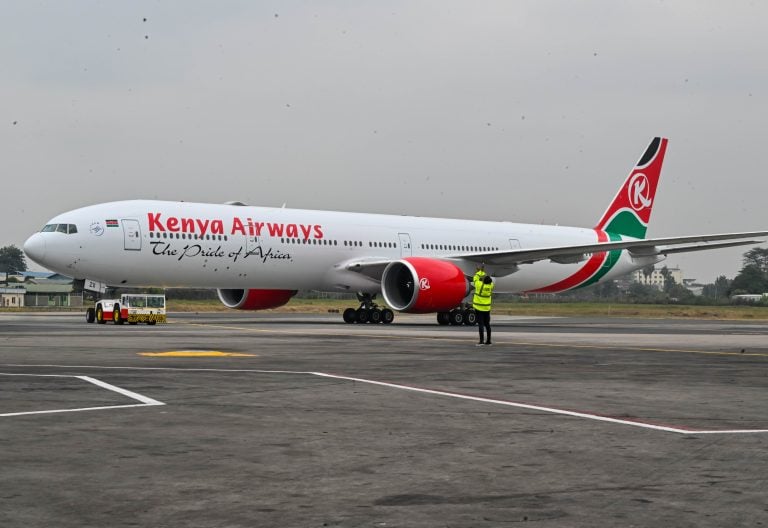
Kenya Airways has officially redeployed its largest wide-body passenger aircraft, the Boeing 777-300ER, to its premier daily Nairobi-London Heathrow route.
The strategic shift follows a highly successful domestic debut on the high-density Nairobi-Mombasa corridor, a temporary routing utilised by the flag carrier to test ground infrastructure, operational logistics, and crew integration.
The reintroduction of the heavy-capacity aircraft represents a critical milestone in the state-backed airline’s broader structural recovery plan.
The 400-seat flagship asset returned to Nairobi earlier this year following nearly a decade of international service on lease to Turkish Airlines, rejoining the fleet at a time when global aviation continues to face unprecedented equipment shortages and supply chain constraints.
You Might Also Like


From an economic and logistical standpoint, moving the high-capacity jet to the United Kingdom route serves as an immediate remedy to surging passenger demand and cargo backlogs on the continent’s most critical colonial and commercial air bridge.
For the state-backed airline colloquially known across the region as the Pride of Africa, the daily London route represents more than a lucrative revenue stream; it serves as a primary geopolitical and commercial link between East Africa and Europe.
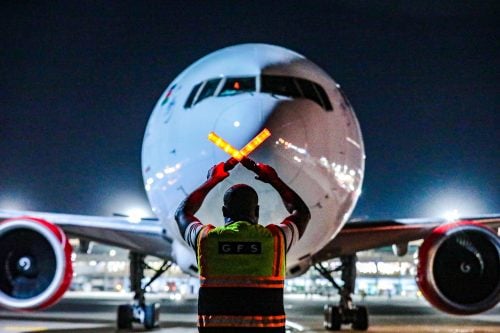
By upgrading the service from its mid-sized wide-bodies to the massive Boeing 777, the airline is executing a targeted fleet optimisation strategy designed to capture seasonal travel spikes and strengthen its long-haul market share.
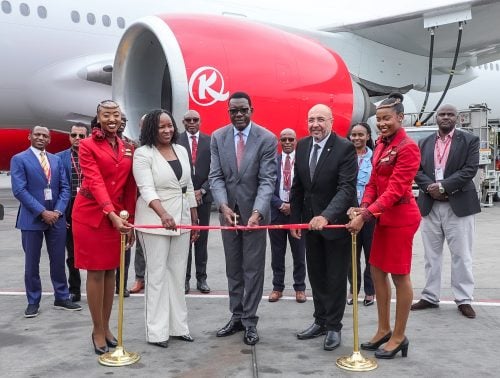
“This is more than the introduction of an aircraft,” Captain George Kamal, Kenya Airways’ Acting Group Managing Director and Chief Executive Officer, said during an inaugural ceremony at Jomo Kenyatta International Airport on Friday, July 17, 2026.
Captain Kamal, a veteran aviator who previously flew the Boeing 777 before transitioning to executive leadership, emphasised that the deployment aligns with a rigorous turnaround strategy to position the right assets on high-yielding routes.
“It reflects our continued commitment to building a stronger, more competitive and future-ready airline while connecting Africa to the world through reliable, efficient and world-class operations.”
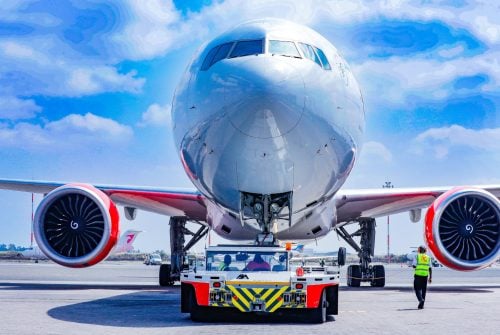
The structural upgrade has drawn praise from international trade analysts, who note that the 777’s expansive belly-hold capacity will provide immediate relief to Kenya’s multi-billion-shilling horticultural and agricultural export sectors.
The increased cargo tonnage allows local fresh produce, fish, and manufacturing goods to reach European supermarkets within hours of harvest, circumventing ongoing global shipping bottlenecks.
The deployment of the aircraft is heavily intertwined with the government’s aggressive campaign to cement Nairobi as the undisputed aviation and logistics gateway for East and Central Africa.
Addressing aviation stakeholders at the launch, the Cabinet Secretary for Roads and Transport, Davis Chirchir, framed the aircraft’s return as a direct indicator of economic resilience and national commercial ambition.
“The return of this Boeing 777 is a clear signal of resilience, recovery and renewed commercial ambition,” Chirchir stated.
“It provides immediate capacity where it is needed most, allowing Kenya Airways to meet growing passenger demand, expand cargo volumes and operate a more flexible and reliable schedule.”
To protect and leverage this public value, the government recently executed decisive financial interventions to clean up the national carrier’s balance sheet, absorbing a substantial portion of its historic debt to give management the operational freedom needed to achieve commercial self-reliance.
Simultaneously, the state is advancing a strategic investor process to inject fresh private equity and institutional expertise into the airline.
This corporate restructuring is being paired with a sweeping modernisation program at Jomo Kenyatta International Airport in Nairobi.
The state department for aviation is currently spearheading infrastructural expansions to raise the hub’s annual passenger capacity from 7.5 million to roughly 22 million, expanding taxiways, parking bays, and cargo terminals specifically designed to process larger wide-body airliners like the newly restored Boeing 777.
As the flagship jet begins its daily trans-continental rotation to London, its departure from the local Mombasa route highlights a transition from defensive, pandemic-era operational survival to aggressive, outward-facing global competition.
Author
Martin Oduor
View all posts by Martin OduorLatest News







Advertisement
More on Business