Advertisement
Govt launches Ksh1T agri-food investment plan
Tuesday 30th June, 2026 07:24 PM|

The Ministry of Agriculture and Livestock Development in Kenya has launched a landmark Ksh1.081 trillion Kenya National Agri-food Systems Investment Framework that will guide the country’s agricultural transformation over the next five years, as part of the second phase of implementing the Agricultural Sector Transformation and Growth Strategy (ASTGS 2019–2029).
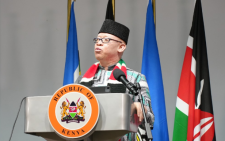
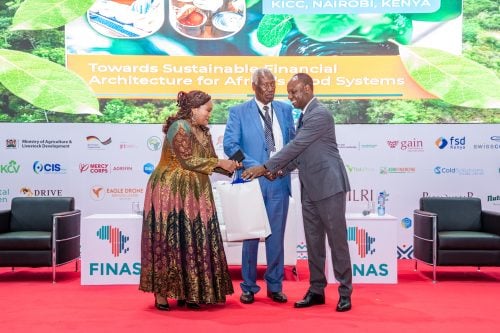
The launch on Tuesday, June 30, 2026, was presided over by Jonathan Mueke, Principal Secretary, Ministry of Agriculture and Livestock Development, on behalf of Cabinet Secretary for Agriculture Mutahi Kagwe. It took place during the official opening of the Financing Agri-Food Systems Sustainably (FINAS) Summit 2026 at KICC, Nairobi.
The Investment Plan is aimed at building resilient food systems, modernising agricultural value chains, expanding irrigation, strengthening food security, creating more than 2 million jobs within the period, increasing farmer incomes, and positioning Kenya as a competitive regional hub for sustainable agrifood investment.
“I am equally proud that the 2026 FINAS Summit provides the platform for the official launch of the National Agri-food Systems Investment Plan (NASIP 2026–2030). At the heart of NASIP is a fully costed investment framework of Ksh1.081 trillion over the next five years.” PS Mueke said.
You Might Also Like

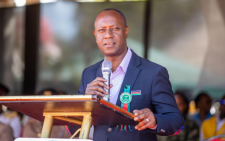

“This investment will be mobilised through a strategic partnership in which the Government of Kenya, together with County Governments, will contribute 35 per cent. I am calling on the commitment of the County Governments, through the Council of Governors, to achieve this goal. The private sector is expected to contribute 45 per cent, and the development and bilateral partners’ share is 20 per cent of the total investment envelope,” PS Mueke added.
The launch of NASIP 2026–2030 coincided with calls for the accelerated implementation of the Comprehensive Africa Agriculture Development Programme (CAADP) Kampala Declaration during the opening ceremony.
Strengthening sustainable food production
The summit comes at a pivotal moment as African countries begin implementing the 2026–2035 CAADP Kampala Strategy and Action Plan, which seeks to strengthen sustainable food production, agro-industrialisation, trade, investment, climate resilience, inclusivity and food systems governance across the continent.
Held under the theme “Towards Sustainable Financial Architecture for Africa’s Food Systems,” the summit features high-level discussions on blended finance for agri-food systems, climate-smart investment pathways, innovative agri-finance solutions, and country case studies from Kenya, Nigeria, and Ethiopia, among others.
FINAS Summit Director Charity Mutegi noted that the summit champions moving from dialogue to delivery, rallying stakeholders to advance agri-food systems in Africa.
“In its third edition, FINAS 2026 has continued to advance sustainable finance as a lever for meaningful change in Africa, laying ground for the unveiling of a private-sector-led agriculture finance working group,” she said.
Exploring financing frameworks tools
At FINAS 2026, delegates from across Africa will also explore practical tools such as the Food and Agriculture Organization’s (FAO) Monitoring and Analysing Food and Agricultural Policies (MAFAP) expenditure reviews and the World Bank–IFAD Financial Flows to Food Systems (3FS) framework to help diagnose financing gaps and mobilise greater public and private investment.
Speaking during the opening session, Caitríona Ingoldsby, Ambassador of Ireland to Kenya, underscored the importance of international partnerships in advancing Africa’s food systems transformation.
“Africa’s food systems transformation requires strong partnerships that bring together governments, development partners, the private sector and smallholder farming communities. Ireland remains committed to supporting inclusive and sustainable partnerships on improving Africa’s agri-food systems,” she said.
Hamadi Iddi Boga, Vice President for Programme Delivery at AGRA, called on stakeholders to move from dialogue to implementation in achieving the ambitions of the Kampala Declaration. He said: “Africa has no shortage of strategies or commitments. What is needed now is implementation at scale.
We must move with urgency to translate the Kampala Declaration into practical investments, stronger institutions and measurable outcomes that improve the lives of farmers and strengthen food systems across the continent.”
Maren Kneller, Head of Development Cooperation at the German Embassy in Kenya, urged African governments and development partners to strengthen efforts to catalyse financing for sustainable agri-food systems.
“Achieving sustainable and resilient food systems will require significantly greater investment from both the public and private sectors. Governments have an important role to play in creating enabling environments that reduce risk, attract capital and accelerate innovation across agricultural value chains,” she said.
The summit also emphasised demand-driven, climate-smart finance, aligning agricultural financing with climate adaptation and mitigation goals. Rashmi Pillai, CEO of FSD Kenya, underscored the importance of innovative financial models, saying:
“As a sector, we need inclusive finance for sustainable agri-food systems. These systems should work for MSMEs and small scale farmers to get financial support which works for them. Together, let’s work towards building a system that truly works for Africa and let’s continue keeping farmers at the center of the conversations and the future we are creating.”
The summit comes at a time of growing momentum around agri-food systems transformation across Africa, with governments increasing budget allocations and policy reforms, while private sector players and development finance institutions expand investments into sustainable agriculture and food systems.
Author
Kenneth Mwenda
Kenneth Mwenda is a business, sports, and politics digital writer with over seven years of experience in journalism, covering breaking news, feature stories, and in-depth analysis across a range of beats.
For inquiries, he can be reached at [email protected]
View all posts by Kenneth MwendaLatest News






Advertisement
More on News