Advertisement
Kenya’s inflation rises to 6.7% in May 2026 as fuel and food prices climb
Saturday 30th May, 2026 02:43 PM|

Kenya’s annual inflation rate rose to 6.7 per cent in May 2026, up from 5.6 per cent in April 2026, as higher fuel and food prices increased the cost of living across the country.
According to the latest Consumer Price Index (CPI) report released by the Kenya National Bureau of Statistics, consumer prices increased by 6.7 per cent in the year to May, while prices rose by 1.6 per cent between April and May 2026.
“The general price level was 6.7 per cent higher in May 2026 than it was in May 2025,” the bureau said in the report.
The overall CPI increased from 152.15 in April 2026 to 154.56 in May 2026. KNBS attributed the rise mainly to higher prices in food and non-alcoholic beverages, transport, and housing-related costs. These three categories account for more than 57 per cent of the consumer basket used to calculate inflation.
Food prices driving the pressure
You Might Also Like

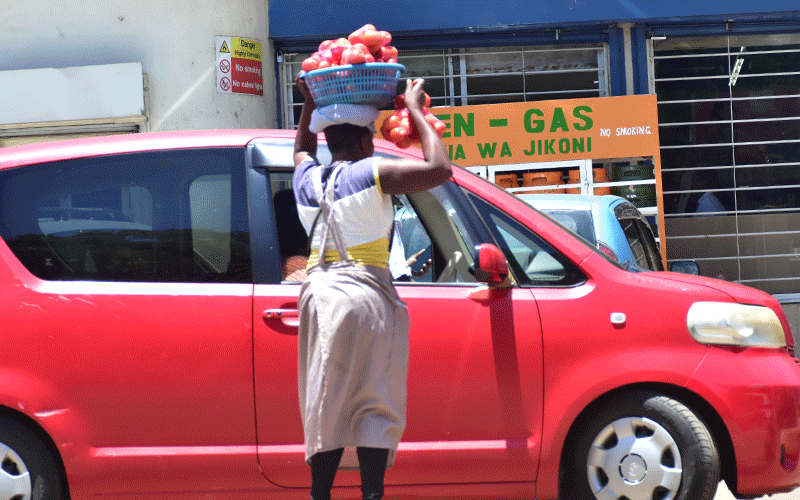
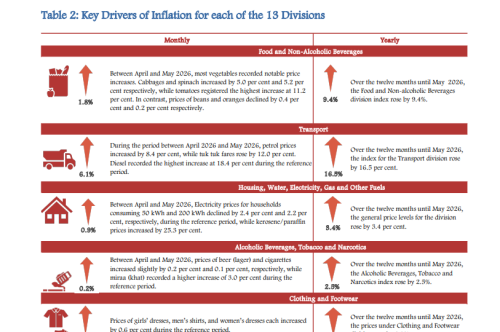
Food prices remained a major source of pressure on household budgets. The Food and Non-Alcoholic Beverages index rose by 9.4 per cent over the past year and increased by 1.8 per cent in May alone.
Several common vegetables recorded sharp increases. Tomatoes rose by 11.2 per cent between April and May 2026 and were 45.7 per cent more expensive than a year earlier. Cabbage prices increased by 5.0 per cent during the month and by 37.8 per cent over the year. Spinach prices climbed 5.2 per cent in May and were up 18.6 per cent compared with May 2025.
“Most vegetables recorded notable price increases,” KNBS noted, highlighting tomatoes, cabbages and spinach among the biggest movers.
Transport costs recorded the steepest increase among the 13 spending categories tracked by KNBS. The transport index rose by 16.5 per cent over the year and by 6.1 per cent between April and May 2026.
Fuel costs drive inflation
Fuel prices played a major role. Petrol prices increased by 8.4 per cent in a single month, while diesel prices jumped by 18.4 per cent. Kerosene prices rose even faster, increasing by 25.3 per cent between April and May 2026 and by 28.5 per cent over the past year.
The report said, “Diesel recorded the highest increase” among key transport-related items during the reference period.
Public transport costs also increased. Tuk-tuk fares rose by 12 per cent during the month, while some matatu and boda boda routes recorded increases of up to 25 per cent.
Not all costs moved upwards. Electricity charges fell during the month. The average cost for households consuming 50 kilowatt-hours declined by 2.4 per cent, while the cost for households using 200 kilowatt-hours dropped by 2.2 per cent. However, the relief from lower electricity bills was largely offset by rising kerosene and fuel costs.
KNBS also reported that core inflation, which excludes volatile items such as fresh food and fuel, stood at 3.2 per cent in May. Non-core inflation reached 16.0 per cent, underlining the impact of rising food and energy prices.
Food and non-alcoholic beverages contributed 2.7 percentage points to the overall inflation rate, while transport added 1.6 percentage points.
The figures suggest that Kenyan households continue to face growing pressure from rising food and transport costs, even as some utility prices ease. Economists and policymakers will be watching closely to see whether these inflationary pressures persist in the coming months.
Author
Kenneth Mwenda
Kenneth Mwenda is a business, sports, and politics digital writer with over seven years of experience in journalism, covering breaking news, feature stories, and in-depth analysis across a range of beats.
For inquiries, he can be reached at [email protected]
View all posts by Kenneth MwendaLatest News








Advertisement
More on Business