Advertisement
Gender Commission report reveals deep inequalities affecting girls’ education in 19 counties
Monday 08th June, 2026 03:42 PM|

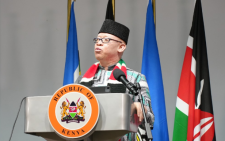
A stark new government report has exposed entrenched gender and regional inequalities that continue to undermine girls’ education across Kenya, particularly in arid and semi-arid lands and informal settlements.
The findings released on Monday, June 8, 2026, show a system where basic school conditions, cultural practices, and staffing gaps are still locking millions of girls out of quality learning.
The National Gender and Equality Commission (NGEC)warns that without urgent, targeted interventions, Kenya risks falling short of both its Vision 2030 ambitions and Sustainable Development Goal 4 on inclusive and equitable education.
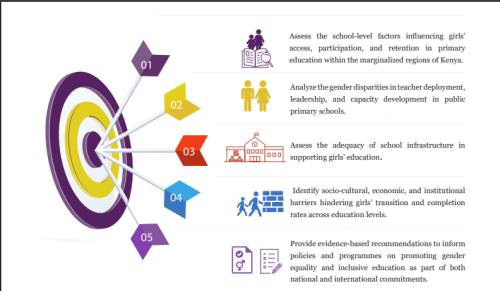
The report, titled Evidence on School-Level Factors Affecting Girls’ Access to Quality Education in Marginalised Communities in Kenya, surveyed public primary schools across 19 counties, including Turkana, Mandera, Garissa, Wajir, and selected informal settlements in Nairobi.
You Might Also Like


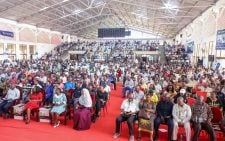
The picture that emerges is one of persistent inequality shaped by infrastructure gaps, social norms, and weak institutional support.
One of the most alarming findings relates to menstrual health and hygiene. Girls in poorly equipped schools, especially those with more than 40 girls per toilet, experience menstrual-related absenteeism of 15.8 per cent. In contrast, schools meeting basic sanitation standards record significantly lower absenteeism at 7.3 per cent.
This gap highlights a critical infrastructure failure. Across the surveyed schools, the average pupil-toilet ratio for girls stands at 32:1, far above the national standard of 20:1. In some counties, conditions are even worse. Mandera recorded extreme shortages, with 97 boys per toilet and 45 girls per toilet.
Only 77 per cent of schools had functional handwashing facilities, while a mere 26 per cent had toilets accessible to learners with disabilities. The report concludes that many girls are missing school every month simply because they lack safe, private sanitation facilities.
Teenage pregnancies and early marriages
The report also exposes the continued prevalence of harmful social practices. At least 30 per cent of schools reported cases of teenage pregnancy, while 16.9 per cent of girls were affected by child marriage.
By comparison, less than 1 per cent of boys were impacted by similar risks.
Female Genital Mutilation (FGM) remains a serious concern in several regions, including Baringo (27 per cent), Garissa (27 per cent), and Narok (21 per cent). These figures underline how deeply cultural practices continue to affect girls’ access to education.
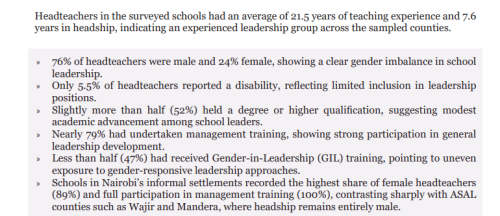
Despite constitutional guarantees of equality, school leadership remains heavily male-dominated. Across the 19 counties studied, 76 per cent of headteachers are male, while only 24 per cent are female. In Wajir and Mandera, all headteachers sampled were men.
By contrast, Nairobi’s informal settlements showed stronger female leadership representation, with 89 per cent of headteachers being women.
Governance structures show similar disparities. Women chair only 25 per cent of Parent-Teacher Associations and just 20 per cent of Boards of Management. In Garissa, Wajir, and Mandera, there were no female PTA chairs recorded.
Teacher shortages deepen inequality
Teacher deployment gaps are further worsening learning conditions. In Mandera, the pupil-teacher ratio reaches 66:1, far exceeding the national standard of 40:1. Female teachers are also significantly underrepresented in some counties, including Wajir (14.9 per cent) and Mandera (14.6 per cent), limiting the presence of female role models in schools.
The rollout of the Competency-Based Curriculum (CBC) is also facing major setbacks in marginalised regions. About 62 per cent of schools cite teacher shortages as the main barrier to implementation, while 61 per cent report inadequate learning materials.
Digital literacy training remains critically low, averaging just 33 per cent nationally, and dropping to zero in Wajir. This digital divide further isolates learners in already disadvantaged regions.
Despite widespread challenges, the report highlights a few positive exceptions. Tharaka-Nithi, Makueni, and Nairobi’s informal settlements show relatively better outcomes in sanitation and leadership.
Tharaka-Nithi, for example, records a strong pupil-toilet ratio of 10:1 for girls, far ahead of national averages.
The NGEC is calling for urgent reforms focused on improved WASH infrastructure, equitable teacher deployment, and stronger gender quotas in school leadership.
Without decisive action, the commission warns that Kenya’s education system will continue reproducing inequality across generations.
Author
Latest News




Advertisement
More on News