Advertisement
Stop dancing for the cameras – Kenya needs real empowerment, not tokenism
Thursday 24th July, 2025 06:32 AM|

There is something deeply unsettling about the growing trend of leaders, including Members of Parliament, gathering crowds, climbing podiums, and performing ceremonial empowerment stunts in the name of development.
They arrive with music and cheerleaders, dish out wheelbarrows, sewing machines, goats, and the occasional cheque, then pose for photos with branded T-shirts and slogans. This is not empowerment; it is state-sponsored performance art. And frankly, it isn’t very comfortable.
The idea behind broad-based empowerment programmes is noble: to uplift ordinary Kenyans, especially the youth, women, and people with disabilities, from poverty to productivity. However, what we are seeing across counties is not empowerment, but rather spectacle. It is the repackaging of handouts as policy. And worse, it is the normalisation of mediocrity by leaders elected to make laws and shape long-term national prosperity.
Let’s be clear: Kenya’s problems will not be solved by issuing 10 sewing machines in a constituency of 300,000 people. They won’t go away by offering Ksh20,000 cheques to youth groups whose members can barely afford the fare to return home. And certainly, no economic miracle will emerge from the ceremonial flagging off boda bodas that will soon be auctioned to pay off crushing digital loans.
You Might Also Like


This form of tokenism is not just ineffective; it is insulting. It reduces the dreams of millions of struggling Kenyans to a photo-op. It patronises their ambition, while camouflaging the inability of the state to deliver systemic, transformative change.
Where are the laws to create sustainable youth enterprise funds backed by real market access and training? Where are the policies that incentivise the private sector to absorb local labour, train skilled workers, and build meaningful partnerships with the government?
Where are the reforms to fix procurement so that small businesses and startups can thrive without needing political godfathers? These are the conversations Parliament should be leading, not singing and dancing on a dais like preachers in a tented crusade.
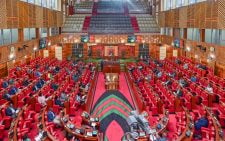
The core responsibility of a legislator is not public relations; it is lawmaking, budgeting, and oversight. And yet, we have MPs acting more like county MCAs, running their CDF-funded roadshows with no policy backbone behind them.
Instead of strengthening public institutions, they are undermining them by turning national development into a charity exercise. Instead of passing laws that will secure jobs, expand industries, and fix agriculture, they are co-authoring the script of Kenya’s economic stagnation.

Theatre of the Absurd?
It is not just lazy, it is dangerous.
Because in their failure to legislate long-term solutions, they entrench dependency. In their refusal to enforce transparency and monitor outcomes, they feed corruption. And in their obsession with optics over substance, they betray the very voters they claim to represent.
What Kenya needs is a national shift in how we define empowerment. We need sustainable, legally grounded, and data-driven frameworks that ensure young people, women, and the poor are not just given something to survive on, but are positioned to succeed on their own.
That means access to capital that is patient and accountable. That means policies that support local manufacturing, rural enterprise, and digital infrastructure. That means leadership that sets the standard and then enforces it, not leaders who behave like barking dogs with no teeth.
It’s time MPs stopped confusing kindness for leadership. Gifting a struggling farmer a jembe might feel generous in the moment, but real leadership is about ensuring that the farmer has access to subsidised fertiliser, predictable markets, and protection from middlemen who profit from his sweat. That requires laws. That requires policy. That requires seriousness.
Leave the podiums to musicians. Get back to Parliament and do the job you were elected to do. The future of Kenya will not be built on fanfare, but on foresight, legislation, and accountability. Empowerment is not a handout; it is a right. And you must protect it.
Author
Latest News






Advertisement
More on Insights