Advertisement
Kalonzo bets on patriotism: Will WPF win hearts and votes?
Saturday 02nd August, 2025 08:39 AM|

Former Vice President Kalonzo Musyoka’s rebranding of the Wiper Democratic Movement into the Wiper Patriotic Front (WPF) on August 1, 2025, signals a calculated pivot in Kenya’s turbulent political landscape.
With the hashtag #KomboaKenya (“Rescue Kenya”), Kalonzo is banking on a wave of patriotic fervor, particularly among the youth, to position WPF as a formidable force against what he calls a “tyrannical dictatorship.” But can this rebrand, rooted in appeals to national unity and Gen Z energy, translate into electoral success in 2027? The answer lies in dissecting the strategy, its resonance, and the challenges it faces in a fractured opposition and a sceptical electorate.
Kalonzo’s announcement, accompanied by a triumphant X post showcasing the new certificate of registration, marks the end of the Wiper Democratic Movement’s 19-year run.

The rebrand, as Kalonzo articulated, is not mere cosmetics but a response to “emerging political realities.” Speaking in Emali, Makueni County, on June 28, 2025, he tied the transformation to the patriotic zeal of Gen Z protesters who shook the nation during the 2024 anti-Finance Bill demonstrations.
You Might Also Like
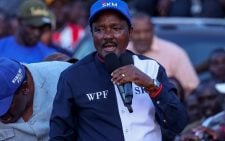


By invoking their spirit, Kalonzo aims to harness the youth’s disillusionment with the status quo, promising a platform where their voices shape policy. This is a bold move in a country where over 60% of the population is under 35, and political apathy among young voters has long been a hurdle.
A bid for youth and national reach
The WPF’s new identity is strategically crafted to project inclusivity and national appeal. Kalonzo’s emphasis on going “national” signals a departure from Wiper’s perceived regional stronghold in Ukambani.
The inclusion of figures like Secretary General Senator Shakila Abdalla, Makueni Senator Dan Maanzo, and Young Patriotic Front leaders Nixon Virundu and Mercy Mawia during the Emali tour underscores a deliberate effort to blend experience with youthful energy.
By committing to field candidates for all elective positions in 2027, WPF is positioning itself as a serious contender, not just a regional player or coalition appendage. Kalonzo’s call for youth to register as members further amplifies this generational outreach—a tactic that could disrupt the traditional voter mobilisation strategies of rivals like Raila Odinga’s Orange Democratic Movement (ODM) or President William Ruto’s United Democratic Alliance (UDA).

Yet the road ahead is riddled with challenges. The rebrand’s success will depend on whether Kalonzo can translate patriotic rhetoric into a cohesive, actionable vision. Political analyst Barrack Muluka’s recent remarks on K24 TV offer a sobering mix of optimism and caution.
He described Kalonzo as “the only grounded potential leader” in the opposition, sharply contrasting him with Raila, whom he called a “slow-punctured politician” leading a party consumed by “hero worship.” While Muluka’s view elevates Kalonzo’s standing, it also reminds voters of his past missteps, including his controversial stance on media freedoms during the Moi era—baggage that could haunt his renewed ambitions.
Coalition headaches
WPF’s emergence coincides with a period of reconfiguration within Kenya’s political landscape. The Jubilee Party under former President Uhuru Kenyatta is undergoing its internal revival, while new figures like Eugene Wamalwa, Martha Karua, Rigathi Gachagua, and Fred Matiang’i continue to reposition themselves for 2027.
Saboti MP Caleb Amisi, in a candid X post earlier this year, accused Kalonzo of failing to capitalise on Ruto’s vulnerabilities, suggesting he missed his “Kibaki Tosha” moment. The reference to Raila’s game-changing endorsement of Mwai Kibaki in 2002 underscores a critical truth: Kalonzo may require a similar coalition-building masterstroke to overcome public doubts about his decisiveness. Without a united front, WPF risks being just one voice in an overcrowded opposition choir.
Kalonzo’s long-standing political career—as a former vice president and minister—cuts both ways. On one hand, his experience gives him institutional knowledge and policy depth. On the other, it raises questions about whether he represents change or continuity. In January, Kalonzo said, “If there is any leader with more experience than me, we can have a discussion.” While this statement underscores his seniority, it may not resonate with young voters seeking fresh faces and new ideas.
The #KomboaKenya slogan, though catchy, must be supported by substantive policy proposals addressing the same economic grievances that spurred the 2024 protests: youth unemployment, rising debt, and perceived government excesses. Without concrete solutions, the rebrand risks becoming another cosmetic shift—one that fails to capture the imagination of the disillusioned electorate.
Rhetoric vs reality
Kalonzo’s task is not merely to convince voters that WPF is different—it is to prove that it is better. The challenge lies in overcoming voter fatigue with political rebrands that often feel opportunistic or hollow. Muluka’s warning about “empty rhetoric” applies here: Gen Z voters, who defied police intimidation during the 2024 protests, are unlikely to be swayed by slogans alone. They are more politically aware, issue-orientated, and connected than any previous generation.
If Kalonzo hopes to win their trust, WPF must go beyond symbolism and offer tangible plans: job creation, access to affordable education, healthcare reforms, and corruption accountability. These are the issues that matter most to a restless electorate. The rebrand offers Kalonzo a platform—but he must now deliver a message that speaks to lived realities, not just patriotic ideals.
With just under two years to the general elections, the window for building momentum is tight. The WPF brand is new, and while it rides on a promise of rescuing Kenya, it will face a tough test in translating hope into votes. Kalonzo’s ability to forge strategic alliances, perhaps with leaders like Karua or Wamalwa, could tip the scales.
Without such unity, the risk of a divided opposition handing Ruto a second term becomes more than just a possibility—it becomes a near certainty.
Ultimately, Kalonzo’s rebrand is a gamble. It has the makings of a revitalised movement, but whether it will capture the public imagination depends on execution. The Wiper Patriotic Front has fired its opening shot—what comes next will determine if Kalonzo finally seizes his moment or watches yet another political wave pass him by.
Author
Latest News





Advertisement
More on Insights