Advertisement
June 25 Gen Z protests: Nationwide shutdown call loses momentum
Thursday 25th June, 2026 12:11 AM|

A nationwide call for sweeping anti-government demonstrations on Thursday, June 25, 2026, appears to be rapidly losing momentum, exposing deep political exhaustion and a fractured opposition unable to replicate the historic street movements of the past.
The contrast with recent history is stark.
In June 2024, an unprecedented wave of youth-led “Gen Z” protests convulsed Kenya, forcing President William Ruto to completely withdraw that year’s contentious finance bill.
Unlike those highly coordinated, organic nationwide disruptions, subsequent anniversaries and spin-off protests in June 2025 displayed little magnitude.
You Might Also Like



The planned 2026 protests are expected to be even less significant, as ordinary citizens increasingly distance themselves from political agitation.
Kisumu rejects the call to march
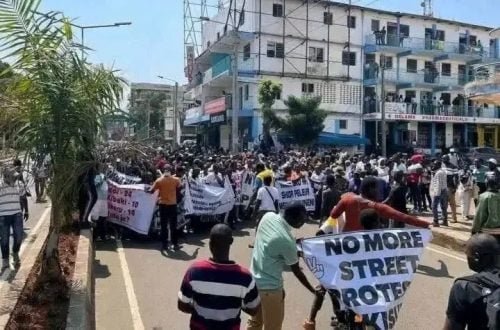
Nowhere is this shift more dramatic than in Kisumu, the lakeside city long regarded as the traditional crucible of opposition protests in Kenya.
On Wednesday, June 24, 2026, hundreds of Kisumu residents took to the streets not to join the planned shutdown, but to vehemently stage counter-protests against it.
Marching through the city’s commercial hub and converging at the busy Kondele Roundabout – historically a flashpoint for fierce clashes – local traders, youth leaders, and women’s groups waved white handkerchiefs and carried placards urging young people to shun the June 25 demonstrations.
“We do not want demonstrations because women have experienced a lot of pain,” Perez Osata, a local businesswoman who spoke on behalf of market traders fearing heavy financial losses, said.
Local leaders pointed to ongoing national infrastructure projects in the region, arguing that a return to disruptive street politics would only sabotage Nyanza’s hard-won economic stability.
The missing ‘Raila factor’

The fading appetite for mass action underscores a fundamental reality of Kenyan political mechanics: the absence of veteran opposition leader Raila Odinga from the trenches.
During the historic 2024 protests, Raila’s Orange Democratic Movement (ODM) commanded absolute political control over Kenya’s three major urban engines -Nairobi, Mombasa, and Kisumu.
When Raila effectively gave his political blessing to the young protesters, the machinery of his party made it remarkably easy to orchestrate a near-total shutdown of the country.
However, those massive 2024 protests quickly subsided when Raila pivoted strategically, entering into a broad-based government alliance with President Ruto.
Since that political handshake, Kenya has not witnessed any significant nationwide protests, as the formidable organisational apparatus of the traditional opposition was absorbed into the state apparatus.
Opposition in search of a crowd

The current crop of opposition leaders – including Wiper party leader Kalonzo Musyoka and the allies of impeached former Deputy President Rigathi Gachagua – has proven largely incapable of organising genuine, organic nationwide protests on their own.
Lacking the institutional grid and personal charisma that Raila Odinga utilised for decades to paralyse the capital, their strategy has increasingly hinged on attempting to hijack the legacy of the Gen Z banner, hoping to trigger the kind of spontaneous national shutdown that once occurred naturally.
In a bid to reignite that spark, veteran opposition figure and Siaya Governor James Orengo issued an aggressive rallying cry, calling for a total national shutdown on June 25, 2026.
“Mark your calendars: June 25th will be observed as a Public Holiday. No work, no school!”
“We invite all Kenyans mothers, fathers, siblings and friends to march to Parliament to demand justice and lay flowers where our children’s lives were cruelly taken,” Orengo said.
Yet, with local communities in places like Kisumu actively organising to keep their shops open, the opposition’s grand shutdown appears poised to yield quiet streets born of apathy rather than the roaring testament of resistance they had envisioned.
While leaders, including Kalonzo and Gachagua, have expressed support for some of the grievances raised by young protesters, the movement’s decentralised nature has made it difficult for any political figure to claim ownership of it.
Whether the anniversary demonstrations ultimately attract significant numbers remains to be seen. But the events unfolding in Kisumu suggest that the political conditions that enabled the nationwide mobilisation of 2024 may no longer exist in the same form.
For now, what was once a movement capable of bringing large parts of Kenya to a standstill appears to be entering a new phase – one in which commemoration, political contestation and public fatigue coexist uneasily, and where calls for a nationwide shutdown no longer command the same automatic response they once did.
Author
Martin Oduor
View all posts by Martin OduorLatest News







Advertisement
More on Insights