Advertisement
Activists and survivors demand justice beyond compensation for victims of police brutality
Friday 26th June, 2026 04:12 PM|
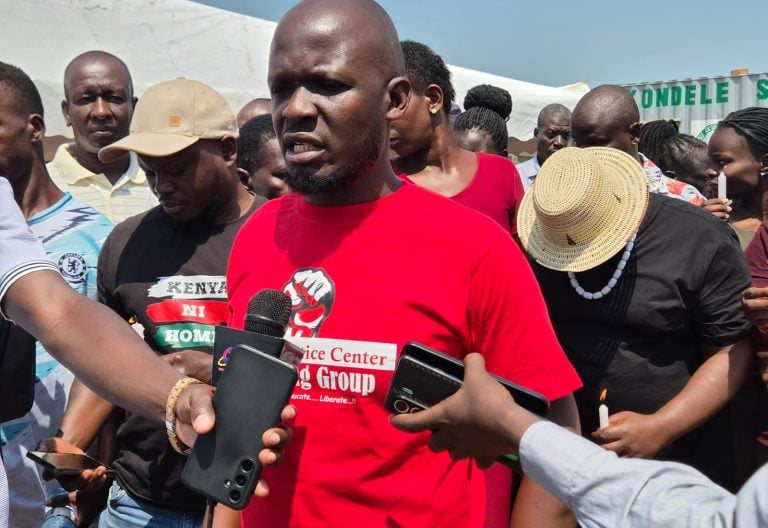
Human rights activists, survivors of police brutality, and families of victims have called on the government to pursue justice, accountability, and legal reforms for victims of police violence, insisting that financial compensation alone cannot address the suffering endured by affected families.
Speaking during a press briefing at the Manyatta Social Justice Centre in Kisumu on Friday, June 26, 2026, convener of the Social Justice Centres Working Group, Western Kenya, Collins K’odhek, said the gathering was intended to stand with survivors and demand lasting justice.
“Today we have gathered as activists, survivors of police abuse and their families, community members, and members of the clergy to express our solidarity with survivors and families of police violence in this country,” K’odhek said.
Compensation for protest victims
K’odhek welcomed President William Ruto’s commitment to compensate victims of police violence linked to the 2024 and 2025 protests, but maintained that compensation should only be the beginning of a broader justice process.
You Might Also Like



“We acknowledge the President’s commitment to compensate victims, but compensation alone is not enough. Justice must include accountability, prosecution of perpetrators, and guarantees that such violations will never happen again,” he said.
He observed that many Kenyans who suffered police violence during earlier incidents, including the 2007 and 2017 election periods, have never received justice or reparations.
“Victims of police violence did not begin with the 2024 and 2025 protests. There are families who have waited for justice since 2007 and 2017, and they, too, deserve recognition and reparations,” he added.
Transparency of the compensation process
K’odhek, however, questioned the transparency of the compensation process, saying many survivors and families had not been contacted and the list of beneficiaries remained unknown.
“Who is being compensated? We have not seen the list, survivors have not been consulted, and we do not want a repeat of what happened after the 2007 post-election violence, where many deserving families were left out,” he said.
The activists called for the immediate operationalisation of the Victim Protection Act, including establishment of the Victim Protection Fund and Victim Protection Board, saying the law already provides a fair framework for compensating victims.
They also urged Parliament to enact legislation criminalising enforced disappearances following Kenya’s ratification of the international convention on the issue.
Joyce Omolo, Chairperson of Kenya Champions for Justice and a survivor of police abuse, said survivors had united to ensure no Kenyan suffers abuse without accountability.
“We are speaking with one voice because we do not want another Kenyan to disappear or be subjected to police brutality without justice. Survivors need legal protection, access to information and support throughout the justice process,” she said.
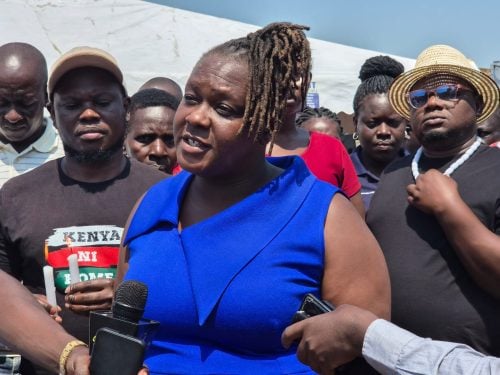
Omolo maintained that financial compensation could never replace lives lost or heal permanent injuries suffered by victims.
Police brutality survivor Caleb Odhiambo from Kondele Ward said injuries sustained during the incident left him permanently disabled.
“My life changed completely after I was injured. I can no longer do the work I used to do, and every day I live with the consequences of what happened,” said Odhiambo.
Human rights defender Linda Ogweno urged Parliament to prioritise the implementation of the Victim Protection Act to ensure justice outlives the current administration.
“How do you determine the value of a life, an eye, or a limb? We also need transparency because the public does not know who is receiving compensation or how those decisions are being made,” she said.
Another activist, Adiko Rongo, criticised attempts to compensate victims outside the legal framework established under the Victim Protection Act.
“Compensation should be managed through the Victim Protection Fund and independent institutions, not political offices. Parliament must also criminalise enforced disappearances so that these violations never happen again,” Rongo said.
The activists called on the government to move beyond financial compensation by ensuring transparency, prosecuting perpetrators and strengthening legal protections for victims, saying only a comprehensive justice process will restore public confidence and prevent future human rights violations.
Author
Viola Kosome
View all posts by Viola KosomeLatest News







Advertisement
More on News