Advertisement
How high fuel taxes are driving up petrol and diesel prices
Wednesday 15th April, 2026 12:35 PM|
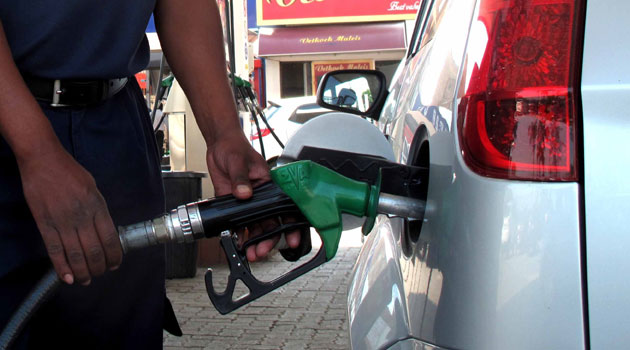
With the recent news by the Energy and Petroleum Regulatory Authority (EPRA) to adjust the fuel prices upwards, speculation about the real cause of the escalating fuel prices in Kenya has erupted.
Although the official reason cited for the upsurge is movements in the global oil market, exchange rates, and landing costs, further analysis of the pricing structure illustrates a more uniform and structural cause: the excessive load of fuel taxes and levies on each litre of petrol and diesel sold in the country.
However, the price of kerosene remains unchanged during the review period.
You Might Also Like

Following the revision, Super Petrol, Diesel and Kerosene will now retail at Ksh206.97, Ksh206.84 and Ksh152.78, respectively, effective midnight of Tuesday, April 14, 2026, for the next 30 days.
The monthly fuel price review by EPRA is meant to capture fluctuations in the international price of petroleum products, the shipping price and the domestic distribution margin. The thing is, though, that in every review cycle, what becomes most notable is that despite global prices stabilising or falling, in Kenya, retail fuel prices are already relatively high.
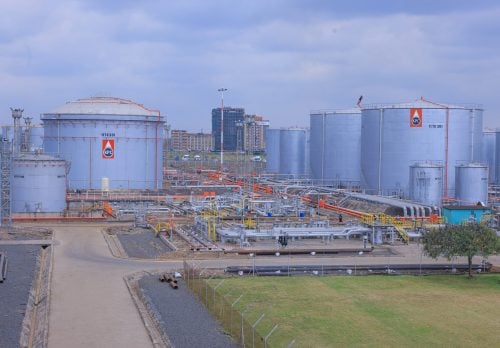
This is much because taxes and statutory levies constitute a huge and non-negotiable percentage of the final pump price, so much of the cost structure is virtually inaccessible to any downward intervention in world markets.
Multi-tiered taxation system
The fundamental element of this system is a multi-tiered taxation system. All litres of fuel in Kenya are charged value-added tax (VAT) and excise, a set of levies that includes the road maintenance levy, petroleum development levy, and railway development levy, among others.
In the latest review, the government was compelled to lower VAT from 16 per cent to 13 per cent to cushion consumers, but still exposed President Ruto’s administration to the reality around taxation, coupled with global factors.
“To cushion consumers from the high landed cost of petroleum products driven by rising global prices, the VAT rate on super petrol, diesel, and kerosene has been effectively reduced from 16 per cent to 13 per cent,” the Energy and Petroleum Regulatory Authority (EPRA) announced.
Various points in the pricing chain require these charges, but the retail level experiences the most impact. The setup is such that, although fuel is consumed by the consumer, a significant portion of its price will have been fixed via taxation.
Due to the fact that most of these taxes are constant per litre, they do not decrease when oil prices in the world market decline. Rather, they keep pressure on prices steadily growing upwards, rendering the affordability of fuel more and more a factor of domestic fiscal policy than of international market shifts.
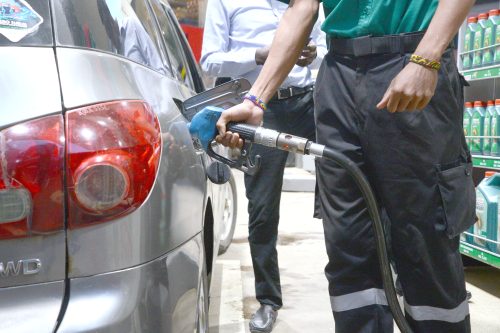
Not only is the base fuel cost subject to VAT, but other underlying charges, such as excise duty and some levies, are subject to the tax. This ends up giving the effect of a tax-on-tax structure: consumers are taxed on already taxed items. This piling effect, over time, has a significant inflation effect on the end pump price, even during the times when world crude oil prices are relatively stable.
The dependence of taxes on fuel as a source of stable revenue by the government also comes to the forefront in maintaining high prices. One of the most effective points of tax collection is fuel, since it is consumed by many people, and it is easy to administer at the import level.
Significance of Petroleum Levy
Moreover, some of the levies are designated to fund important infrastructure projects like road development and rail development, and as such, they are politically and economically challenging to cut or eliminate. This has led to the entrenchment of fuel taxation in the Kenyan fiscal framework that fulfils revenue generation as well as development financing purposes.
Ripple effects of fuel hike
Nevertheless, this system has a far-reaching economic effect in the country. With every rise in fuel prices, there is a ripple effect in the whole economy.
Immediately, transport costs increase, and this translates to increased prices of food and other basic commodities. The companies have higher operational expenses, which are usually transferred to the customer. To the household, especially in cities such as Nairobi and other large towns, the impact is a literal squeeze on disposable income and buying power.
Although the recent rise in EPRA fuel price is officially explained by the dynamics of the global markets and exchange rates, the more lasting and deep-rooted cause is the organisation of fuel taxation in Kenya.
The multiple levies, excise duties, and VAT result in a stratified pricing structure that makes the fuel prices high, irrespective of world trends.
Unless major reforms are made to simplify or lighten these taxation burdens, the price of fuel will always be under the microscope of the domestic fiscal policy, and taxation will always take centre stage in determining what Kenyans will pay at the pump.
Author
Latest News








Advertisement
More on Insights