Advertisement
Explained: Can Okoth Obado appeal his murder conviction? Here’s what happens next
Thursday 23rd July, 2026 09:30 PM|

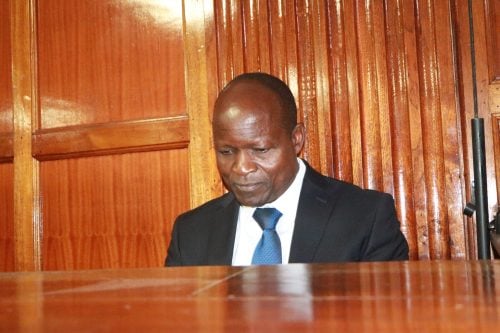
Former Migori Governor Okoth Obado still has legal avenues to challenge his murder conviction despite being found guilty by the High Court over the 2018 killing of university student Sharon Otieno.
Under Kenya’s judicial system, a conviction by the High Court is not necessarily the end of a criminal case. Obado has the right to appeal both the conviction and the sentence, setting the stage for what could be a lengthy legal battle.
First stop: The Court of Appeal
The first avenue available to Obado is the Court of Appeal, where his lawyers can seek to overturn the High Court’s decision.
In the appeal, his legal team may argue that the trial court erred in law, misinterpreted evidence, relied on inadmissible evidence, or failed to properly evaluate the facts before reaching its verdict.
You Might Also Like



They can also challenge the sentence imposed by the court. The Court of Appeal has several options.
It can uphold the conviction, quash it and acquit Obado, order a retrial, or uphold the conviction while varying the sentence if it finds merit in part of the appeal.
Can the case reach the Supreme Court?
If the Court of Appeal upholds the conviction, Obado’s legal options become more limited.
Unlike an appeal from the High Court to the Court of Appeal, there is no automatic right of appeal to the Supreme Court in criminal cases.
Instead, the Supreme Court only hears appeals involving the interpretation or application of the Constitution or where a matter is certified as one of general public importance.

This means Obado’s lawyers would have to convince either the Court of Appeal or the Supreme Court itself that the case raises constitutional issues or legal questions that go beyond his individual circumstances and are significant enough to warrant the apex court’s intervention.
Simply disagreeing with the Court of Appeal’s findings on evidence or witness credibility would not be sufficient.
Bail pending appeal
Should Obado be sentenced to a custodial term, he may also apply for bail pending appeal. However, legal experts note that bail after conviction is granted only in exceptional circumstances.
Courts generally require an applicant to demonstrate that the appeal has overwhelming chances of success or that there are unusual circumstances justifying release before the appeal is determined.
How long could the process take?
Appeals in murder cases often take months or even years to conclude, depending on the complexity of the case, preparation of court records, filing of submissions and the court’s schedule.
If the matter eventually reaches the Supreme Court, the legal process could be prolonged further before a final determination is made.
The High Court’s conviction is a major milestone in one of Kenya’s most closely watched murder cases, but it does not necessarily mark the end of Obado’s legal fight.
His immediate focus is expected to shift to the Court of Appeal, where he will seek to overturn the conviction.
Only if the case raises constitutional questions or issues of general public importance can it proceed to the Supreme Court, whose decision would represent the final chapter in the judicial process.
Her death sparked national outrage and became one of Kenya’s most high-profile criminal trials, culminating in the High Court finding Obado guilty of her murder after nearly eight years of court proceedings.
Author
Emmanuel Rono
Rono is a digital journalist with a proven track record in newsroom leadership and content creation. Currently a Digital Writer for People Daily Digital, Emmanuel’s career is rooted in a lifelong passion for storytelling. Let's talk here: [email protected] or [email protected]
View all posts by Emmanuel RonoLatest News








Advertisement
More on Insights