Advertisement
Civic education is vital on standards of products
Thursday 13th October, 2022 01:30 AM|
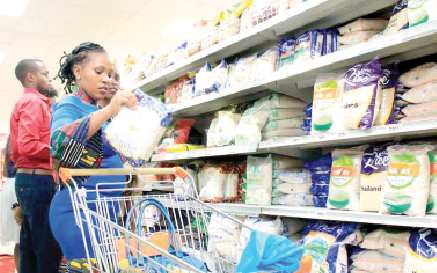
That global supply chains would collapse if governments failed to develop standards that would ensure sustainable international trade between States is a truism that is not debatable.
Consumers around the world increasingly demand products and services that are simultaneously good for the economy, for the environment, and for society—the triple bottom line of sustainable growth.
The concept of standardisation has protected global commerce since the pre-modern age of the French Revolution when new laws to govern weights and measures took a foothold in international trade.
However, not so many people have been able to learn about standards and appreciate their importance to commerce.
Standards bodies all over the world, with guidance from the International Standards Organisation (ISO), have been putting efforts to educate their populace about the different standards they moot every day to protect their markets.
Here at the Kenya Bureau of Standards (Kebs) we are not different. KEBS has been putting great effort to ensure our society learns as much as it can from standardisation, which is the ultimate war line for consumer protection. It is in line with this endeavour that the national standards body has created a platform dubbed the Emerging Standards Forum, which offers an avenue for standards experts, industry stakeholders and the media to interact, while opening the concept of standardisation to the rest of the populace.
Kebs will be holding the Emerging Standards Forum, the second in a series that will be held quarterly, on October 14.
Coincidentally, the forum will be held alongside the World Standards Day that is observed on the same day annually by the international standards community. Kebs understands that improving standards requires much more than simply adopting and enforcing new rules. It requires long-term commitment, and incentives and mechanisms tailored to the particular needs of specific value chains.
World Standards Day this year has narrowed down to three concepts that have proved extremely significant for the global community: Smart Cities, bio diesel fuel and clean water and sanitation.
Smart City is a developed urban area that creates sustainable economic development and high quality of life by excelling in multiple key areas; economy, mobility, environment, people, living, and government integrated approach to improving the efficiency of city operations, quality of life for its citizens, and growing local economy.
Half of humanity—3.5 billion people—live in cities today, and this number will continue to grow. Because the future will be urban for a majority of people, the solutions to some of the greatest issues facing humans— poverty, climate change, healthcare, education— must be found in city life.
At Kebs, this is a fact that we have come to welcome and appreciate. We have realised the need to develop standards that will create room for the development of these cities. Even as we turn our attention towards the development of Smart Cities, we cannot forget the need for renewable energies if we are to win the climate change and global warming war.
The government is aware of the current developments across the globe in search for green energy such as biodiesel. Manufactured from plant oils, animal fats and recycled cooking oils, biodesiel fuel has a myriad of advantages. Top among them being it can reduce global warming greenhouse gas emission and is also compatible with new technology diesel engines and emissions control devices.
At Kebs, we intend to standardise the use of these fuels and have them available in the market in a safe and affordable manner. It is also important to note that Sustainable Development Goal 6 goes beyond drinking water, sanitation and hygiene.
—The writer is the Kenya Bureau of Standards Managing Director
Author
PD columnist
View all posts by PD columnistLatest News






Advertisement
More on Insights