Advertisement
Hussein Khalid: June 25 commemoration was about 70 percent successful
Friday 26th June, 2026 12:23 AM|

Human rights activist Hussein Khalid described the June 25, 2026 nationwide commemorations marking the second anniversary of the deadly Gen Z protests as “about 70-80 percent successful,” despite significant challenges experienced during the events.
In an interview, Khalid said the day “didn’t exactly pan out as we hoped,” but noted that key objectives linked to remembrance of victims of the 2024 and 2025 demonstrations were achieved.
He emphasised that the focus remained on honoring those killed during the protests and supporting affected families through symbolic memorials.
Access to Parliament road
Khalid stated that for the first time since the 2024 violence outside Parliament, protesters and families of victims were able to reach Parliament Road. “We actually got to Parliament Road, not necessarily the Parliament buildings,” he said.
You Might Also Like



During the commemorations, participants laid flowers and held memorials as grieving families gathered in remembrance of their relatives. He added that organizers prioritized accompanying families to show solidarity, noting: “You lost one child, but you’ve now gotten many others who will stand with you… until justice is done.”
The events were also used to reflect on civic freedoms and the lives lost during the demonstrations.
Security response and arrests
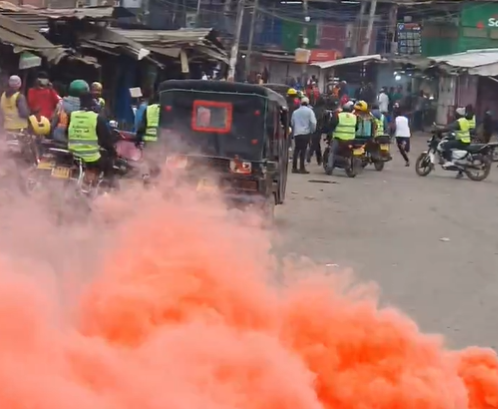
The commemorations were marked by a heavy police presence across several parts of the country. Officers reportedly stopped and arrested individuals carrying flags as they headed toward Nairobi’s central business district.
Activists also reported colleagues being arrested near Parliament and detained during the day. The Police Reforms Working Group (PRWG), a coalition including Amnesty International Kenya, Katiba Institute, and Kenya Human Rights Commission, criticised the policing measures, including roadblocks on major routes into Nairobi and other counties such as Embu, Nakuru, Machakos, Kajiado, Laikipia, and Kiambu.
The group said the restrictions affected movement, assembly, and access to services despite a court order against blanket closures. Authorities maintained that June 25 would be a normal working day with security provided for peaceful demonstrations.
Demonstrations, casualties, and rights concerns
Demonstrations were reported in at least 14 counties, including Nairobi, Mombasa, Kisumu, and Nakuru. In Nairobi, police dispersed mourners attempting to lay flowers outside Parliament, used tear gas near Central Police Station, and deployed masked officers during confrontations involving protesters and journalists.
According to rights groups and media reports, more than 355 arrests were recorded nationwide, with significant numbers in Nairobi and Kajiado, alongside reported injuries in some areas. Families were at times prevented from fully accessing memorial sites during the commemorations.
The PRWG called for the release of detainees, investigations into alleged misconduct, and stronger parliamentary oversight, while also commending instances where demonstrations were facilitated peacefully in Mombasa.
The events highlighted continued tensions between state security responses and public demands for accountability over past protest-related violence.
Author
Latest News






Advertisement
More on News