Advertisement
Kanjama calls for accountability over pre-emptive arrests and tear gas use
Friday 26th June, 2026 12:40 AM|

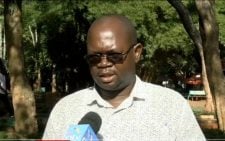
Human rights lawyer and activist Kanjama criticised the National Police Service’s handling of the Gen Z memorial protests held on June 25, 2026, calling for stronger accountability mechanisms over pre-emptive arrests and the use of tear gas on demonstrators.
Speaking during an interview on the day of the commemorations, he questioned the justification for detaining individuals ahead of the protests based on intelligence reports.
“But when we hear those who were actually arrested yesterday ahead of this protest, the police said according to the intelligence these are the individuals who are trying to bring together goons in order to infiltrate this protest,” he noted.
He said it remains difficult to distinguish between suspected disruptors and peaceful protesters, stressing that evidence must guide the process through investigation, prosecution, and court determination.
Rights concerns and timing of police action
You Might Also Like

Kanjama stated that even where police actions are later found to lack sufficient evidence, affected individuals may already have suffered violations. He said some protesters are blocked from participating or subjected to intimidation and the use of tear gas, meaning rights are affected before legal processes conclude.
According to him, post-facto legal remedies are insufficient since the impact occurs during the protest period.
He called for mechanisms to ensure accountability where interventions do not meet required evidentiary thresholds, emphasising that policing must be conducted in good faith while respecting constitutional rights to assemble, demonstrate, picket, and present petitions.
·/X
Oversight, protest policing, and reported restrictions
Kanjama called for stronger oversight through independent policing bodies, courts, and other institutions to ensure accountability in protest management.
He raised concerns about the use of extensive roadblocks across Nairobi and other counties, questioning whether such measures were justified by intelligence assessments.
His remarks followed widespread criticism from rights organisations, including the Police Reforms Working Group (PRWG), a coalition of Amnesty International Kenya, Katiba Institute, Kenya Human Rights Commission, and other groups.
The PRWG accused security agencies of violating constitutional rights despite assurances from Interior Cabinet Secretary Kipchumba Murkomen that June 25 would be a normal working day and that peaceful protests would be facilitated.
Police deployed roadblocks in Nairobi and counties including Embu, Nakuru, Machakos, Kajiado, Laikipia, and Kiambu, restricting movement and access to workplaces.
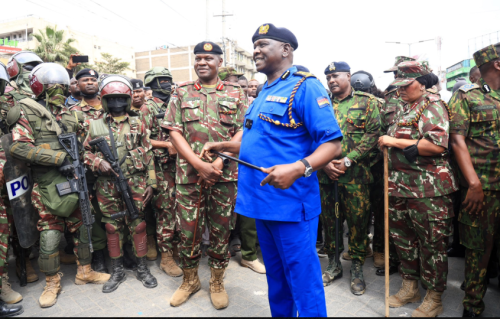
In Nairobi, tear gas was used against protesters and journalists near Central Police Station, while families attempting to lay flowers at Parliament were dispersed. More than 361 arrests were reported nationwide, with additional injuries recorded in Kajiado.
Masked officers were also deployed in some areas, contrary to court directives barring certain enforcement actions without notice. The PRWG called for release of detainees, investigations into alleged misconduct, and parliamentary oversight, while noting more facilitative policing in Mombasa as an example.
Author
Latest News





Advertisement
More on News